One day at the Grand Canyon sounds rushed — until you realize the canyon has been there for six million years and isn’t going anywhere, but your schedule is. I’ve done the Grand Canyon as a day trip twice, and with the right plan, one day delivers 90 percent of the wonder. The key: the South Rim, a tight itinerary, and realistic expectations.
The best way to see the Grand Canyon in one day is a sunrise-to-sunset South Rim blitz: the best viewpoints, one short below-the-rim hike, and the shuttle system doing the driving. Here’s the hour-by-hour plan.
No, you won’t see everything. Yes, you’ll be stunned anyway.
Before You Go: Logistics
Go to the South Rim — it’s open year-round, has the classic views, the visitor center, and the shuttle system. (The North Rim is seasonal, remote, and deserves its own trip.) Enter early: the South Entrance backs up by 9–10 a.m. in peak season — arrive by 7 a.m. or use the East (Desert View) entrance, which is usually quieter. Park entry is $35 per vehicle or covered by the America the Beautiful pass — buy it if this trip is part of a bigger park tour (see our budget park road trip guide).
Stay nearby the night before if possible: Tusayan (10 minutes), or Flagstaff/Williams (1–1.5 hours). A 5 a.m. wake-up from Flagstaff is doable; from Phoenix (3.5+ hours) it’s brutal — don’t. Check the weather and pack layers: the rim is 7,000 feet — 20 degrees cooler than the desert below, with real wind. Summer brings afternoon thunderstorms (deadly lightning on exposed rims — plan to be off high points by noon).
Download the NPS app and offline maps — cell service is spotty. Fill the water bottles (free fill stations at the visitor center), wear real walking shoes (not flip-flops — the rim trail is easy but long), and eat a real breakfast. You’re about to walk 5–8 miles at altitude; fuel accordingly.
The Itinerary: Sunrise to Sunset
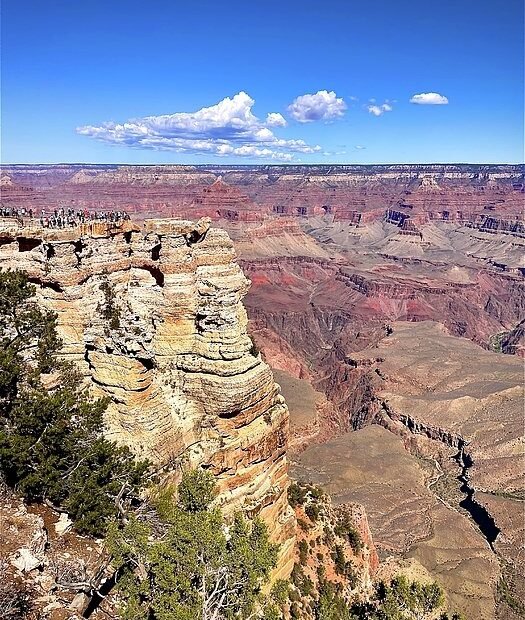
Sunrise (5:30–7 a.m.): be at Mather Point or Yaki Point for sunrise — the canyon ignites in layers of orange and red, and you’ll share it with dozens, not thousands. Walk the Rim Trail east toward the visitor center as the light builds. Grab breakfast at Maswik Lodge or pack it — eating with the view beats any restaurant.
Morning (7–11 a.m.): the below-the-rim hike — Bright Angel Trail to the first tunnel or 1.5-Mile Resthouse (1–3 hours round trip). This is the essential Grand Canyon experience: descending into the canyon changes your understanding of its scale completely. Rules: going down is optional, coming up is mandatory — turn around at half your energy, carry a liter of water per person, and never attempt the river and back in a day (people die trying). The 1.5-mile round trip to the first tunnel delivers 80 percent of the magic with 20 percent of the effort.
Midday (11 a.m.–3 p.m.): escape the heat — shuttle the Hermit Road (Red Route) west, hopping off at viewpoints (Mohave, Hopi, and Pima Points are standouts), or tour the Desert View Drive (East Rim) with the Watchtower. Eat lunch in the shade. Visit the Yavapai Geology Museum (15 minutes, free, the canyon’s story in one room). This is also prime time for the visitor center film and exhibits — air-conditioned learning while the sun rages.
Sunset and the Evening Finish
Late afternoon (3–6 p.m.): walk more Rim Trail — the light gets golden and the crowds thin. Hopi Point is the classic sunset spot (arrive 45–60 minutes early for a good position), but Pima Point and Lipan Point are less crowded alternatives with equally stunning views. The shuttle runs until after sunset — confirm the last shuttle time so you’re not walking the Hermit Road in the dark.
Sunset itself: put the camera down for at least five minutes. Watch the shadows climb the far wall, the colors shift through impossible oranges and purples, the canyon go quiet. It’s the single most beautiful hour in the American national park system, and no photo captures it — be present for it. Then dinner at El Tovar (book ahead — the historic lodge dining room) or the Arizona Room, or pizza at Maswik with zero regrets.
Stargazing finale: the Grand Canyon is a Dark Sky Park — on a clear night, the Milky Way over the canyon is a religious experience. Give your eyes 20 minutes to adjust, lie back on a rim bench (away from the edge, obviously), and look up. One day, sunrise to stars — that’s the complete Grand Canyon. For the multi-day version, our Southwest road trips guide has the Grand Circle context.
Best Way to See the Grand Canyon in One Day: The East Entrance Trick
Here’s the logistics trick that saves an hour: enter through the East (Desert View) entrance instead of the South. The South Entrance backs up badly from 9 a.m. onward — lines of 30–60 minutes are normal in peak season. The East entrance, off Highway 64 from Cameron, rarely has a line, and it puts you at the Desert View Watchtower first — the perfect sunrise-or-morning stop, working your way west along Desert View Drive toward the village as the day builds. You see the same viewpoints in reverse, skip the line, and the Watchtower at opening is nearly empty.
The east-to-west flow has a second advantage: the light. Morning light is best on the eastern viewpoints (Desert View, Lipan, Moran), and by afternoon you’re at the western viewpoints (Hopi, Mohave) right as the golden hour builds. You’re chasing the good light all day instead of fighting it. End at Hopi Point for sunset, shuttle back to the village for dinner, and drive out the South entrance (no lines exiting). It’s the same canyon, sequenced for light and lines — the difference between a good day and a perfect one.
Grand Canyon One-Day Itinerary
- Night before: stay in Tusayan/Flagstaff; pack layers
- 5:30–7am: sunrise at Mather or Yaki Point
- 7–11am: Bright Angel Trail to 1.5-Mile Resthouse
- 11am–3pm: Hermit Road shuttle viewpoints; Yavapai Museum
- 3–6pm: Rim Trail walk; position for sunset
- Sunset: Hopi Point (or Pima/Lipan for fewer crowds)
- Dinner: El Tovar (reserve) or Maswik
- Night: stargazing — Dark Sky Park Milky Way
- Bring: 1L water/person, real shoes, layers, sun protection
- Don’t: attempt river-and-back; hike midday summer heat
One Day Is Enough to Be Changed
The Grand Canyon doesn’t need a week to work on you. One sunrise, one descent below the rim, one sunset — that’s enough to understand why it’s a wonder of the world. You’ll leave planning your return (everyone does), but you won’t leave feeling shortchanged.
Go early, hike a little, watch the light show. The canyon does the rest.