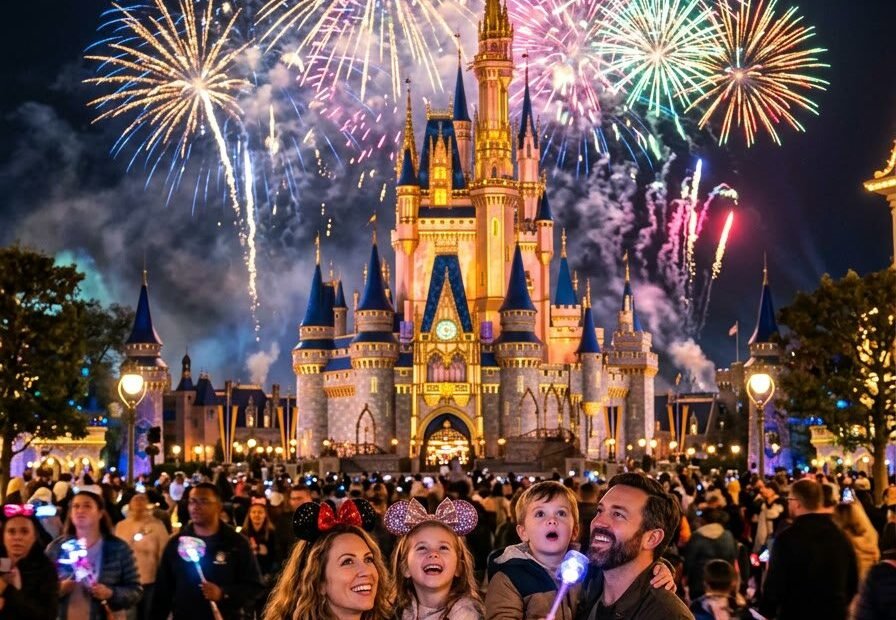
Ask a dozen families what a Disney World trip cost and you will hear numbers from $3,000 to $12,000 — for the same four people, in front of the same castle. Both ends are telling the truth, because a Disney budget is not a price; it is five decisions wearing a price tag: when you go, how many park days you buy, where you sleep, how you eat, and how much of the upsell you accept. For a family of four (two adults, two kids) over four to five days, the honest ranges are these: a disciplined budget trip lands around $4,000–$5,500, the comfortable middle runs $6,500–$9,000, and a no-limits version passes $12,000 without blinking. What follows compares the three builds line by line, so you can choose your number instead of discovering it.
Decision one: the tickets, compared
Tickets are the monster line item and the least flexible. Base tickets run roughly $110–$160 per person per park day depending on the season’s pricing tier, with multi-day tickets discounting the per-day rate — four people over four park days should budget $1,800–$2,500 before options. The first option is Park Hopper, at roughly $65 more per ticket: it lets you visit multiple parks in a day, which experienced visitors use to dodge crowds, and first-timers doing one park per day can skip without missing anything. The second is the skip-the-line system, Lightning Lane (the old Genie+ is gone), priced per ride or per day and varying with demand — $25–$40 per person per day is a fair planning figure, which for four people over four days adds $400–$640. The comparison is stark: tickets alone can be a $1,900 line or a $3,200 line, and the lever is not whether you go but how many paid shortcuts you stack on top. Buy from Disney directly or from an authorized discounter (Undercover Tourist reliably undercuts gate prices by 5–10 percent); the tickets sold in gas stations and timeshare booths along the highway are the trip’s first scam.
Decision two: where you sleep, three ways
Disney’s own hotels ladder neatly. The value resorts — Pop Century and Art of Animation are the family favorites — run about $180–$280 a night and include the sweet spot of the whole system: free Disney transportation, which quietly deletes a rental car and daily parking fees ($30 a day and up) from the budget, plus Early Theme Park Entry, thirty minutes that are genuinely worth rides. Moderates step up to $300–$450; deluxe resorts run $500 to well past $1,000. For five nights the lodging line reads: roughly $900–$1,400 value, $1,500–$2,250 moderate, $2,500+ deluxe. Off-site hotels at $120–$200 a night undercut the values on sticker price, then hand some back in car rental, parking, and drive time — honest math puts a five-night off-site stay around $600–$1,000 plus transport costs and an hour a day of logistics. The advanced play, for stays of five nights or more, is renting Disney Vacation Club points through the established rental market: deluxe villas at 40–50 percent below rack rates, booked far ahead. It is the one “secret” in Disney budgeting that survives scrutiny.
Decision three: food, the controllable cost
Disney dining at full tilt — quick-service lunches plus a table-service dinner most days — runs about $75–$100 per person per day, or $1,200–$1,600 for four over four days, and character meals push well past it. The savings plays are proven: breakfast in the room from a grocery delivery (the services deliver to resort bell desks routinely), quick-service lunches where portions are generous and kids’ meals are honestly sized ($15–$20 per person for the meal), one signature or character dinner chosen as the trip’s splurge rather than a nightly habit, and the standing freebie — ice water is free at any quick-service counter, always, which quietly replaces a small fortune in bottled drinks. A family running the disciplined version feeds four for $500–$700 across the trip without anyone feeling managed; a family eating every meal at a table in the parks can double the food line without a single better memory to show for it.
Decision four: the calendar, and five: the extras
The season is a multiplier on everything above. The identical trip — same hotel tier, same tickets — was quoted in planning examples $2,000 apart between an off-season week and a holiday week, because tickets, rooms, and even Lightning Lane all price by demand. Late August into September, mid-January, and early May are the value windows; spring break, summer peak, and the Christmas-to-New-Year fortnight are the premium ones. Finally, the extras decide the last thousand: souvenirs (set a per-child budget before the parks set it for you), Memory Maker photos, a rental stroller versus bringing your own, airport transfers, and the flights themselves if Orlando is not driving distance. Ground transport between airport and resort is no longer free, so price it in rather than discovering it. Add travel days’ food and the trip’s true total assembles itself — for most families, flights or fuel add $600–$1,500 on top of everything above.
A worked budget, assembled end to end
Numbers convince better in a single pile. Take the disciplined build for five nights in a value window: four-day base tickets for four, bought from an authorized discounter, about $1,900; a value resort at $220 a night for five nights, $1,100; food run the grocery-breakfast way, $650; one character dinner inside that figure as the splurge; transfers and incidentals, $200; souvenirs capped at $50 a child, $100; two days of Lightning Lane bought only for the two busiest parks, about $250. Total: roughly $4,200 — squarely inside the promised budget band, with no day feeling rationed. Now flip three decisions: peak-season dates (+$600 on tickets and room), a moderate hotel (+$700), Hopper added (+$260), table-service dinners nightly (+$600), Lightning Lane every day (+$250 more). The same family is now past $6,600 and inside the middle band, having bought comfort rather than access. Nothing about the second trip is foolish — but notice that every dollar of the difference was a decision, taken in advance or by default. Disney’s pricing counts on default.
Where families overspend without noticing
The leaks are worth naming because they are small, cheerful, and constant. The in-park bottled drink bought five times a day for four people is a $100 habit across a trip that free ice water was invented to prevent. The souvenir bought on day one at full park price is usually available — and budgeted for — by day four, when the children know what they actually want. The rental car kept for a full week “for flexibility” by a family that uses it twice pays parking to attend parks the free buses serve better. The dining plan or package bought for convenience prices out above pay-as-you-go for most real families once the arithmetic is run honestly. And the extra park day added “because we’re here” at the margin costs more than its ticket: another hotel night, another food day, another late flight. None of these is a scandal. Together they are the difference between the families who say $4,000 and the families who say $6,500 about the same vacation — a gap that belongs entirely to awareness, not income.
Two last decisions separate the calm planners from the improvisers. First, tickets are date-based and the popular days sell into higher tiers as they fill, so the order of operations is tickets before hotel, hotel before everything else — the whole budget keys off the park calendar, and families who book the room first sometimes discover their chosen week is a premium-tier week only at the ticket screen. Second, build a contingency of about 10 percent into the total and call it the fun fund rather than the emergency fund: it absorbs the rained-out day that becomes a shopping afternoon, the ride photo nobody budgeted for, the dessert that became a core memory. A Disney budget is not a diet; it is a fence around the fun so the fun can be unguarded inside it. Families who set the fence enjoy the parks more, not less — the arithmetic says the magic was never the expensive part.
The verdict
Run the comparison and the pattern is clear: the budget build and the luxury build are the same parks, the same rides, and largely the same smiles, separated by hotel tier, restaurant count, and paid shortcuts — not by access to the magic. A family that books the value resorts in a value window, eats one big meal a day, and skips the Hopper lands within sight of $4,000 and misses almost nothing. The families who spend $12,000 mostly bought convenience and ceremony — which are legitimate purchases, made knowingly. Choose your tier before Disney chooses it for you, write the number down, and the most common question in family travel answers itself. When the parks are done, the recovery day is cheap and close: the coast is an hour away, and a wind-down day at one of the most family-friendly beaches in the US costs a tank of gas and a picnic. Current ticket tiers and dates are listed on Disney’s official park ticket page — check them first, because everything in your budget cascades from that one number.