
Ask ten bakers for the best temperature to bake chocolate chip cookies and you’ll get ten confident, contradictory answers. That’s because there isn’t one right temperature — there’s the right temperature for the cookie you want. Chewy centers, crisp edges, and cakey puffs all come from different heat, and most recipes just pick 350°F and hope for the best.
I’ve baked hundreds of batches testing this, and the temperature genuinely matters as much as the recipe. A 50-degree swing changes spread, browning, and texture dramatically. Here’s what each temperature does, when to use it, and the technique details that matter just as much as the number on the dial.
The Short Answer: Best Temperature to Bake Chocolate Chip Cookies
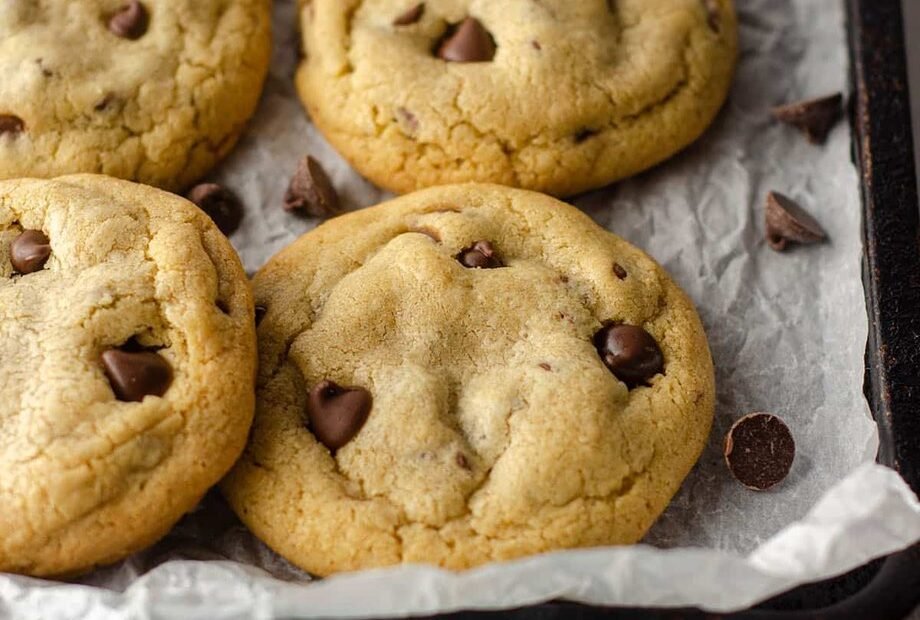
For classic chewy cookies with crisp edges — the style most people picture — 350°F is the sweet spot. At 350, the butter melts at a moderate pace, the edges set while the centers stay soft, and you get even golden browning in 10 to 12 minutes. It’s the default for good reason: it’s the most forgiving temperature across the widest range of doughs.
But your oven might be lying to you. Home ovens routinely run 25 degrees hot or cold, and that swing is the difference between perfect and disappointing. A $10 oven thermometer is the best baking investment you’ll ever make. Hang it on the middle rack, preheat fully (give it a full 15 to 20 minutes), and bake on the center rack where heat is most even.
What 325°F, 350°F, and 375°F Each Do to Your Cookies
At 325°F, cookies spread slowly and bake through gently. You get thicker, paler, softer cookies with barely-crisp edges — great for cakey or ultra-chewy styles, but they can look underdone and need 13 to 15 minutes. This is my pick for doughs with lots of brown sugar or extra egg, where you want tenderness over crunch.
At 375°F, the opposite happens: fast spread, deep browning, crisp edges, and chewy-to-crisp centers in just 8 to 10 minutes. The window between perfect and burnt is narrow — check at 8 minutes — but the flavor payoff is real, since higher heat drives more caramelization and Maillard browning. Thin, lacy, butterscotch-flavored cookies live at 375. Above 375, you’re in burnt-bottom territory unless your dough is specifically built for it.
Reference: King Arthur Baking’s cookie baking guide.
Reference: Serious Eats’ chocolate chip cookie science.
Cookie Temperature Rules Worth Memorizing
Temperature is half the battle. The other half is technique:
- Chill the dough at least 30 minutes (overnight is better). Cold dough spreads slower, which means thicker cookies at any temperature.
- Pull cookies when the edges are set and golden but the centers still look slightly underdone — they finish cooking on the hot pan.
- Use light-colored aluminum sheet pans. Dark pans absorb more heat and burn bottoms, especially at 375°F.
- Space dough balls 2 inches apart. Crowded cookies steam instead of crisping and bake unevenly.
- Let the pan cool between batches, or the second batch spreads into pancakes before the oven even heats them.
- For uniform size, use a cookie scoop. Same-size cookies bake evenly; mixed sizes mean mixed results.
- Freeze scooped dough balls and bake from frozen — just add 2 to 3 minutes. Fresh-baked cookies on demand, any night of the week.
Adjusting for Your Dough and Your Oven
High-butter doughs spread aggressively, so they benefit from the lower end (325 to 350°F) plus thorough chilling. Doughs with more flour or oats hold their shape and can handle 375°F for extra browning. If your cookies always come out flat, the culprit is usually warm dough or too-soft butter — not the temperature. And if the bottoms burn while the tops look pale, your oven has a hot bottom element; move to the upper-middle rack and consider an insulated sheet.
Convection? Reduce the temperature by 25°F from what the recipe says. Convection’s circulating air browns faster and can dry out cookies before the centers set. I actually prefer conventional bake mode for chocolate chip cookies — the gentler heat gives you that perfect chewy center more reliably.
Quick Answers to Common Questions
Why do my cookies always come out flat?
Warm dough is the usual culprit — butter that’s too soft or dough that wasn’t chilled spreads before it sets. Chill scooped dough at least 30 minutes (overnight is better). Other suspects: too little flour (spoon-and-level instead of scooping), an oven running hot (get a thermometer), or old baking soda that’s lost its lift.
Should I use salted or unsalted butter for cookies?
Unsalted, so you control the salt — but honestly, salted butter works fine if you reduce the recipe’s added salt by about ¼ teaspoon per stick. The bigger variable is butter temperature: cool room temperature (it should dent when pressed, not smear) creams properly; melty butter makes greasy, flat cookies.
Can I freeze cookie dough?
Absolutely — it’s one of baking’s best tricks. Scoop dough balls, freeze solid on a tray, then bag them. Bake straight from frozen at the same temperature, adding 2–3 minutes. Fresh-baked cookies on any weeknight with zero prep. Frozen dough keeps 2–3 months at peak quality.
More from Daily USA Post
- what are the best apps for finding live events nearby, explained in detail
- Also see: how can I find a local theater group to join
- Our complete guide: how can I make fluffy pancakes without buttermilk
The best temperature to bake chocolate chip cookies is 350°F for the classic chewy-crisp style, 325°F for thick and soft, and 375°F for thin and caramelized. But the number only works if your oven is accurate (get a thermometer), your dough is chilled, and you pull the cookies while the centers still look a touch underdone. Nail those three habits and every batch comes out bakery-worthy.
One last tip from years of cookie batches: keep notes. Jot the temperature, time, and result on the recipe card each time you bake. Within three batches you’ll have your oven’s perfect numbers dialed in, and from then on it’s repeatable perfection instead of delicious guesswork.




1 Comment