
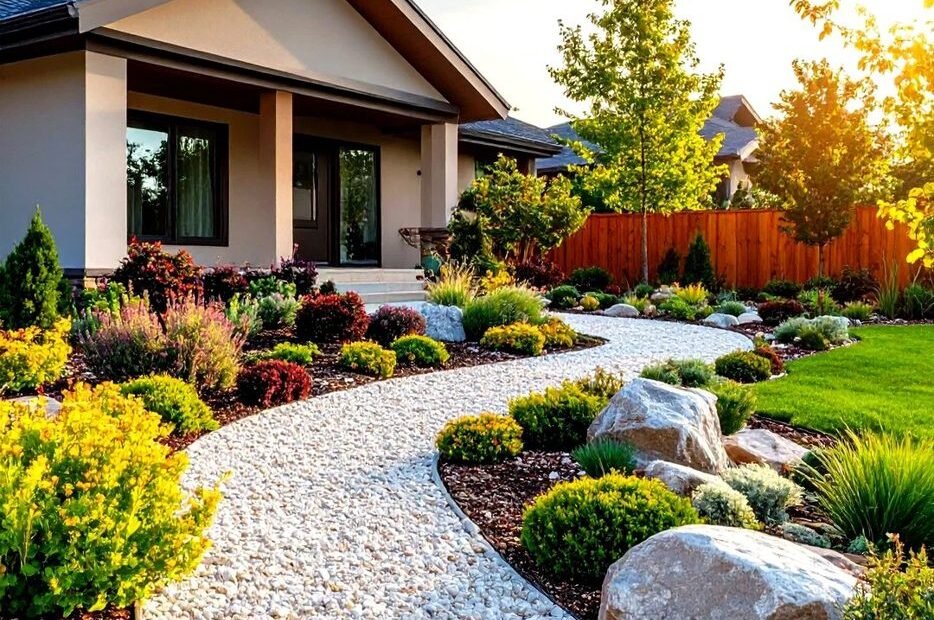
I used to spend every Saturday on yard work and still had a yard that looked tired. Then I redesigned for laziness as a core principle: every plant had to survive neglect, every bed had to suppress its own weeds, and mowing had to shrink. Three years later the yard looks better and I spend maybe two hours a month on it.
What are the best low-maintenance landscaping ideas? The philosophy is simple: right plant, right place, mulch everything, and shrink the lawn. Here is the playbook.
What Are the Best Low-Maintenance Landscaping Ideas?
Start with native plants, the ultimate low-maintenance cheat code. Plants native to your region evolved for your rainfall, your soil, and your pests, which means they thrive on neglect once established. A native perennial bed needs watering only in its first year, no fertilizer ever, and divides every few years instead of demanding annual replanting. Contact your state’s native plant society or extension service for lists tailored to your exact county; the recommendations are free and specific.
Mulch is the hardest-working material in low-maintenance landscaping. What are the best low-maintenance landscaping ideas for weed control? Three to four inches of wood mulch over landscape fabric (or cardboard sheet mulch) suppresses 90% of weeds, retains soil moisture, and looks tidy. It needs topping up annually, a one-hour job, versus weekly weeding without it. In beds, mulch is non-negotiable; bare soil is a weed invitation and a moisture leak.
- Plant natives for your county. Free lists from extension services. Thrive on neglect after year one.
- Mulch everything 3-4 inches deep. Suppresses weeds, holds moisture. Top up annually.
- Shrink the lawn. Replace struggling turf with beds, groundcover, or hardscaping. Less mowing, less watering.
- Use groundcover instead of mulch in shade. Pachysandra, vinca, or native sedges cover ground permanently where grass fails.
- Install drip irrigation on a timer. Waters roots, not weeds. Set it and forget it beats hand-watering forever.
- Choose slow-growing shrubs. Dwarf varieties need shearing every few years, not every few months.
- Hardscaping for high-traffic zones. Gravel paths, stone patios, and edging reduce planted area that needs care.
- Group plants by water needs. Hydrozoning means no plant gets too much or too little when the irrigation runs.
- Perennials over annuals. Plant once, enjoy for years. Annuals are a yearly chore disguised as color.
Shrinking the lawn deserves emphasis because lawns are the highest-maintenance feature most people own: weekly mowing, watering, fertilizing, weeding, aerating. Every square foot of lawn converted to mulched native bed or groundcover is a permanent reduction in chores. Keep lawn where you actually use it (play areas, dogs) and liberate the rest. The most low-maintenance yard is not a perfect lawn; it is a smaller lawn.
The First-Year Investment
Honest warning: low-maintenance landscaping is not no-effort landscaping, especially in year one. New plantings need regular watering until established, mulch beds need initial installation, and the design work happens upfront. Budget one season of real effort. The payoff starts in year two and compounds: each year the plants fill in, the weeds decrease, and the maintenance shrinks. By year three, you are doing seasonal cleanups and occasional pruning while your neighbors are still fighting their yards every weekend.
Start with the worst area first, the bed that embarrasses you or the lawn patch that never grows. One transformed zone motivates the rest, and you learn your soil and conditions on a manageable scale before committing the whole yard.
Quick Answers to Common Questions
What is the lowest maintenance landscaping?
Native plant beds with deep mulch and drip irrigation. After establishment, they need seasonal cleanup and occasional pruning, roughly a few hours per season.
How do I reduce lawn maintenance?
Shrink the lawn to only used areas, switch to a low-maintenance grass type for your region, mow high (3-4 inches) to shade out weeds, and mulch-mow to return nutrients.
Is landscape fabric worth it?
Under mulch in ornamental beds, yes, for weed suppression. Avoid it in vegetable gardens and under trees where soil health matters more. Overlap seams generously or weeds exploit the gaps.
What plants need the least care?
Natives for your region, plus proven tough perennials like daylilies, hostas (shade), sedum, and ornamental grasses. Your extension service’s recommended list is the authoritative answer for your zip code.
My Low-Maintenance Yard Checklist
- Get your county native plant list. Extension service. Free, specific, authoritative.
- Mulch beds 3-4 inches deep. Weed suppression and moisture in one step.
- Shrink lawn to used areas only. Convert the rest to beds or groundcover.
- Install drip on a timer. Water roots automatically. Forget the hose.
- Plant perennials, not annuals. Plant once. Enjoy for years.
What I Would Do Next
My Saturday yard work is now a monthly two-hour session with coffee, mostly just walking around enjoying things. The native bed I planted three years ago is the neighborhood’s butterfly hotspot, the mulch handles the weeds, and the lawn is half its former size. Laziness, properly designed, is beautiful.
What are the best low-maintenance landscaping ideas? Native plants, deep mulch, smaller lawns, drip irrigation, and perennials over annuals. One season of setup buys years of easy weekends.
Design for the lazy gardener you actually are, not the enthusiastic one you imagine in spring. Future you, relaxing instead of weeding, will be grateful.
Wildlife is the bonus nobody expects from low-maintenance native landscaping. Within two seasons, native beds attract butterflies, bees, and birds that a turf-and-shrub yard never sees. A small water feature or even a simple birdbath multiplies the effect. The yard stops being a chore you maintain and becomes a habitat you enjoy, which is a strange and wonderful side effect of designing for laziness.
Related reading: What Is the Best Way to Pack Souvenirs without Breaking Them.
Related reading: What Is the Best Cheap Cut of Steak for Grilling.
Related reading: How Can I Make My Garage More Organized and Useful.
For official guidance, check out the Department of Energy home efficiency guides and Family Handyman project walkthroughs.



