The lowest-maintenance yard is not the one with no plants in it. It is the one where every square foot has been given a job, the lawn has been fired from most of them, and nothing in the ground needs weekly persuasion to survive. Low-maintenance landscaping is mostly a design decision made once, not a chore performed forever — and the design follows a checklist. Work through these items in order, because the later ones assume the earlier ones: ground cover before plants, plants before ornaments, and water systems before everything.
The low-maintenance checklist
- Shrink the lawn to the area actually used — play space, a path, a picnic patch; everything else gets a cheaper surface
- Mulch every bed 3 to 4 inches deep over landscape fabric or a cardboard sheet-mulch layer
- Plant perennials, not annuals — plant once, divide free copies in a few years
- Choose shrubs that mature at the size of their space — no weekly haircut obligations
- Group plants by thirst and put the beds on drip irrigation with a timer
- Edge every bed with a hard border — stone, steel or brick — so grass cannot creep and the mower never needs a trimmer pass
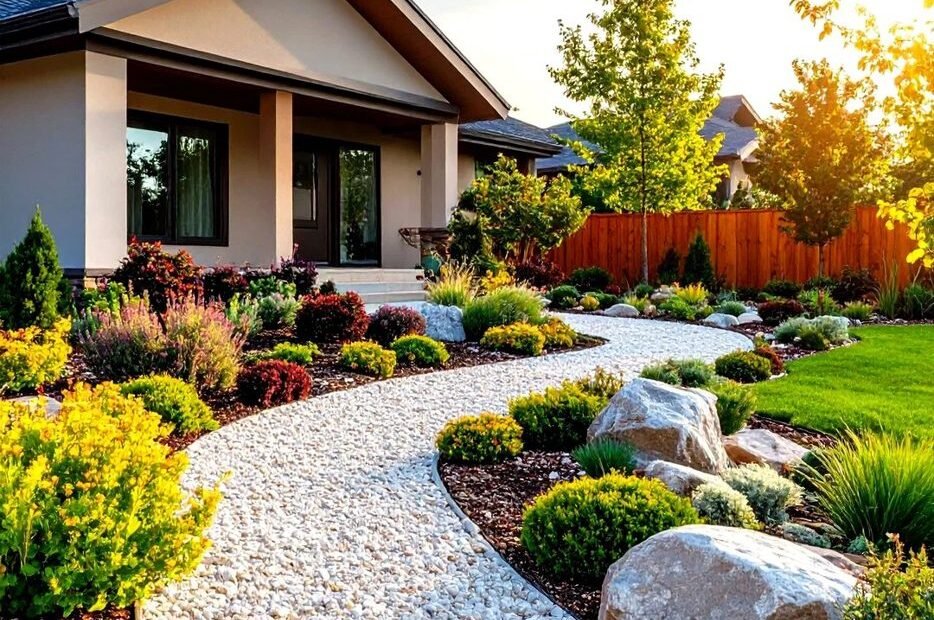
- Replace awkward lawn corners with hardscape — gravel, pavers or a pad under the bins and the bench
- Pick ground covers for slopes and shade where grass always struggled anyway
Checklist item one: the lawn demotion
Lawns are the highest-maintenance surface in most yards per square foot — mowing, edging, feeding, watering, reseeding — and most lawns are far bigger than the life lived on them. The single highest-return move is shrinking turf to the rectangle the family genuinely uses and converting the rest. What remains should be a low-fuss grass suited to the region, mowed high at 3 to 4 inches so the blades shade out weed seeds, and mulch-mowed so clippings return their nutrients instead of being bagged. A smaller, taller, self-feeding lawn can cut mowing time by more than half and irrigation with it. Every converted corner also removes the worst mowing geometry — the tight, sloped and shaded patches where grass never thrived and the mower always struggled.
Checklist item two: mulch as a system, not a garnish
Three to four inches of wood mulch is working equipment. At that depth it suppresses the great majority of weed germination by blocking light, holds soil moisture through dry weeks, buffers soil temperature and keeps beds looking finished. Lay it over landscape fabric where you want a durable barrier, or use the cardboard sheet-mulch method under new beds: overlapping cardboard, wetted down, then mulch on top — the cardboard smothers existing growth and rots into the soil within a season or two. Top up an inch each year or two rather than re-mulching from zero; a maintained mulch layer is a subscription that costs a few bags annually and returns hours. Keep mulch a few inches clear of trunks and stems, since mulch volcanoes against bark invite rot and rodents.
Checklist items three and four: plants that pension themselves
Perennials are the plant version of buy-it-once: they return each year, fill in over time, and many can be divided every few years into free plants. Pair them with shrubs chosen by their mature size, read off the label at purchase, so the plant’s adult dimensions match the space and pruning shrinks to an annual tidy rather than a monthly fight against a shrub swallowing a window. Native and regionally adapted plants deserve priority for a practical reason beyond fashion: they evolved with local rainfall, soil and pests, so they ask for less water, less feeding and less rescue. The EPA WaterSense guidance on water-efficient outdoor landscaping makes the same point from the water side — plant selection and zoning are where outdoor water budgets are actually decided. A bed of adapted perennials and right-sized shrubs, mulched and drip-fed, can be a look-at-it-monthly garden.
Checklist items five to eight: water, edges and the problem patches
Group the planting by thirst so irrigation never has to overwater nine plants to save one, and run beds on drip lines under the mulch with a simple timer: drip delivers water to roots instead of air, and mulch hides the hardware. Then hard-edge everything; a steel, stone or brick border between lawn and bed is what stops grass rhizomes marching into the mulch and gives the mower a wheel-track to follow, eliminating the separate trimming pass. The remaining classic trouble spots — the slope that erodes, the shade where grass dies annually, the strip beside the driveway — should stop pretending to be lawn: dense ground covers on slopes and shade, gravel or pavers under bins, gates and utility areas. Each conversion is permanent, which is the entire philosophy: pay once, in a weekend, for not doing a chore two hundred times. Paired with the street-facing half of the same philosophy in how to improve your home’s curb appeal cheaply, the whole property shifts from maintained to designed.
Ground covers and hardscape do the quiet work
Two checklist categories deserve more than a line each, because they retire the most recurring labor. Ground covers — creeping perennials planted densely enough to close ranks within a season or two — replace both lawn and bare mulch on exactly the ground where both fail: slopes that erode under a mower, deep shade under trees, the narrow side yard nobody enjoys cutting. Planted at the spacing the label suggests rather than the spacing the budget prefers, they knit into a living mulch that needs an annual trim at most; planted sparsely to save money, they leave weed gaps for three frustrating years, which is the false economy of this whole category. Hardscape is the other quiet worker. A gravel or paver pad under the bins, a stone step-path through a bed instead of a trampled mulch trail, a small patio where a worn lawn corner used to be — each one removes a weekly irritation permanently. Neither category photographs as dramatically as a flower bed in May. Both are still earning their keep in year ten, which cannot be said of the flower bed.
What maintenance actually remains
Honesty requires describing the far side of the conversion: a low-maintenance yard is not a no-maintenance yard, and pretending otherwise sets owners up to abandon the system. The realistic calendar looks like this. Spring: one mulch top-up of an inch or so in the beds, a check of the drip lines and timer, a single pruning pass on shrubs before growth hardens. Summer: mowing the reduced lawn every week or two depending on growth, spot-weeding that takes minutes because the mulch suppressed the rest, and a walk-past check that ground covers are closing their gaps. Autumn: leaf management — leaves are free mulch for beds but a smothering blanket on lawn — and dividing any perennials that have outgrown their station. Winter: nothing, which is rather the point. Total it and a converted yard commonly asks for a few hours a month where the unconverted one asked for a weekend. The system also degrades gracefully: skip a season and the yard looks shaggy, not ruined, because the structure — edges, mulch depth, right-sized plants — keeps working without you.
Year one is the weediest year — plan for it
One disappointment ambushes nearly every conversion: the first season after mulching and planting, the weeds still come. The system works on a lag. Perennials and ground covers are small in year one, leaving lit gaps where weed seeds germinate; mulch suppresses most of them, not all; and the seed bank already in the soil gets its last chances before the canopy closes. Owners who expected instant sterility conclude the method failed and reach for the old routine. The correct year-one posture is brief, frequent and shallow: a ten-minute pass every week or two, pulling seedlings while they are threadlike and before they seed, beats a monthly excavation of established weeds. Resist re-spraying or laying fresh fabric over problems mid-season; the closing canopy is the actual herbicide, and it arrives on schedule in year two. Treat year one as the apprenticeship the yard serves, and judge the conversion at the end of year two, which is when the promised hours actually materialize.
The first-year investment, honestly stated
None of this is free in year one: mulch by the bag or yard, edging materials, drip hardware and perennial stock add up, and a full front-and-back conversion typically lands in the hundreds rather than the thousands, depending on how much hardscape is involved. The return is measured in recurring time — commonly several hours a month of mowing, weeding and watering handed back — plus a smaller water bill. Spread the project by zones if budget or weekends are tight: beds this spring, lawn reduction in autumn, ground covers next year. The checklist works partially; a yard that is 60 percent converted already feels like a different property to maintain. The goal is not a yard that needs nothing. It is a yard that needs an hour where it used to need a day, and looks better for the change.