Hour three is where it happens. The highway has gone flat and quiet, someone in the back seat pries open a bag of crumbly crackers, and half of it lands between the cushions. A chocolate bar that looked fine at the last stop is now a soft smear on small fingers, then on the seat belt, then on everything the hand touches next. The drive still has four hours to go, and the car already smells faintly sweet and stale.
That scene is preventable, and the prevention starts the night before, not at a gas station on the morning of the trip. Follow one family drive from packing to the final stretch, and the rules become the difference between a car that stays clean and fed, and one that turns into a rolling cleanup project.
The Night Before: Packing With a Plan
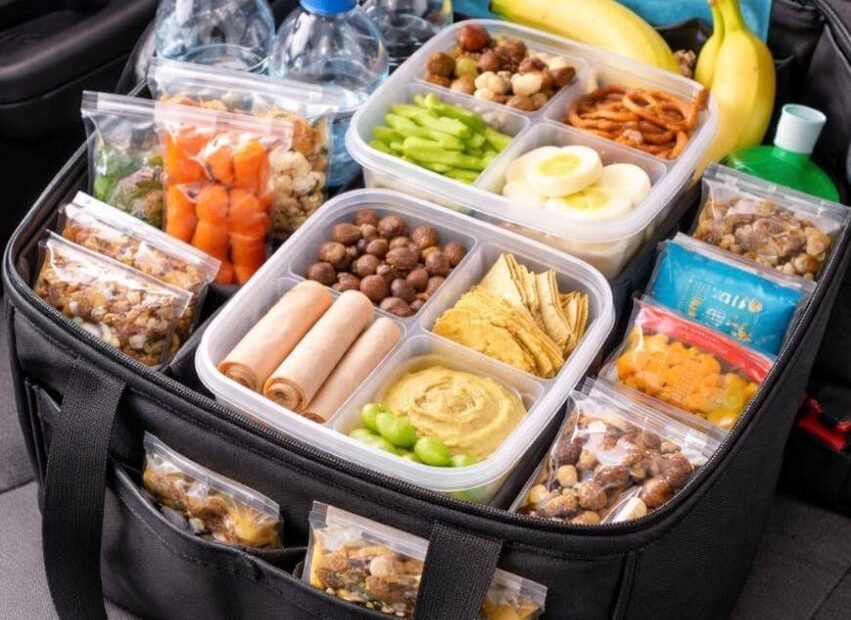
The work begins at the kitchen counter after dinner. Bags get portioned, the cooler gets staged in the fridge, and nothing is left for a rushed morning grab. Portioning matters more than it sounds. A full pound bag of trail mix handed to the back seat will be gone, unevenly, within an hour. The same mix split into small bags lasts the whole drive and stops the argument about who ate more.
The balance is simple: about half the snacks should be satisfying protein and fat, about a quarter fresh, and about a quarter pure fun. Protein and fat keep people full, so requests from the back seat slow down. Fresh food cuts the heavy, salty feeling that builds after hours of packaged snacks. The fun quarter keeps morale up.
On the counter, the satisfying half comes together first. Beef or turkey jerky goes in because it needs no refrigeration, makes no mess, and a small amount fills a real gap. Roasted chickpeas add crunch with protein and fiber. Nut butter packets go in for the same reason: squeeze them onto apple slices or crackers, and a light snack becomes a filling one. Granola bars get checked for chew. Chewy bars travel well. Crunchy bars shatter into exactly the crumbs the whole plan is trying to avoid.
The fresh quarter gets washed, dried, and packed where it will stay cold. Apples, whole or sliced. Grapes, pulled from the stem so small hands can manage them. Baby carrots with single-serve hummus cups. String cheese, which is portioned by design and peels into a small activity as well as a snack.
The fun quarter stays modest on purpose. Dried mango for chewy sweetness that does not melt. Fruit leather, flat and tidy in its packet. A small bag of popcorn, light and salty. Pretzels, sturdy and far less crumbly than chips. Rice crackers for anyone who wants a crisp bite without a greasy hand. Two muffins per person, wrapped on their own, because a muffin at a rest stop solves breakfast and a mid-morning slump at the same time.
The Cooler, Loaded the Smart Way
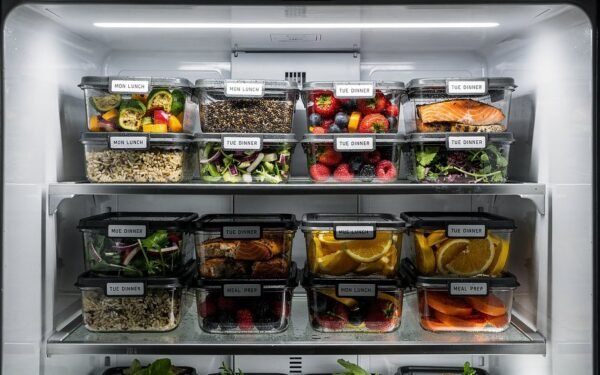
Morning comes, and the cooler is the last thing packed and the first thing placed. Frozen water bottles do the work of ice. They keep the food cold for hours, they do not melt into a pool that soaks labels and cardboard, and as they thaw they become cold drinking water. That one choice removes the soggy cooler problem entirely.
Perishables go in the middle of the cooler, surrounded by the frozen bottles, because the middle holds the coldest, steadiest temperature. String cheese, hummus cups, and hard-boiled eggs live there. The eggs were peeled at home the night before, which saves a shell-filled mess in the car, and they are planned for early in the drive, before hours of opening and closing warm the cooler up.
Placement in the car matters as much as placement inside the cooler. The cooler rides in the cabin, within reach of a passenger, not in the trunk. A trunk on a sunny day turns into an oven, and a cooler back there is both warmer and useless at the moment someone actually wants a snack. In the cabin, a passenger can hand food back without anyone twisting around or digging through luggage at speed. A separate small bag of shelf-stable snacks sits near the front seat for the same reason: jerky, pretzels, popcorn, and granola bars should never require a stop to reach.
Two plain items finish the loading: a roll of paper towels and a small trash bag, opened and ready before the car moves. A bag that is already open collects wrappers without a thought, and the car at hour six looks much like the car at hour one.
Hour One: Settling In
The first hour asks for very little. Everyone had breakfast, and the best move is water and something light. Grapes come out first: cold, drip-free, and slow to eat. For the driver, the rule that governs the whole list shows up early: everything must work one-handed. A snack that needs two hands, a spoon, or a lap to balance on is not a road snack.
Hour Three: Where Drives Usually Go Wrong
Back to hour three, the danger hour. This is when hunger, boredom, and restlessness arrive together, and when a poor snack stock does its damage. In the well-packed car, the crumbly cracker bag from the opening scene simply is not there. In its place, baby carrots and a hummus cup give the crunch people are actually craving, with almost nothing left behind on the seats.
The chocolate smear does not happen either, and the reason is a temperature rule worth memorizing: above about 75°F, chocolate stays out of the cabin snack bag. A parked car, a warm back seat, even a sunny window ledge will soften it fast. If chocolate travels at all on a warm day, it lives in the cooler, in small amounts, and comes out to be eaten right away. The trail mix for this drive was mixed with that rule in mind, heavy on nuts and seeds, light on anything that melts.
Odor gets its moment here too. Hours into a closed car, strong smells have nowhere to go. That is why the list favors mild food: no tuna, no pungent cheese, nothing heavily spiced with garlic. The hard-boiled eggs are the one exception, and the plan handles them by timing, eaten early and finished, rather than opened at hour five. Low odor is not about politeness alone. A car that smells like lunch makes everyone feel worse on a long drive.
Crumbs follow the same logic. Popcorn and pretzels brush off a seat in seconds. Flaky pastry, powdered coatings, and brittle crackers grind into fabric and reappear for months.
The Middle Hours: Protein Does the Quiet Work
By the middle of the drive, the pattern is set. Roughly every hour or so, something with protein appears: a stick of jerky, a string cheese, a handful of roasted chickpeas, a nut butter packet on apple slices. None of it is a meal. All of it together keeps energy level, which keeps the car calm. A snack run built only on sugar and plain starch gives a quick lift and a slump after it, and the slump at hour four feels much longer than the lift at hour three.
The fresh food earns its place here too. After salty jerky and rich nut butter, an apple tastes sharper and cleaner than it would at the start. Alternating rich and fresh keeps any one flavor from wearing out.
Water stays constant through all of it. Thirst often shows up disguised as hunger and tiredness, and the melting bottles mean cold water is always on hand without a stop.
Kids, Chapters, and the Final Stretch
For the children in the back, the drive is not measured in miles. It is measured in how often something new happens. The parents on this drive use a rough rhythm: a new snack about every 45 minutes. Each one is small. Each one is a short event, a choice, a packet to open. Strung together, those small events cut a long drive into chapters, and chapters feel survivable in a way that one endless stretch does not.
The kid selection mirrors the grown-up list in smaller, easier forms: string cheese, grapes, apple slices, baby carrots, pretzels, popcorn in a cup that limits spills, fruit leather, and a mini muffin. Many of the same ideas pull double duty at home during the school week, which is why thinking about healthy snacks for kids’ lunchboxes pays off here too: the foods a child already knows and accepts are the foods that work in a car seat.
One item is held back on purpose. A single special treat, the thing each kid likes most, stays hidden until the final stretch of the drive. When energy and patience are at their lowest, that treat lands like a reward for the whole trip. Handed out at hour one, it would have been forgotten by hour two. Saved, it carries the car through the last forty minutes.
That pacing approach lines up with the Academy of Nutrition and Dietetics’ snacking guidance, which favors planned, balanced snacks over constant grazing: protein paired with produce, portions set in advance, and treats placed with intent rather than scattered through the day.
The Stop That Proves the Savings
Late in the drive, the car pulls into a gas station for fuel and a stretch. Inside, the prices make the case for the cooler all over again. A single bag of chips, a candy bar, and a bottled drink for each person add up fast. Packing a full day of snacks for a family from home runs roughly $15 to $25. Buying the same day piece by piece at gas stations and rest stops runs roughly $40 to $60, for food that is saltier, sweeter, and messier than what is already in the car.
The family buys one cold drink each and gets back on the road. The cooler still has cheese, fruit, and the saved treats, and the trash bag, tied off at the stop, kept the cabin clean enough that the car still feels pleasant to sit in.
Arrival, With the Car Still Clean
The drive ends as designed: nobody arrives starving or crashing, and the back seat needs a quick brush-out instead of a deep clean. Leftovers go straight into the fridge or back into the pantry for the return trip.
The whole system is only a few choices repeated: one-handed food, nothing that melts outside the cooler, low odor, low crumb, protein in roughly half of everything, frozen bottles for ice, the cooler in the cabin, and snacks paced out like chapters for the kids. All of it takes the night before. Pack then, and hour three is just another hour.