
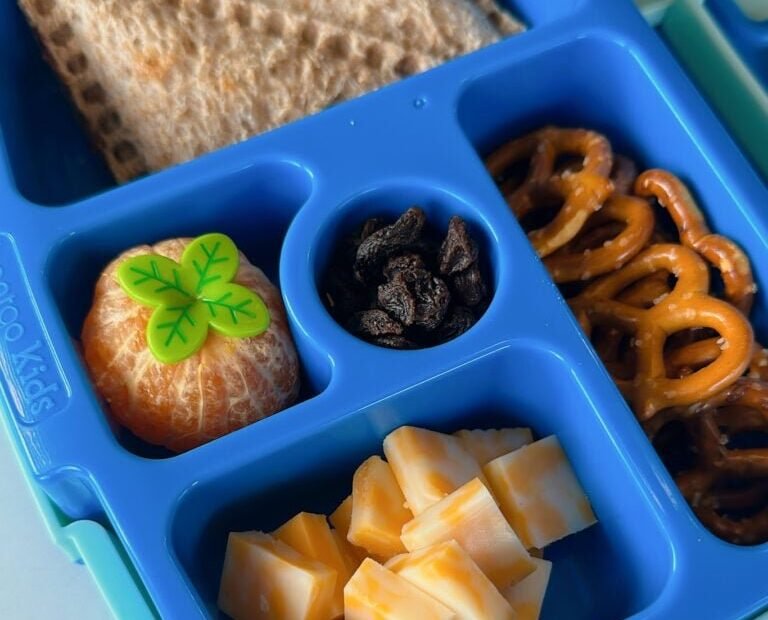
Packing a healthy lunchbox feels like a daily negotiation between what you want them to eat and what they’ll actually eat. The uneaten apple that comes home every day isn’t nutrition — it’s compost with extra steps. The real goal isn’t the healthiest possible lunchbox. It’s the healthiest lunchbox your kid will finish.
After years of packing lunches and watching what comes home uneaten, I’ve learned that kid-approved healthy snacks follow a formula: familiar plus one small twist, easy to eat, and — this matters more than parents admit — fun to open. Here’s what works, organized by what kids actually reach for.
The Formula for Healthy Snacks for Kids’ Lunchboxes
Every good lunchbox snack hits three notes: protein or fat for staying power, something fresh, and something fun. A lunch of pure carbs (crackers, pretzels, fruit snacks) spikes blood sugar and leaves kids crashing by afternoon. Add protein and the same lunch sustains them: cheese with those crackers, peanut butter with the apple, yogurt with the berries. You don’t need a nutrition degree — just make sure something in the box has staying power.
Involvement is the secret weapon. Kids eat what they choose and what they help make. Let them pick two snacks from a parent-approved list each week, or assemble their own bento-style boxes on Sunday. A kid who chose the edamame will eat the edamame; the same edamame imposed from above comes home untouched. Autonomy is a more powerful seasoning than salt.
Packing for Safety and Freshness
Food safety in lunchboxes is genuinely important — a lunchbox sits at room temperature for hours. Use an insulated lunch bag with a frozen water bottle or ice pack; it keeps food cold until lunch and becomes drinking water as it melts. Perishables like yogurt, cheese, deli meat, and cut fruit need that cold source. As a rule, don’t pack anything you wouldn’t leave on the counter for four hours without ice.
Allergy awareness matters too. Many schools are nut-free, so check your school’s policy before packing peanut butter — sunflower seed butter and roasted chickpeas are excellent nut-free protein alternatives. And cut grapes, cherry tomatoes, and hot dogs lengthwise for younger kids; whole round foods are choking hazards, and it’s a two-second fix.
Reference: USDA MyPlate guidance for kids.
Reference: American Academy of Pediatrics nutrition resources.
25 Healthy Lunchbox Snacks Kids Actually Eat
Mix and match 2 to 3 per day:
- Apple slices with sunflower seed butter cups — crunchy, protein-rich, and nut-free for school.
- Cheese cubes and whole-grain crackers — the classic, because it works.
- Greek yogurt tubes (frozen) — they thaw by lunch and keep everything else cold.
- Baby carrots and hummus cups — the crunch kids crave, with staying power.
- Hard-boiled eggs — pre-peeled, with a tiny salt packet. Protein powerhouse.
- Banana with a cheese stick — nature’s pre-wrapped snack plus protein.
- Edamame (shelled, lightly salted) — fun to pop, surprisingly kid-popular.
- Whole-grain mini muffins (homemade) — bake a batch Sunday, freeze, grab and go.
- Berries in a small container — nature’s candy, no prep beyond washing.
- Turkey and cheese roll-ups — deli meat wrapped around a cheese stick, no bread needed.
- Popcorn (lightly salted) — whole grain, high volume, very snackable.
- Cucumber rounds with cream cheese — cool, crunchy, and fun to assemble.
- Roasted chickpeas — crunchy like chips, with fiber and protein.
- Pita triangles and tzatziki — feels like a treat, eats like a balanced snack.
- Pineapple chunks or mandarin cups (in juice) — sweet, hydrating, lunchbox-safe.
Dealing With the Picky Eater
For genuinely picky kids, play the long game: the ‘one bite’ rule for new foods, repeated exposure without pressure (it can take 10 to 15 exposures before a kid accepts something), and bridging — pairing a new food with a loved one. Broccoli is suspicious; broccoli with ranch dip is an experiment worth trying. Never make it a battle. Pressure backfires and creates food aversions that outlast childhood.
Also, audit what’s coming home. An untouched lunchbox for a week straight is data, not defiance — something about those choices isn’t working for your kid. Ask them why (too messy? too hard to open? too weird-looking in front of friends?) and adjust. The social dynamics of the school cafeteria are real, and a lunch your kid is embarrassed to open is a lunch that won’t get eaten.
Quick Answers to Common Questions
How do I keep lunchbox food safe until lunchtime?
Use an insulated lunch bag with a frozen water bottle or ice pack — it keeps perishables cold for 4–5 hours and becomes drinking water as it melts. Pack yogurt, cheese, deli meat, and cut fruit against the ice pack. As a rule, don’t pack anything perishable you’d leave on the counter for 4 hours without ice. When in doubt, freeze the yogurt tube — it doubles as the ice pack.
What if my school is nut-free?
Check your school’s policy first — many are strictly nut-free. Sunflower seed butter is the closest peanut butter substitute (similar taste and texture), roasted chickpeas and pumpkin seeds replace nut-based crunch, and cheese, yogurt, hummus, and deli roll-ups cover the protein. Always read labels: ‘may contain’ warnings matter for allergic kids, so choose certified nut-free products when required.
How do I get my picky eater to try new lunchbox foods?
The long game: repeated low-pressure exposure (it takes 10–15 tries), the ‘one bite’ rule, and bridging — pairing new foods with loved ones (broccoli is suspicious; broccoli with ranch is an experiment). Let them choose from your approved list — autonomy beats authority. And never make it a battle; pressure creates aversions that outlast childhood.
More from Daily USA Post
- Keep reading: what are the best reality shows to watch with friends
- Related: what are the best escape room themes for first-timers
- how can I start a podcast with no expensive equipment, explained in detail
The best healthy snacks for kids’ lunchboxes balance protein, freshness, and fun — cheese and crackers, yogurt, fruit with a protein partner, crunchy veggies with dip — packed in an insulated bag with an ice pack. Let kids choose from your approved list, watch what comes home uneaten, and adjust without pressure. A finished ‘pretty healthy’ lunch beats an untouched ‘perfect’ one every single day.



