
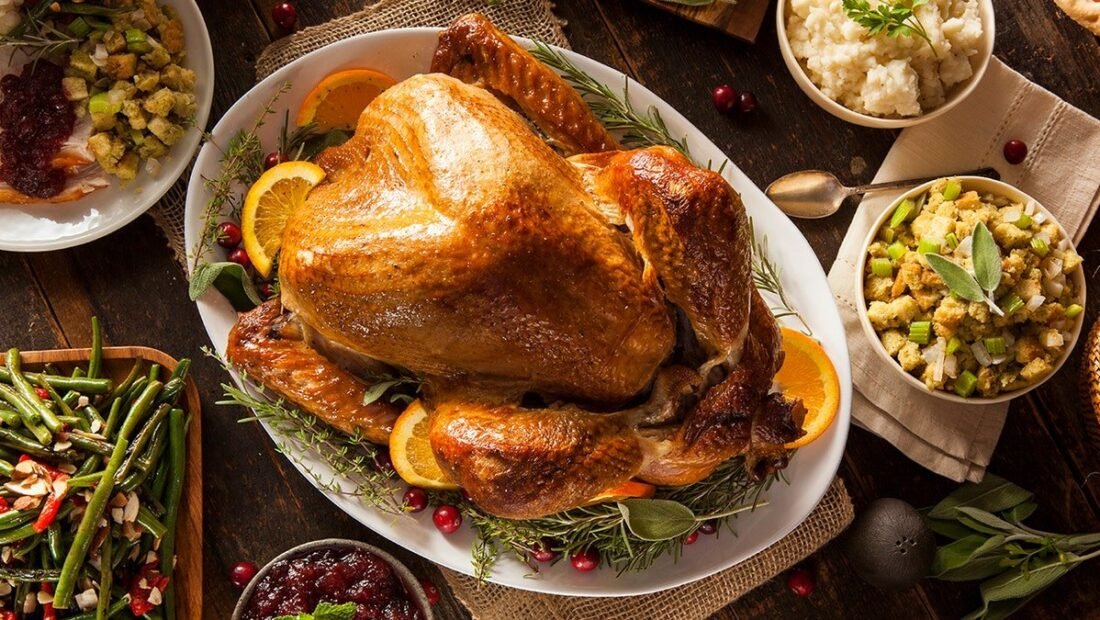
Every Thanksgiving table has a turkey, and too many of them are dry. Not slightly dry — sawdust dry, gravy-dependent dry, the-kind-of-dry-that-makes-people-reach-for-ham dry. It doesn’t have to be this way. A juicy turkey isn’t luck or genetics; it’s technique, and the technique is simpler than the internet makes it look.
I’ve cooked more Thanksgiving turkeys than I can count, for crowds from six to thirty, and the method below has never failed me. It comes down to four things: brining, not overcooking, resting, and ignoring half the advice your relatives will offer. Let’s make this the year your turkey is the thing people talk about.
Brine It: The Single Biggest Step Toward a Juicy Turkey for Thanksgiving
If you do one thing differently this year, brine the bird. A wet brine — the turkey submerged in salted water for 12 to 24 hours — seasons the meat deeply and helps it retain moisture during cooking. The basic ratio: 1 cup of kosher salt per gallon of water, plus aromatics like bay leaves, peppercorns, and citrus if you’re feeling fancy. The turkey needs to stay under 40°F the whole time, so use a brining bag in a cooler with ice or clear serious fridge space.
Short on space or time? Dry-brine instead. Rub the turkey all over with kosher salt (about 1 tablespoon per 4 pounds), refrigerate uncovered for 24 to 48 hours, and skip the giant bucket. Dry brining gives you seasoned, juicy meat plus crispier skin than wet brining — many chefs now prefer it. Either way, rinse off excess salt and pat the bird completely dry before roasting. Wet skin steams; dry skin crisps.
Temperature: The Only Doneness Metric That Matters
Throw away the pop-up timer that came with the turkey. Those things are set to absurd temperatures and are the number-one cause of dry birds nationwide. Buy a $15 probe thermometer and cook to temperature: pull the turkey when the thickest part of the breast reads 150°F and the thigh reads 165°F. Yes, 150 for breast — carryover cooking during the rest will bring it safely past 160, and the USDA confirms poultry is safe when held at 150°F for several minutes.
Roast at 325°F to 350°F — low enough for even cooking, high enough for browned skin. Start breast-side down for the first hour if you want extra insurance for the breast meat, then flip. Shield the breast with foil if it browns too fast. And for the love of gravy, don’t stuff the bird if juiciness is the goal — stuffing forces you to overcook the meat waiting for the center of the stuffing to hit 165°F. Cook dressing separately; it’s better anyway.
Reference: USDA turkey roasting and food safety guide.
Reference: Butterball’s turkey cooking calculators.
Juicy Turkey Rules
The complete checklist, from purchase to carving:
- Buy right: plan 1 to 1.5 pounds per person (more if you want leftovers). Fresh beats frozen if you can get it; thaw frozen birds in the fridge, 24 hours per 4 pounds.
- Brine wet or dry, 12 to 48 hours. This is the highest-impact step in the whole process.
- Pat the skin completely dry and rub with butter or oil plus salt and pepper. Dry skin equals crisp skin.
- Roast at 325–350°F on a rack in a roasting pan so hot air circulates underneath.
- Use a probe thermometer. Breast to 150°F, thigh to 165°F. Ignore the pop-up timer entirely.
- Rest the turkey 30 to 45 minutes tented loosely with foil before carving. Juices redistribute; skip this and they flood the cutting board.
- Carve properly: remove legs and thighs first, then slice the breast meat against the grain in even slices.
Troubleshooting on the Big Day
Breast done but thighs raw? Next year, consider spatchcocking — removing the backbone and flattening the bird. It cooks faster and more evenly, and the skin gets incredibly crisp. This year, just tent the breast with foil and keep roasting until the thighs hit temp. Skin not browning? Your oven might run cool, or the bird went in wet — crank to 400°F for the last 20 minutes and watch it like a hawk.
Running behind schedule? A turkey rests happily for up to an hour tented in foil, which gives you a generous buffer. Running ahead? Same trick — the rest window is flexible. The turkey is the most forgiving part of Thanksgiving once you stop cooking it by the clock and start cooking it by temperature. Your thermometer is the boss; the clock is just a suggestion.
Frequently Asked Questions
Should I stuff my turkey or not?
Cook the stuffing separately — it’s better in every way. In-bird stuffing forces you to overcook the meat waiting for the stuffing’s center to hit 165°F, and it blocks hot air from circulating inside the bird. Separate dressing gets crispy edges, cooks evenly, and lets the turkey roast to perfect temperature. This is the rare case where tradition is just wrong.
How long should a turkey rest before carving?
Thirty to forty-five minutes, tented loosely with foil. This isn’t optional — resting lets the juices redistribute through the meat instead of flooding the cutting board. A turkey can rest happily for up to an hour, which conveniently gives you a buffer for finishing sides and gravy. Plan the rest into your timeline, not around it.
What size turkey do I need?
Plan 1 to 1½ pounds per person — 1 pound if you don’t care about leftovers (though why wouldn’t you?), 1½ if you want the glorious leftover week. A 12–14 pound bird feeds 8–10 generously. Bigger birds (over 18 pounds) cook less evenly; for huge crowds, two smaller turkeys beat one monster every time.
More from Daily USA Post
- Also see: how can I make restaurant-quality guacamole at home
- Our complete guide: what are the best comedy shows to binge on a weekend
- how do I find concerts happening near me — what you need to know
A juicy turkey for Thanksgiving comes from brining (wet or dry), roasting to temperature instead of time (150°F breast, 165°F thigh), resting 30 to 45 minutes, and skipping the in-bird stuffing. Get a probe thermometer, trust it over the pop-up timer, and this year’s bird will be the one people request again next year. Dry turkey is a choice — and now you know how to choose otherwise.




1 Comment