
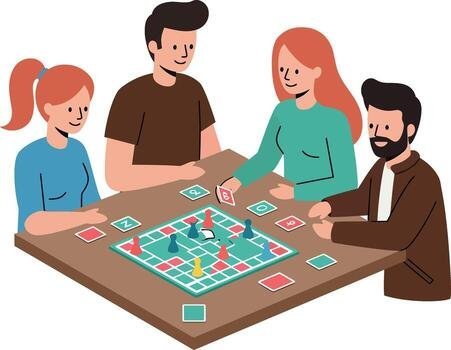
Four hours into Monopoly, one player was eliminated in the first hour and is watching television, two others are locked in a property dispute, and the evening ends early with nobody asking to play again. That pattern is so common that many adults conclude they dislike board games, when the real problem is one old game with design flaws that modern games fixed decades ago.
Modern board games are built around choices, time limits, and keeping every player in the game to the end. The range runs from ten-minute word games for eight people to long strategy games, so the useful question is which design family fits the group at the table.
What Monopoly Gets Wrong, and What Changed
Player elimination is the first flaw. In Monopoly, going bankrupt means sitting out while the game continues, sometimes for hours. The person with the least fun gets the longest wait. Modern games almost never do this. Players stay active to the final turn, and scoring often stays close enough that a comeback remains possible.
Roll-and-move is the second flaw. A dice roll decides where a token lands, and the landing spot decides what happens. There are trades and purchases, but long stretches pass with no real decision to make. Modern designs hand the decision to the player: which card to keep, which route to claim, which tile to draft, which engine to build. Luck still appears, but it sets up a choice instead of replacing one.
The missing ending is the third flaw. Monopoly ends when everyone else is ruined, which can drag well past the point of enjoyment and makes the length impossible to plan. Modern games use a reliable ending trigger: a set number of rounds, a points target, a deck running out, or a board filling up. A host can honestly say a game takes forty minutes and be right.
Those three fixes explain most of the shelf below. Gateway games prove the point quickly. Strategy games stretch the same principles over two or three hours. Party and deduction games apply them to laughter and bluffing instead of points.
Gateway Games: Real Decisions in Under an Hour
Ticket to Ride. Players collect colored cards and claim train routes across a map, trying to complete destination tickets for extra points. It takes about 10 minutes to learn and plays in under an hour. The decisions are clean: take cards now or claim a route before someone else blocks it. Turns move fast, nobody is eliminated, and the map filling up creates tension without direct attacks. For a first modern game, it remains the safest recommendation.
Codenames. Two teams compete to find their words on a grid from one-word clues given by a spymaster. The fun comes from hilarious misunderstandings: a clue meant to connect three words reminds a teammate of a fourth word the clue giver forgot was there. It plays 8 or more with ease, needs almost no setup, and turns quiet players into passionate debaters within one round. Few games produce table-wide laughter this reliably.
Splendor. A gem-collecting engine builder with almost no text and a calm, elegant feel. Players take gems, buy cards, and use those cards as permanent discounts toward better cards, racing to be first to 15 points. Each turn offers one clear choice, yet the engine slowly changes what that choice is worth. It works as well at 2 as at 4, which makes it unusually flexible for couples and small groups alike.
Azul. Players draft beautiful tiles from shared displays and place them on a personal board to score patterns. The drafting creates just enough spite: taking a tile an opponent needs, or leaving a pile someone is forced to pick up at a bad time, is legal, visible, and satisfying. Rounds are short, scoring is clear, and the physical tiles make the game pleasant to handle even for people who rarely play.
Any one of these four disproves the Monopoly hangover in a single evening. Rankings and player counts for thousands of alternatives can be checked on BoardGameGeek’s game rankings and player reviews, which is the hobby’s main reference shelf.
Deeper Strategy: When the Group Wants a Real Workout
Wingspan. A bird-sanctuary engine builder with a gentle look and sharp play underneath. Players attract birds to habitats, and each bird adds a power that strengthens future turns: draw more cards, gather more food, lay more eggs. The theme feels peaceful, the components are lovely, and the competition is real without being hostile, since players mostly build their own sanctuary better rather than tearing down a rival’s. It suits adults who want depth without a war game’s tone.
Brass: Birmingham. An economic strategy game about building industries and networks during the Industrial Revolution. Cards limit where actions can happen, loans and timing matter, and the board state changes between eras in a way that rewards planning. Expect 2 to 3 hours, and learn the rules beforehand: one person should watch a teach or read the rulebook before game night, because learning this weight of game cold at the table will swallow the evening.
Terraforming Mars. Players run corporations raising the temperature, oxygen, and ocean coverage of Mars until the planet becomes habitable. Hundreds of project cards create different engines each game, and the shared board fills as the global targets climb. It also runs 2 to 3 hours and rewards a prepared teach. Choose it for a group that enjoys long arcs, table talk about big plans, and a clear finish line reached together even while competing for the win.
The gateway shelf should come first for mixed groups. Deeper games land best when players already trust that a board game can end on time and keep everyone involved.
Big Groups and Cooperation: Winning or Losing Together
The Crew. A cooperative trick-taking game, which sounds like a contradiction until the first mission. Players win standard tricks, but specific players must win specific cards, in a set order, with communication sharply limited. Missions grow harder in small steps, and silent table tension replaces the usual trick-taking banter. It works for card players who think cooperation means a soft game; this one is a puzzle under pressure.
Just One. A cooperative word game built for groups. One player guesses a mystery word while everyone else writes a single clue, but identical clues cancel each other out, so obvious help disappears and creative help wins. That one rule produces groans, cheers, and very funny arguments about what counts as a duplicate. It plays quickly, teaches in a minute, and includes shy players without putting any one person on stage for long.
Cooperation changes the social math of game night. Nobody leaves the table beaten by a friend, new players can ask for advice openly, and the group shares one story afterward. For a host building a regular night, a cooperative title earns its shelf space early.
Social Deduction: Lying With a Structure Around It
The Resistance. Teams go on missions while hidden spies try to fail them without being identified. There are no player eliminations and no moderator needed; voting on mission teams creates the debate, and each failed mission narrows the suspects. Games run short, arguments run long, and the same group will demand a rematch to settle who read whom correctly.
Blood on the Clocktower. A larger, richer deduction game for groups that want a full evening of it. A storyteller runs the game, dead players stay involved as ghosts who still talk and vote once, and character abilities keep information messy in entertaining ways. It needs a bigger group and a confident storyteller, but for the right crowd it becomes the game people talk about for weeks. The design directly answers the Monopoly problem: even death does not mean watching television.
Trivia With a Twist: Knowledge Optional
Wits & Wagers. Every question has a numerical answer, and players write a guess, then bet on whose guess is closest. Non-experts can win because reading the table matters as much as knowing facts: the confident player might be bluffing, the wild guess might be nearest, and small bets on safe answers can beat one big bet on a hunch. It is the rare trivia game where the least knowledgeable person at the table still has a real path to victory, which keeps the whole group betting to the final question.
Building a Starter Shelf That Actually Gets Played
A small shelf beats a large one. Start with three gateway titles that cover different moods: Ticket to Ride for a calm competitive hour, Codenames for a loud group, and Splendor or Azul for two to four players on a quieter night. Add Just One or The Crew once the group asks for cooperation, and one deeper title such as Wingspan when the table wants more. That is a shelf of five or six games that can host almost any adult group without repeating itself too soon.
Getting games played is a hosting skill more than a buying skill. Three habits make the difference:
- Teach in five minutes. The host learns the rules before guests arrive, explains the goal, the turn, and how the game ends, then starts playing. Details can be taught as they come up. A long rules lecture before anyone touches a piece is where game nights die.
- The host owns the rules. One person answers questions and keeps turns moving, so guests can relax and just make choices. That ownership is hospitality, the same as handling the food.
- Start with the gateway shelf. Save Brass: Birmingham for a group that has already enjoyed two or three shorter games together and is asking for something bigger.
That approach pairs well with how to plan the perfect game night for couples, since smaller groups need the same mix of a quick teach, a firm ending time, and a first game chosen for the players rather than the box art.
End while energy is still high, name the next game before people leave, and the shelf earns its keep. Adults who hate Monopoly rarely hate games. They hate waiting, watching, and wondering when it ends. Modern games solved all three, and one evening with Ticket to Ride or Codenames usually settles it.




1 Comment