Grow lights are the default recommendation for seed starting — and at $30–$100 plus electricity, they’re a real investment. But here’s what the grow-light industry doesn’t emphasize: Texas has one of the best free grow lights in the world, and it’s called the sun. Starting seeds without grow lights isn’t just possible; in Texas’s climate, it’s often easier than the indoor-light rigmarole, because you can work with natural light and warmth that northern gardeners can only dream about in February. The trick is timing, placement, and choosing the right method for each seed type. For more detail on a related topic, see our article on can ai help me plan your garden based on your location.
Why Texas Is Ideal for Light-Free Seed Starting
- Abundant winter/spring sun: by February, Texas gets 10–11 hours of daylight with strong intensity — enough for most seedlings on a bright windowsill or patio.
- Early last-frost dates: South Texas’s last frost is February; Central Texas March; even the Panhandle is April. You need far less indoor head-start time than northern zones.
- Warm soil early: many seeds germinate based on soil temperature, and Texas soil warms weeks before northern soil. Direct sowing works for far more crops here.
Method 1: The Sunny Windowsill (Simplest)
For herbs, lettuce, and small batches:
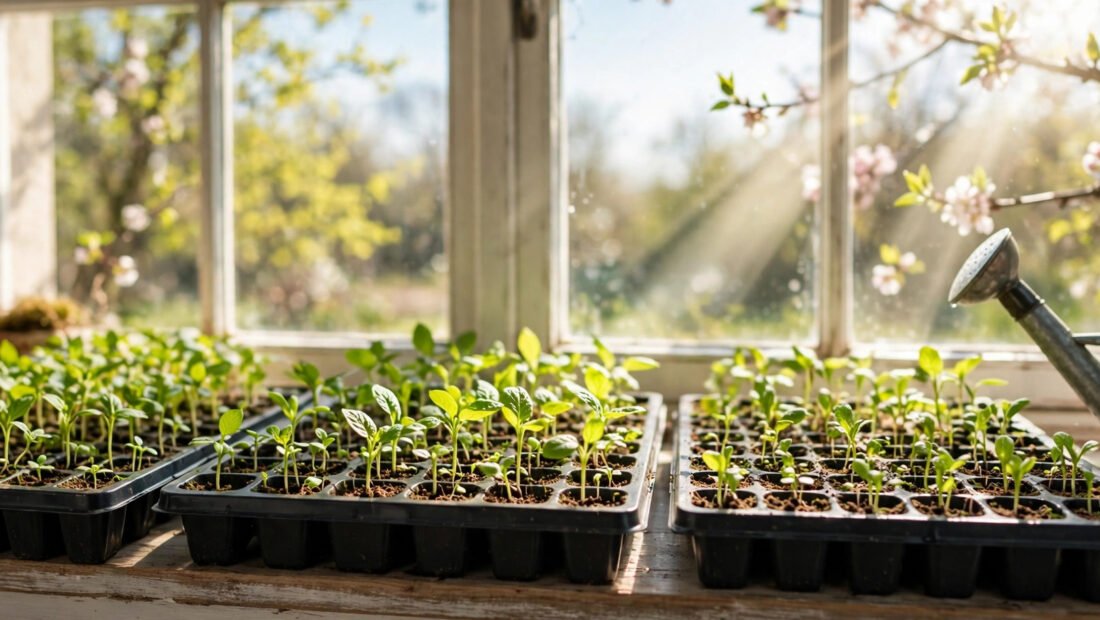
- South-facing window is mandatory — east or west work marginally; north-facing won’t cut it. The sill should get 6+ hours of direct sun.
- Rotate daily: seedlings lean toward light; a quarter-turn daily keeps them straight.
- Keep lights-close principle: without grow lights, the window is the light — keep seedlings within inches of the glass.
- Supplement with reflection: line a cardboard box with aluminum foil and place it behind the seedlings (shiny side toward plants). This bounces light onto the shaded side and dramatically reduces legginess — the poor gardener’s grow light.
- Watch for legginess: tall, pale, floppy stems mean insufficient light. Move closer to glass, add the foil reflector, or move to Method 2.
Method 2: Outdoor Protected Starting (Best for Texas)
This is the Texas secret weapon — a mini-greenhouse on your patio or balcony:
- The setup: seed trays inside a clear plastic storage tote with the lid on (propped slightly for airflow), placed in a spot with morning sun and afternoon shade. The tote creates a humid, warm microclimate — essentially a free greenhouse.
- Temperature control: Texas spring days can overheat a closed tote to 120°F+ — lethal. Vent the lid when temps exceed 85°F inside; close at night if frost threatens. A $5 min-max thermometer from any garden center takes the guesswork out and pays for itself the first time it prevents a cooked tray.
- Cold frames: for the handy, a simple wooden box with an old window on top works all winter in Central and South Texas — no electricity, just solar gain.
- Wall-o-Water / cloches: individual plant protectors let you start heat-lovers (tomatoes, peppers) outdoors weeks early.
Method 3: Direct Sow (Skip Starting Entirely)
Many Texas gardeners overcomplicate this — half your garden can go straight in the ground:
- Direct-sow champions: beans, peas, corn, squash, cucumbers, melons, okra, sunflowers, zinnias, cosmos — all germinate readily in warm Texas soil and resent transplanting anyway.
- Soil temperature is the trigger: beans and squash want 70°F+ soil; peas and lettuce germinate in 45°F+ soil. A $10 soil thermometer removes all guessing.
- Succession sowing: sow small batches every 2 weeks for continuous harvests rather than one overwhelming planting.
- Winter sowing in milk jugs: sow hardy seeds in vented milk jugs left outdoors in January–February — they germinate when conditions are right, naturally hardened off. Magically low-effort.
What Actually Needs Indoor Starting in Texas
Be strategic — only start indoors what benefits:
- Worth starting: tomatoes, peppers, eggplant (long season, slow starters — 6–8 weeks head start pays off), onions from seed, and slow herbs (rosemary, thyme).
- Not worth starting: anything in the direct-sow list above, plus fast growers like radishes and arugula.
- Timing math: count backward from your area’s last frost date (find it via your county extension office). Tomatoes: start 6–8 weeks before; peppers: 8–10 weeks. In South Texas, that means January starts — when the windowsill sun is already strong.
Preventing the Classic Failures
- Leggy seedlings: insufficient light (the #1 issue without grow lights). Fix with the foil reflector, closer window placement, or moving outdoors to the tote greenhouse.
- Damping off: fungal disease that kills seedlings at the soil line. Prevent with sterile seed-starting mix (not garden soil), bottom watering, airflow (a small fan on low nearby works wonders), and cinnamon dusted on the soil surface (mild antifungal).
- Transplant shock: harden off over 7–10 days — increasing outdoor hours gradually. Texas sun is intense; unhardened seedlings sunburn in hours.
- Overwatering: the other #1 killer. Keep mix moist like a wrung sponge, not soggy. Bottom-watering prevents most issues.
For ongoing plant care once seedlings are up, keeping plants alive with a busy schedule covers the low-maintenance routines that work for indoor growing too.
Conclusion
Starting seeds without grow lights in Texas plays to the state’s strengths: strong winter sun, early springs, and warm soil. Use the south-facing windowsill with a foil reflector for small batches, the tote-greenhouse on the patio for serious starting, and direct sow everything that tolerates it — which in Texas is most things. Reserve indoor starting for the long-season crops that earn it (tomatoes, peppers, eggplant), time everything backward from your county’s last frost date using a simple calendar, harden off religiously over 7–10 days, and label every tray — by April you won’t remember which seedlings are which. You’ll save the cost of lights and electricity, skip the timer-and-height-adjustment fuss of indoor rigs entirely, and your seedlings — raised under the actual Texas sun from day one — will be sturdier and better hardened than anything grown under purple LEDs. Your county’s Texas A&M AgriLife Extension office offers free planting calendars tuned to your exact county. The National Gardening Association provides seed-starting charts and frost-date tools for planning your sowing schedule.
Frequently Asked Questions
Can I start seeds on a windowsill without grow lights?
Yes, with a south-facing window getting 6+ hours of direct sun, daily rotation, and a foil reflector behind the trays. It works best for small batches of herbs, lettuce, and flowers; large batches do better in an outdoor tote-greenhouse.
When should I start seeds in Texas?
Count back from your county’s last frost date: South Texas (February frost) starts tomatoes in January; Central Texas (March frost) in January–February; North Texas/Panhandle (April frost) in February–March. Your AgriLife Extension office has exact dates.
Why are my seedlings tall and floppy?
Legginess = insufficient light. Move seedlings closer to the window, add a foil reflector, or transition to outdoor protected starting. A small fan providing gentle airflow also encourages sturdier stems.
What is winter sowing in milk jugs?
Sowing hardy seeds in vented, translucent milk jugs left outdoors in winter. Seeds germinate when conditions suit them and emerge naturally hardened off. Nearly zero effort, surprisingly effective for native plants and hardy annuals.
Do I need a heat mat for seed starting in Texas?
Usually not — Texas ambient temperatures suffice for most seeds by starting season. Heat-lovers (peppers, eggplant) germinate faster with bottom warmth; the top of a refrigerator or near (not on) a heating vent works as a free alternative.