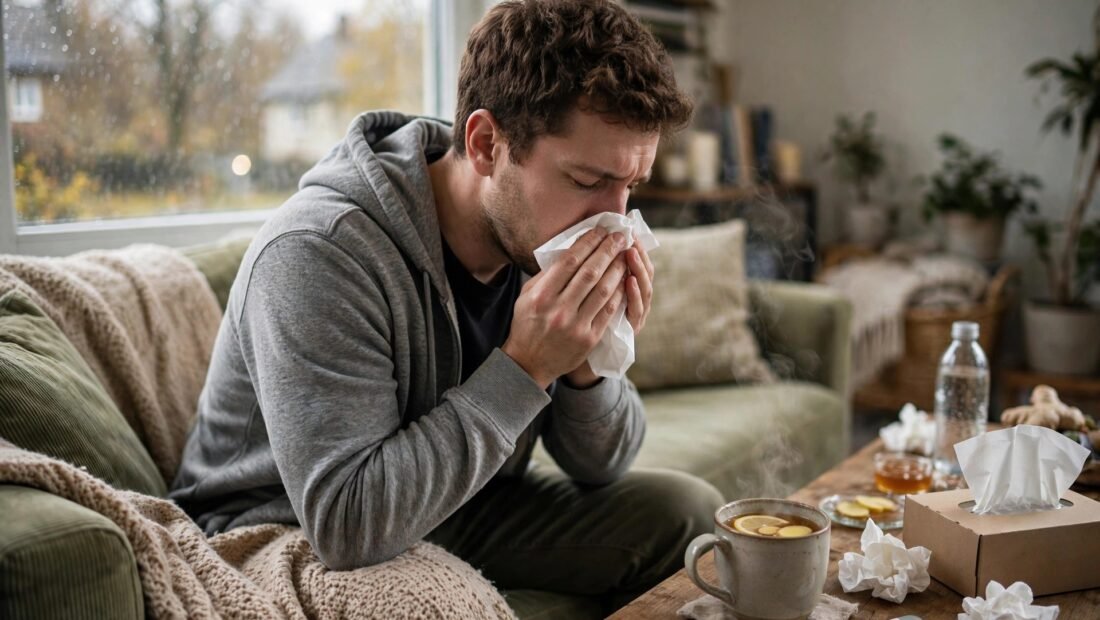
Short answer: most people who catch everything do not have one broken immune system. They have a stack of ordinary things adding up. Too little sleep, steady stress, a job or a home that puts them near sick people all day, and, in Texas, allergies that keep the nose and airways inflamed so a real infection finds an easy way in. Any one of those can raise your odds a little. Together, they can make illness feel constant. The good news inside that answer is that a stack can be unstacked, one layer at a time, starting with the layer that has the strongest evidence behind it.
The hand you start with: genes and immune history
Some of the difference is dealt before you can do anything about it. Genes that help the immune system spot invaders vary from person to person, so two people can meet the same virus and react in different ways. Immune history matters just as much. Every infection you have fought and every vaccine you have had leaves a memory in the system. That memory is a library. The friend who never seems sick may own a deeper library, built over years of exposures, so a new cold virus looks partly familiar on arrival and gets cleared before symptoms take hold.
Age changes the picture twice. Young children get sick often because almost every virus is new to them. Adults have met more of the common cold viruses, so they catch fewer. Later in life, the immune response itself slows. Older adults may catch fewer brand-new colds, yet face a harder course when an infection does land.
Sleep does the night work
Sleep is the biggest lever most frequently ill people control, and the one most often skipped. During sleep the immune system releases signaling proteins, makes antibodies, and sorts and stores what it learned during the day. Cut sleep short night after night and that maintenance runs behind. Research on cold exposure tells a consistent story: people sleeping under 6 to 7 hours are several times more likely to catch a cold when exposed to a virus than people sleeping 8 hours or more. No exact multiplier fits every study or every person, so treat the point plainly: short sleep raises the risk a lot, not a little.
The fix is unglamorous. Aim for 7 to 9 hours on a regular schedule, not a heroic catch-up on weekends. Keep the wake time steady, dim the last hour, and keep the bedroom cool and dark. If you are always sick and always tired, resist the urge to buy a shelf of products first. Fix sleep for a month and track how you feel. For many people that one change moves the count of sick days more than any other single habit.
Stress makes its own suppressant
Short stress can sharpen the body. A deadline, a race, a hard workout: the system rises, then settles. Long stress works differently. When worry, caregiving strain, money pressure, or a punishing job runs for weeks and months, stress hormones stay up, and those hormones dampen immune response. Fewer infection-fighting cells circulate in a useful way, inflammation is handled poorly, and wounds heal more slowly. That is why people so often get sick right after an exam period, a move, a death in the family, or a brutal stretch at work. The exposure may have been routine. The defense was lowered.
You cannot delete stress from a real life, and advice that pretends otherwise is useless. What helps is lowering the steady level and giving the system breaks that actually register: a daily walk outside, a hard stop to work messages at night, regular time with people who leave you calmer, and treatment for anxiety or low mood when those are present.
Exposure: the math nobody counts
Illness needs a germ to arrive. Some lives deliver far more arrivals than others. Teachers, health care workers, flight crews, retail staff, and parents of young children meet respiratory viruses at a rate an isolated remote worker never will. Crowded indoor air in a Texas summer, when everyone retreats into air conditioning for months, keeps those viruses circulating even outside the usual winter season. Hand habits decide how many arrivals get in: touching your face, rubbing your eyes, and skipping handwashing after transit, stores, or a waiting room all raise the dose.
Food, movement, alcohol, and smoke
No food turns a weak defense into a strong one overnight, but steady shortfalls drag the system down. Eating enough overall, and enough protein in particular, gives the immune system the material it needs to build cells and antibodies. Severe gaps in key nutrients hurt. Beyond fixing a real gap, extra doses have little to offer a person who already eats a varied diet. Be wary of any product that promises to boost immunity beyond normal. A healthy system needs balance, not a maximum setting. An overactive response is itself a problem in allergies and autoimmune disease.
Movement has a sweet spot. About 150 minutes a week of moderate activity, such as brisk walking, cycling at an easy pace, or active yard work, is linked with fewer respiratory infections. Regular moderate exercise helps immune cells circulate and lowers steady inflammation. Very hard training with too little rest can do the opposite for a short window, which is one reason endurance athletes often report a cold right after a major event. For most readers, the risk is too little movement, not too much.
Alcohol and smoking are clearer. Heavy drinking impairs immune cells and damages the barriers in the lungs and gut. Smoking injures the airways directly, slows the tiny hairs that sweep mucus and germs out, and makes both catching an infection and recovering from it harder. Cutting back on alcohol and quitting smoking will not show up as a dramatic before-and-after photo. Over a winter, they can change how often you are down and how long each round lasts.
Vaccines belong in this section because they are training, not treatment. A flu shot each year, COVID boosters as current guidance directs for your age and risk, and keeping tetanus and other routine shots current teach the system to recognize a threat before a real encounter. That training is the same library-building that past infections provide, without paying for the lesson with a week of illness. A fuller seasonal plan for how to boost your immune system during flu season can help you time those steps before peak months arrive.
The Texas twist: allergies wearing a cold costume
In Texas, a share of constant colds are not colds at all. Cedar, oak, ragweed, grass, and mold keep pollen and spores in the air for long stretches. Allergic inflammation swells the lining of the nose and sinuses, traps mucus, and causes sneezing, congestion, fatigue, and a scratchy throat that feel exactly like the start of an infection. Worse, inflamed airways are easier for a real virus to settle into, so allergies both mimic illness and invite it.
Clues point toward allergy: symptoms that last for weeks without a fever, itchy eyes and nose, a pattern tied to pollen counts or to being outdoors, and the same misery returning in the same season each year. Clues point toward infection: fever, body aches, a sore throat that peaks and fades, and a clear arc of getting worse, then better, over about a week. Treating allergies properly, with a plan from a clinician or pharmacist for antihistamines, nasal sprays, or other options suited to you, can cut the number of sick months dramatically for some Texans. Resources from MedlinePlus’s resources on infections and immune health can help you sort allergy, cold, and flu symptoms before you decide what to treat.
What to change first, ranked by evidence
Work in this order and give each step time before judging it. First, sleep 7 to 9 hours on a steady schedule. Second, bring steady stress down with daily breaks, movement, and real downtime, and get help for anxiety or depression if they are part of the load. Third, get to roughly 150 minutes a week of moderate exercise. Fourth, stay current on vaccines. Fifth, wash hands well and keep hands off your face. Sixth, eat enough, with protein at meals, and correct any known deficiency rather than guessing. Seventh, limit alcohol and do not smoke. Eighth, if you live with Texas allergies, treat them as a medical issue in their own right instead of enduring them as weather.
When frequent illness needs a doctor, not another supplement
Some patterns deserve medical attention promptly. See a doctor if infections keep returning in the same place, such as repeated pneumonia, deep skin infections, or sinus infections that never fully clear. Pay attention if you need antibiotics again and again, if infections are unusually severe, if wounds heal very slowly, or if illness comes with unexplained weight loss, night sweats, or lasting fatigue. Frequent illness in a child who is not growing well also needs a proper look.
Frequently asked questions
Is it normal to get sick five or six times a year?
It can be, especially for parents of young children, teachers, and health care workers with heavy exposure. Adults with low exposure more often average fewer colds. The total count matters less than severity, length, and whether infections keep landing in the same place. If the pattern worries you, bring a simple log to a clinician.
Do immune-boosting supplements fix frequent illness?
For a person with no deficiency, most supplements have weak evidence for preventing colds. Correcting a real deficiency, such as low vitamin D confirmed by a test, is different from taking large doses on a guess. Sleep, vaccines, exercise, and allergy treatment have stronger support and should come first.
Can lack of sleep really make a cold more likely?
Yes. In exposure studies, people sleeping under 6 to 7 hours were several times more likely to develop a cold than people sleeping 8 hours or more. You will not feel your immune system change on a single short night, but a run of short nights lowers defense in a way that shows up when a virus arrives.