The spray bottle fails in Texas for a plain reason. When the air sits near 100 degrees, many herbicides break down faster, drift in the heat, and land where you never aimed them, on tomato leaves, on a neighbor’s roses, on the wildflowers you meant to keep. You spray, the top growth yellows for a week, and then the same weeds push back up from roots and from seed that was already waiting in the soil. Going chemical-free is not about finding a gentler spray to swap in. It works only when you stop the habits that invite weeds in the first place, and then use a steady system for the ones that still show up.
Mistake 1: Scalping the Lawn Short
Cutting grass very short feels tidy for about a day. After that it does the opposite of what you want. Short grass lets sunlight hit the soil surface, and weed seeds need light and warmth to sprout. Crabgrass in particular loves thin, scalped turf. Bare, hot soil is an open invitation, and every pass with the mower set too low makes the next weed crop more likely. Scalping also stresses the grass itself. Weak roots grow shallow, the lawn thins out, and thin turf cannot shade out seedlings on its own. Many Texas yards end up in a loop: cut short, weeds grow, spray, grass weakens, cut short again.
Mistake 2: Laying Mulch Too Thin
A light dusting of mulch looks neat in a photo and does almost nothing in a bed. Weed seeds under a thin layer still get light, still get moisture, and still sprout right through it. Gardeners then blame mulch as a method, when the real problem was depth. A thin layer also breaks down fast in Texas heat, so whatever small benefit it gave is gone within weeks. The other half of this mistake is skipping top-ups. Mulch settles and rots down into the soil over a season. If you never add more, beds that started covered end the summer nearly bare, and late-season weeds walk straight in.
Mistake 3: Trusting Kitchen Vinegar at 5 Percent
Household vinegar from the grocery shelf is about 5 percent acetic acid. On a weed, it may spot the leaves or do nothing at all. It does not travel down into roots, and it does not stop a perennial from regrowing. People pour bottle after bottle on the same plant, scorch a little green, and conclude that natural methods are useless. The gap is strength and target. Young annual weeds are soft and easy to burn back. Established perennials with deep roots, thick crowns, or underground storage parts barely notice a weak surface burn. Using the wrong tool on the wrong weed wastes time while the plant keeps spreading below ground.
Mistake 4: Pulling Dry Soil and Snapping the Roots
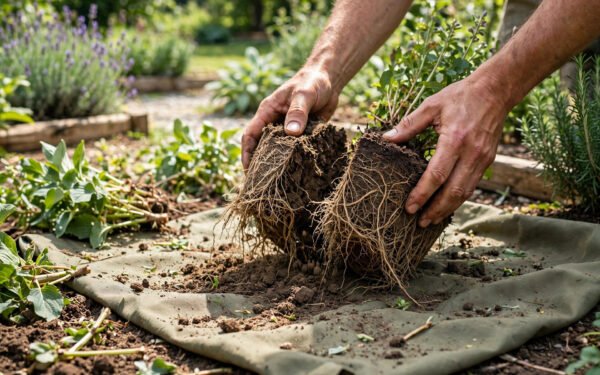
Texas clay when dry holds roots like concrete. Yank a dandelion, thistle, or nutsedge out of dry ground and the top comes away while the root, or a piece of it, stays behind. For many weeds that piece is enough to regrow. Nutsedge is the worst example. Pulling the green top without the small nutlets underground can actually prompt more shoots. Dallisgrass has the same problem in a different form: a shallow tug leaves the clump base intact, and the clump returns. Timing and tools matter as much as effort here. Ten minutes of pulling done badly can leave you with more weeds next month, not fewer.
Mistake 5: Letting Weeds Go to Seed, Then Shaking Them Everywhere
One pigweed plant can produce well over 100,000 seeds. If a weed has already set seed and you drag it across the bed, toss it on a compost pile that never gets hot, or mow over it, you have just planted next year’s problem across a wider area. The seed bank is the hidden part of every Texas yard. Every square foot of soil already holds dormant seeds waiting for light and a gap. Killing this year’s visible plants without shrinking that bank only resets the clock. Each seeding weed you miss adds years of future pulling to the job.
Mistake 6: Leaving Bare Soil and Dirty Tools Alone
Bare soil grows weeds. That is the rule, in beds and in lawns. Gaps between plants, empty corners, and thin patches are where weeds start first. Seeds also travel. They stick to mower decks, ride in cheap bulk mulch, and hitch a lift on boots and tools moved from a weedy patch to a clean one. Skipping a quick clean between areas spreads the problem you just spent an hour removing. None of this needs chemicals to fix. It needs coverage and a little care about what moves from place to place.
The Correct Way Starts With Prevention
Prevention does about 80 percent of the work in a chemical-free yard, and it is the least exciting part, which is why people skip it and then wonder why treatments alone fail.
Mulch beds deeply, at 3 to 4 inches of wood mulch. At that depth it blocks light from weed seeds, holds soil moisture in Texas heat, and keeps roots cooler. Top it up each year as the lower layer breaks down. In ornamental beds, landscape fabric under mulch can help, but keep it out of vegetable beds, where it blocks the soil life you want, and avoid thin cheap fabric that weeds punch through within a season anyway.
Mow high and leave it there. Set the mower to 3.5 to 4 inches for St. Augustine and 2.5 to 3 inches for Bermuda. Taller grass shades the soil, cools it, and starves weed seedlings of light. It also grows deeper roots that hold up better in drought. If you garden nearby beds as well, the same coverage logic applies to food plants, and learning how to grow garlic at home in Texas is a good example of a crop that rewards dense, well-timed planting over open, weedy rows.
Plant densely on purpose. Space bed plants so their canopies meet, add groundcovers in gaps, and overseed thin lawn patches in fall. Covered soil stays cooler, holds moisture longer, and gives weed seeds far fewer chances. Buy mulch from a source you trust and knock soil and seed off tools and mower decks before you move to a clean area.
Manual Removal, Done the Right Way
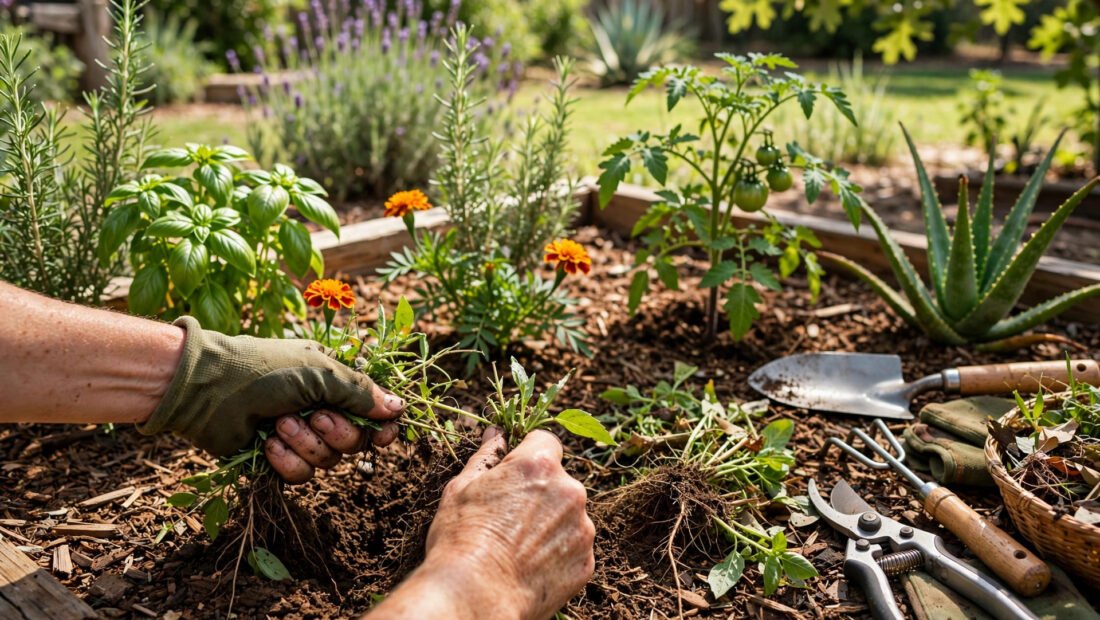
Pull after rain or after watering, when clay softens and releases roots cleanly. Work the day after a soak, not in the middle of a dry week. Use a stand-up weeder or a hori-hori knife to get under the full root instead of gripping the stem and hoping. For tap-rooted weeds, ease the whole root out in one piece. For nutsedge, dig carefully enough to remove the nutlets, and expect to revisit the spot, since this weed rarely clears in a single pass. Stay patient and persistent rather than fast and rough.
Build the 10-minute daily habit. Pulling a handful of young weeds each day, before roots deepen and before any seed forms, beats a three-hour monthly fight against mature plants. Young seedlings come out with almost no effort. If a weed has already gone to seed, bag it and throw it away. Do not compost it. That one habit alone slowly drains the seed bank instead of refilling it.
For a badly infested patch, use solarization. Cover the area with clear plastic for 4 to 6 weeks in full Texas summer. The soil under the plastic can heat past 140 degrees, hot enough to kill weed seeds near the surface, many soil pathogens, and nutsedge nutlets. It is slow, it looks odd for a month, and for a worn-out bed it is one of the strongest chemical-free resets you have.
Targeted Treatments for What Gets Through
Even a well-run yard will have survivors, mostly in cracks, edges, and gravel. Match the treatment to the place rather than using one method everywhere.
Boiling water is simple and free, and it works best on hardscape. Pour it slowly over weeds in driveway cracks, paths, and patio joints. It kills on contact. Keep it away from plants you want to keep, because it does not tell the difference.
Horticultural vinegar at 20 to 30 percent acetic acid is a different product from the kitchen bottle. It burns top growth on young annual weeds on contact. Wear gloves and eye protection, treat it with respect, and expect perennials to regrow from their roots. It is a spot tool, not a full answer.
Corn gluten meal works before weeds appear, not after. Spread it in early spring, ahead of sprouting, and again as directed for your lawn. It curbs seed germination, with commonly reported results in the range of about half to a bit more than half fewer weeds emerging when timing is right, and it also feeds the lawn lightly as a mild fertilizer. It will not kill a weed that is already up and growing, and its effect builds with steady yearly use rather than in a single week.
Flame weeding uses a propane torch passed briefly over weeds so the heat bursts their cells without setting them on fire. It is fast on paths and driveways. Check local rules first, since some Texas counties limit open flame during drought, and never use it near dry mulch or dry grass.
Smothering handles bed prep with no digging. Lay overlapped cardboard, wet it well, and cover it with mulch. In about 6 to 8 weeks the growth underneath dies, the cardboard softens into the soil, and you have a cleaner bed to plant into.
The Tough Texas Weeds, One by One
Nutsedge, the fast yellow-green sedge that outgrows the lawn around it, needs dense turf first, solarization for bad patches, and calm repeat removal of new shoots before they build new nutlets. Crabgrass fades when you mow high, fill bare spots, and time corn gluten before soil warms past about 55 degrees in spring. Dallisgrass, the clumpy perennial that shrugs off most sprays, has to be dug out as a whole clump, roots and all. Henbit and chickweed are winter weeds, so pull them in fall before they seed, and a thick fall overseeding helps crowd them out.
For region-specific timing, Texas A&M AgriLife Extension’s lawn and garden guidance is worth checking before you set your spring and fall dates, since conditions shift from the Panhandle to the Gulf Coast.
Give the system one full season before you judge it. By the second year, with deep mulch, grass held high, and ten steady minutes a day, weed pressure usually drops to a fraction of where it started.