Texas soil has personality — and much of it is difficult. The black clay of Central Texas turns to concrete in summer and soup in spring. The sand of East Texas drains nutrients as fast as you add them. The caliche of the Hill Country laughs at shovels. And the standard advice — “just add synthetic fertilizer” — feeds plants while starving the soil, creating dependency without fixing anything. Improving poor soil quality without chemicals isn’t slower or weaker than the synthetic route. It’s the only approach that actually fixes soil rather than renting fertility by the bag. Here’s how to transform Texas dirt into living soil. For more detail on a related topic, see our article on how to use up leftover vegetables before they spoil.
Know Your Soil First (Free/Cheap Testing)
Guessing wastes years. Get data:
- Texas A&M Soil Testing Lab: $12–$20 per sample for a complete analysis (pH, nutrients, organic matter, texture). The single best investment in your garden. Your county AgriLife Extension office provides instructions and sometimes free sample bags.
- The jar test (free): shake soil with water in a jar, let settle — sand drops in minutes, silt in hours, clay in days. The layer proportions reveal your texture.
- The squeeze test: moist soil that forms a tight ball that won’t crumble = clay; soil that won’t hold shape = sand; soil that holds loosely then crumbles = loam (the goal).
- pH matters enormously in Texas: much of Central and West Texas soil is alkaline (pH 7.5–8.5), which locks up iron and other nutrients. The test tells you exactly where you stand.
The Master Amendment: Organic Matter
Every soil problem in Texas is improved by organic matter — it loosens clay, helps sand hold water, feeds soil biology, and slowly releases nutrients:
- Compost (the king): 2–4 inches worked into the top 6–8 inches transforms soil structure within a season. Make your own (free) or buy in bulk — Texas municipalities often sell municipal compost cheaply.
- Aged manure: horse, cow, or chicken manure aged 6+ months. Fresh manure burns plants and harbors pathogens — “aged” is non-negotiable. Local stables often give it away free.
- Leaf mold: decomposed leaves — free, abundant every fall, and exceptional for soil structure. Texas oaks drop mountains of leaves; bag them instead of curbing them.
- Wood chips (as mulch, not mixed in): arborist chips are often free via ChipDrop. As surface mulch they feed soil biology as they decompose; mixed into soil they temporarily tie up nitrogen (the one caveat).
Fixing Texas Clay (The Big One)
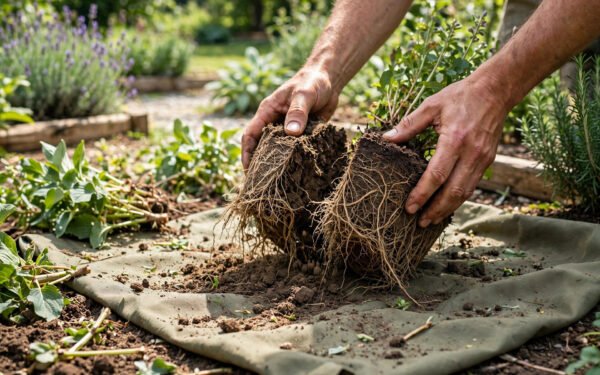
Clay soil’s problems: compaction, poor drainage, concrete-hard when dry. The fixes:
- Never add sand to clay: the infamous mistake — sand + clay = concrete-like adobe. This myth kills more Texas gardens than drought.
- Gypsum (calcium sulfate): the exception that works — gypsum flocculates clay particles (clumps them into larger aggregates) improving drainage without pH change. Apply per soil test recommendations.
- Organic matter, relentlessly: compost is the long-term clay fix. Raised beds (8–12 inches of quality mix over native clay) are the pragmatic shortcut — many Texas gardeners skip amending clay entirely and build up instead.
- Don’t work wet clay: digging or tilling wet clay destroys its structure for the season. If it sticks to your boots, wait.
- Cover crops: daikon radish (“tillage radish”) drilled into clay in fall punches bio-channels through compaction as roots decompose — nature’s subsoiler.
Fixing Sandy Soil and Alkaline pH
- Sand: organic matter is again the answer — compost and aged manure dramatically improve water and nutrient retention. Mulch heavily to reduce evaporation. Biochar (charged with compost tea first) is a longer-term amendment gaining evidence.
- High pH (alkaline): elemental sulfur lowers pH gradually (takes months; apply per soil test). For planting beds, acidic organic matter (pine bark, peat alternatives like coco coir) helps. For severely alkaline spots, raised beds with imported mix are pragmatic.
- Caliche: the limestone hardpan of the Hill Country. Pick through it for planting holes (jackhammer for trees — seriously), or build raised beds above it. Don’t fight geology; garden around it.
Free Amendment Sources in Texas
Soil improvement doesn’t have to be expensive. Texas gardeners have access to remarkable free resources: municipal compost programs in Austin, Dallas, Houston, and San Antonio sell or give away compost by the truckload; local tree services dump arborist wood chips free through ChipDrop; horse stables across the state give away aged manure to anyone who hauls it; coffee shops hand over spent grounds (nitrogen-rich, worms love them); and your own fall leaves are the best free amendment of all. The gardeners spending the least often build the best soil — because free materials encourage the heavy application rates that actually transform ground.
Feed the Biology, Not Just the Plants
Chemical fertilizers feed plants directly while soil biology starves. The organic approach inverts this:
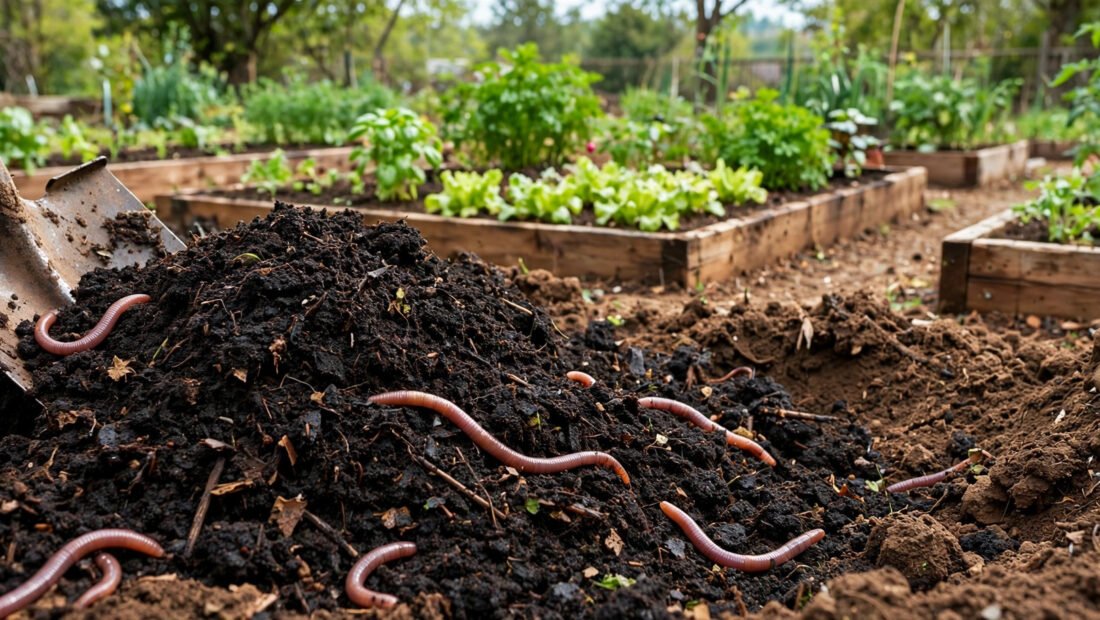
- Compost tea / worm castings: inoculate soil with beneficial microbes. Worm castings (make with a $30 worm bin) are among the most potent amendments per pound.
- Mulch everything: bare soil is dying soil — UV, heat, and rain destroy soil biology. Keep 3–4 inches of organic mulch on all beds always.
- Minimize tilling: each tilling destroys fungal networks that took months to build. No-dig methods (layer compost on top; let worms do the mixing) preserve and build biology.
- Plant diversity: polycultures and cover crops feed diverse microbial communities. Even a winter cover crop of clover or rye between seasons transforms soil by spring.
- Stop the chemicals: synthetic fertilizers, herbicides, and pesticides all damage soil biology. The transition takes 1–2 seasons — biology rebuilds — then the soil starts working for you.
For placing plants in your newly improved soil, planning your garden for your location ensures you match plants to your specific conditions rather than fighting them.
Conclusion
Improving poor Texas soil without chemicals is a 1–3 season project with a permanent payoff: test first ($12 well spent), add organic matter relentlessly (compost is king), fix clay with gypsum and organic matter (never sand), address sand with compost and mulch, correct pH per the test, and feed soil biology with mulch, minimal tilling, and diversity. The synthetic shortcut rents fertility; the organic approach builds it — and within two seasons, you’ll garden in soil that holds water, drains well, and grows plants with a fraction of the inputs. Your soil test is step one. The Texas A&M AgriLife Extension soil lab is where it starts. The USDA Natural Resources Conservation Service has in-depth soil health resources, including free soil testing guidance.
Frequently Asked Questions
How long does it take to improve clay soil organically?
Noticeable improvement in one season with heavy compost amendment; genuine transformation in 2–3 seasons. Raised beds over clay give instant results while the native soil improves underneath.
Can I mix sand into clay soil to loosen it?
No — this is the most damaging common advice. Sand + clay + water creates a concrete-like structure worse than either alone. Use compost, gypsum, and organic matter for clay; never sand.
What’s the cheapest way to improve garden soil?
Homemade compost (free), collected fall leaves (free), free arborist wood chips as mulch, and free aged horse manure from local stables. The $12 soil test prevents wasting effort on the wrong amendments.
How do I lower soil pH in Texas?
Elemental sulfur applied per soil-test recommendations lowers pH gradually over months. Acidic mulches (pine bark) help in beds. For container or small-bed gardening, just use an appropriate potting mix.
Is no-dig gardening viable in Texas heat?
Yes — arguably more viable than tilling, since tilling exposes soil to baking heat and destroys moisture-holding structure. Layer compost and mulch on top; worms and biology do the incorporation. Water retention improves dramatically.