Staging — preparing a home to photograph and show at its best — is one of the highest-return investments a Texas seller can make. Industry data consistently shows staged homes sell faster and for more: the National Association of Realtors reports that staged homes often fetch 5 to 10 percent more than unstaged comparable properties, and spend far fewer days on market. On a $400,000 Texas home, even a 3 percent staging lift is $12,000 — against staging costs that typically run $2,000 to $6,000. But staging done wrong wastes money and can even backfire. Here is how to stage strategically for the Texas market.
Why Staging Works: The Psychology
Buyers do not evaluate homes like appraisers. They decide emotionally in the first 90 seconds and rationalize afterward. Staging exploits three well-documented biases: scale perception (right-sized furniture makes rooms feel larger; empty rooms feel smaller), lifestyle projection (a set dining table helps buyers picture their own dinners there), and defect blindness (a polished, cohesive presentation draws eyes away from minor flaws toward strengths). Online, the effect multiplies — over 90 percent of Texas buyers start their search on a screen, and staged homes photograph dramatically better, earning more clicks, more showings, and more offers.
The Texas Staging Playbook, Room by Room
Curb appeal first
Texas buyers form impressions from the car. Fresh mulch, trimmed hedges, a clean driveway, and a freshly painted front door (deep navy, black, or classic red photograph best against Texas brick) deliver the highest ROI of any staging dollar. Power-wash the exterior, siding, and walkways. Our detailed guide to improving curb appeal cheaply covers the full exterior checklist.
Living areas: less is more
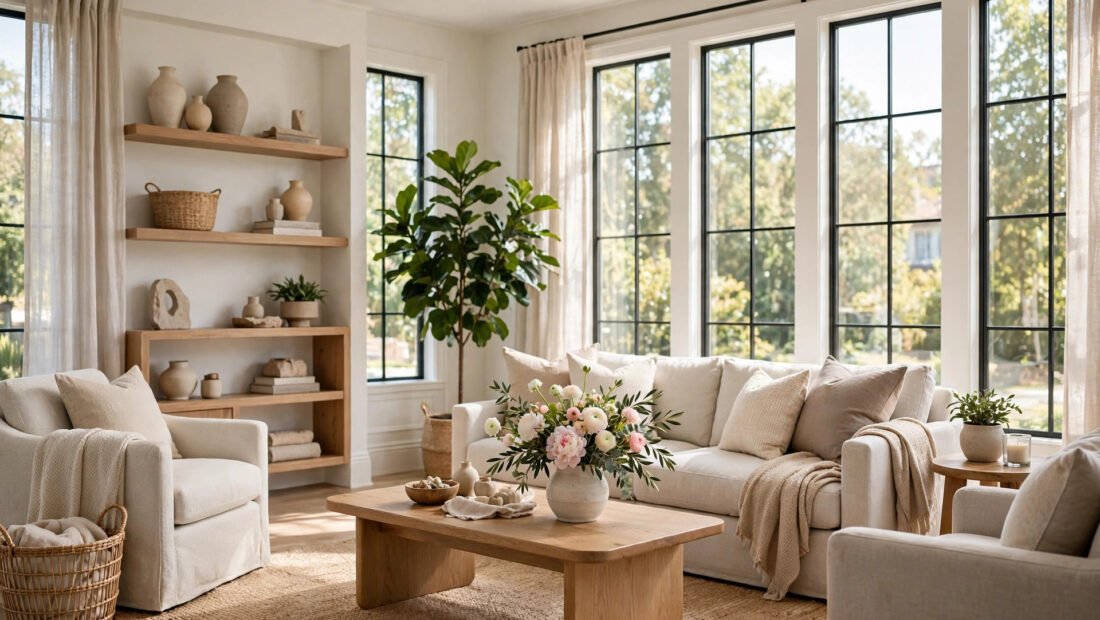
Remove 30 to 50 percent of furniture and nearly all personal items — family photos, collections, refrigerator art. What remains should be clean-lined, neutral, and purposeful. Every room needs a defined function; the “bonus room” with an exercise bike and boxes reads as wasted space, while the same room with a desk and chair reads as a home office.
Kitchen: the money room
Clear counters to three or fewer items. Update cabinet hardware ($3 to $8 per pull) for an instant facelift. A bowl of fresh fruit, a cookbook stand, and good lighting do more than expensive props. If the kitchen is dated, consider whether cheap kitchen updates beat full staging spend — sometimes $2,000 in cosmetic updates returns more than $2,000 in staging.
Primary bedroom: the retreat
Hotel-style bedding in white or soft neutrals, symmetrical nightstands with matching lamps, zero clutter. This room sells the emotional promise of the home — treat it accordingly.
Bathrooms: spa, not storage
New white towels, a single plant or candle, cleared counters, fresh caulk where needed. Remove every personal toiletry from sight.
Texas-Specific Staging Considerations
- Light and heat. Texas summers are brutal; schedule photography for morning light, keep the home at a comfortable temperature for showings, and use sheer curtains to maximize natural light without the greenhouse effect.
- Outdoor living. Patios, decks, and pools are major Texas selling features — stage them as living space with seating, not as empty concrete. Clean the pool to sparkling; a cloudy pool photographs terribly.
- Neutralize bold Texas décor. Longhorn mounts, team memorabilia walls, and heavy regional theming narrow your buyer pool. Pack them before listing.
- Pet evidence. Texas is pet-crazy, but buyers should not smell it. Deep-clean carpets, hide litter boxes during showings, and repair any pet damage before photos.
- Storm and hail disclosure honesty. Staging never means hiding defects. Texas sellers must disclose known issues; fresh staging over an undisclosed roof problem is a lawsuit, not a strategy.
The Numbers: Staging ROI in Texas Markets
Staging economics are unusually favorable in Texas’s competitive metros. In Austin, Dallas-Fort Worth, and Houston, where buyer competition is fierce, staged homes routinely attract 3–5x the online views of unstaged comparable listings — and online views convert to showings at roughly 2–3%. On a $400,000 home, a $3,500 staging investment that yields even a 2% price lift ($8,000) returns more than double. In slower rural Texas markets, the payoff shifts from price premium to time-on-market: staged homes sell weeks faster, saving carrying costs (mortgage, taxes, insurance) of $2,000–$3,000 per month. Either way the math works — the only losing move is spending staging money on the wrong things (over-accessorizing, staging rooms buyers do not value like formal dining rooms in family neighborhoods) instead of curb appeal, kitchens, and primary bedrooms where buyer emotion actually lives.
DIY Staging vs. Professional Staging
DIY staging ($500 to $2,000 in supplies and rentals) works when the home is already in good shape and the seller has an eye for presentation. Focus spend on: fresh paint in greige or warm white throughout, modern light fixtures in the entry and dining room, new bedding and towels, and professional photography — non-negotiable regardless of budget.
Professional staging ($2,000 to $6,000+ for a typical Texas home, often with monthly furniture rental) pays off for vacant homes — which sell for measurably less unstaged — luxury listings, and sellers who cannot objectively edit their own belongings. Interview stagers like contractors: view their portfolio, ask about their Texas market experience, and get the total cost including rental duration, not just the setup fee. The National Association of Realtors staging profile publishes current data on staging costs and returns.
Photography: The Staging Multiplier
Staging without professional photography is money half-spent. Professional real estate photographers ($150 to $400 in Texas markets) use wide-angle lenses, HDR bracketing, and twilight techniques that make staged rooms glow. Insist on: twilight exterior shots (Texas sunsets sell), drone photos for larger lots or acreage properties, and 25 to 40 final images. The listing photos are your staging’s audience of thousands; the in-person showing is just the closing act.
Conclusion
Staging a Texas home to sell for top dollar is applied psychology backed by real ROI: declutter ruthlessly, define every room’s purpose, invest in curb appeal and the kitchen, neutralize personal taste, stage outdoor living as a feature, and photograph it all professionally. Budget $2,000 to $6,000, expect faster sales and a meaningful price lift, and never use staging to conceal defects Texas law requires you to disclose. The sellers who earn top dollar are not the ones with the nicest homes — they are the ones whose homes photograph like the nicest homes.
Frequently Asked Questions
How much does home staging cost in Texas?
DIY staging runs $500 to $2,000; professional staging for a typical home costs $2,000 to $6,000 including furniture rental. Vacant and luxury homes cost more.
Does staging really increase the sale price?
Industry research consistently shows staged homes sell faster and for 5 to 10 percent more than comparable unstaged homes, with the strongest effects on listing photography and online engagement.
Should I stage a vacant home?
Yes — vacant homes are the strongest case for professional staging. Empty rooms feel smaller in photos and give buyers nothing to emotionally attach to; staged vacant homes dramatically outperform empty ones.
Is professional photography worth it?
Absolutely. With over 90 percent of buyers starting online, professional photos ($150 to $400) are the highest-ROI marketing spend in the transaction — the Redfin housing data center consistently shows better-photographed listings attract more views and faster offers.