
My eyes were burning by 3pm every day and I was sure I needed glasses. Turns out the answer was more nuanced — here’s how to tell what’s actually going on.
I wish someone had handed me a straight-talking guide to this years ago. Instead I pieced it together from doctor visits, research papers, and plenty of trial and error. This article is the guide I wanted: practical, evidence-informed, and free of miracle cures.
Need glasses or eye strain: What the Evidence Shows
Let’s get specific about need glasses or eye strain — what it means, why it matters, and the practical steps that make a difference. Everything below is actionable starting today.
Eye strain comes and goes; vision problems don’t. The key test: does your vision clear up after rest? If your eyes feel tired and blurry at the end of a screen-heavy day but fine on weekends, that’s strain. If street signs are always fuzzy or you can’t read menus at any hour, that’s a refractive error — get an eye exam. This is one of those fixes that feels too easy to matter — until it does.
The headache location tells a story
Strain headaches typically sit behind or around the eyes and build through the day. They ease with breaks. Headaches from uncorrected vision often come with squinting and show up during any sustained focus — reading a book counts, not just screens. The people who do this consistently swear by it, and the logic holds up.
Try the 20-20-20 rule first
Every 20 minutes, look at something 20 feet away for 20 seconds. It sounds too simple to matter, but it relaxes the focusing muscle that’s been locked at screen distance all day. Most people’s ‘need glasses’ symptoms improve dramatically within a week of actually doing this. Small change, real payoff — that’s the pattern with this one.
Related reading: our guide to how much does an urgent care visit cost without insurance covers a closely connected topic worth understanding alongside this one.
Check your screen setup before your eyes
A monitor too close (under 20 inches), too low, or too bright forces constant strain. Top of screen at or below eye level, arm’s length away, brightness matching the room. Blue-light glasses are mostly marketing — proper distance and breaks matter far more. File this under ‘boring but effective,’ the best category there is.
Dry eyes masquerade as vision problems
Staring at screens cuts your blink rate by more than half, drying the eyes and blurring vision intermittently. If blinking a few times clears things up, or your eyes feel gritty, try preservative-free artificial tears before assuming you need a prescription. Worth trying for two weeks. You’ll know by then if it’s your fix.
Get the exam anyway — it’s cheap insurance
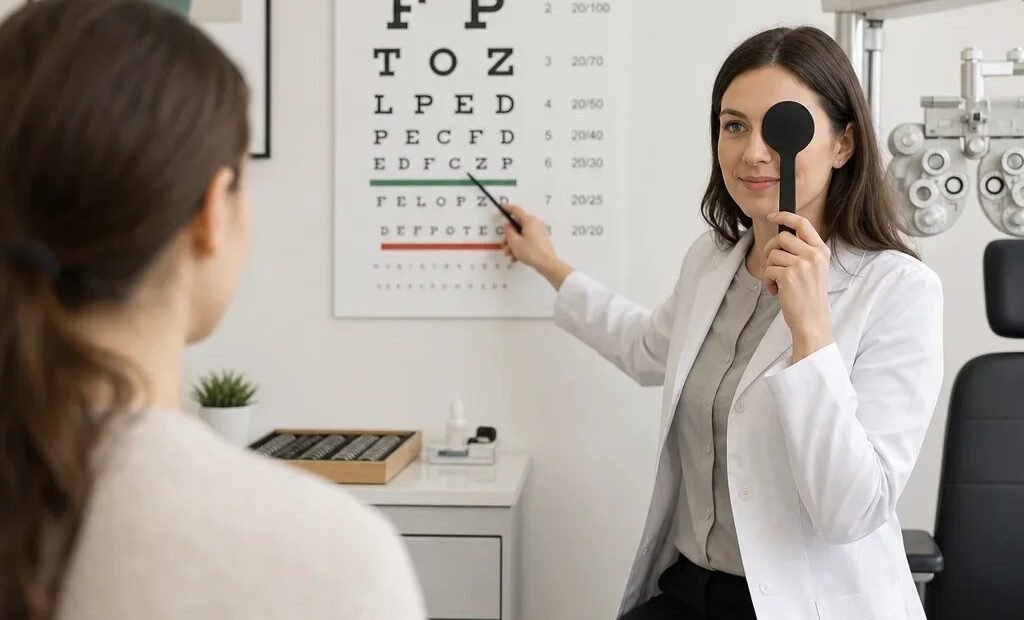
An eye exam every 1 to 2 years catches not just refractive errors but glaucoma, retinal issues, and even signs of diabetes. Many vision plans cover it fully, and retailers like Costco offer exams for $70 or less without insurance. It sounds simple because it is. The hard part is just doing it consistently.
Quick Takeaways
- Eye strain comes and goes; vision problems don’t: The key test: does your vision clear up after rest? If your eyes feel tired and blurry at the end of a screen-heavy day but fine on weekends, that’s strain.
- The headache location tells a story: Strain headaches typically sit behind or around the eyes and build through the day.
- Try the 20-20-20 rule first: Every 20 minutes, look at something 20 feet away for 20 seconds.
- Check your screen setup before your eyes: A monitor too close (under 20 inches), too low, or too bright forces constant strain.
- Dry eyes masquerade as vision problems: Staring at screens cuts your blink rate by more than half, drying the eyes and blurring vision intermittently.
- Get the exam anyway — it’s cheap insurance: An eye exam every 1 to 2 years catches not just refractive errors but glaucoma, retinal issues, and even signs of diabetes.
The Role of Consistency (It’s Everything)
Almost every health intervention works on the same curve: modest effort, sustained for months, beats intense effort abandoned in weeks. The body adapts slowly — whether you’re building a habit, healing tissue, or changing a biomarker. Expect the first two weeks to feel pointless; that’s normal, not failure.
Build your environment for success instead of relying on willpower. Lay out what you need the night before, remove friction from the good choice, add friction to the bad one. Willpower is a terrible plan; design is a great one.
A Common Mistake to Avoid
Buying cheap readers off the rack as a first move. Readers help a specific problem — age-related near-focus loss — but they can mask astigmatism or worsen headaches if your eyes are mismatched. A real exam first, self-diagnosis second.
If you want to go deeper on a related topic, see our guide to how can I improve my posture while working from home — and for a different angle on everyday wellness, our guide to is it normal to feel anxious before a doctor visit is worth your time.
Stress: The Hidden Variable
Chronic stress quietly sabotages nearly every health goal — disrupting sleep, driving cravings, tensing muscles, suppressing immunity. Managing it isn’t luxury; it’s maintenance. Ten minutes of daily decompression (walking, breathing, journaling) pays compound interest across every other habit.
You can’t eliminate stress, but you can process it. The research favors active recovery — movement, social connection, time in nature — over numbing (scrolling, drinking). Build one genuine stress outlet into your routine and protect it like an appointment.
For authoritative background, see the CDC’s flu prevention recommendations, and also the Sleep Foundation’s sleep hygiene research for a second perspective.
Frequently Asked Questions
Can screens permanently damage eyesight?
No good evidence says screens cause permanent damage in adults, though heavy near-work in childhood is linked to myopia. Strain is real and miserable, but it’s reversible.
At what age do most people need readers?
Usually early to mid-40s, when the lens stiffens — presbyopia. If you’re under 40 and struggling up close, get checked rather than assuming it’s age.
Start Small, Start Today
The best time to start was a month ago; the second-best time is after you finish this article. Pick the lowest-effort recommendation above and do it today — drink the water, take the walk, make the appointment, move the screen. Action today beats planning tomorrow.
Then build the week’s rhythm: same wake time, one daily movement block, one real meal you cooked. Boring? Completely. Effective? More than any dramatic overhaul. Health is built in ordinary weeks, not heroic ones — stack enough ordinary weeks and the results surprise you.
The Bottom Line
End-of-day blurriness that clears with rest is usually strain — fixable with breaks, distance, and blinking. Constant blurriness means it’s exam time. When in doubt, the exam is cheap and definitive.



