A door that bounces off its latch instead of clicking shut is delivering a precise diagnosis — the click that never comes, the size of the gap, and the scuff marks around the strike plate are the whole report. Latching is a meeting between two parts: the latch bolt on the door’s edge and the strike plate on the frame, and a failure is always a story of the two missing each other, by a millimeter or by a mile. These are the questions the door is asking, answered in the order a diagnostician asks them.
Why does the door bounce instead of latching?
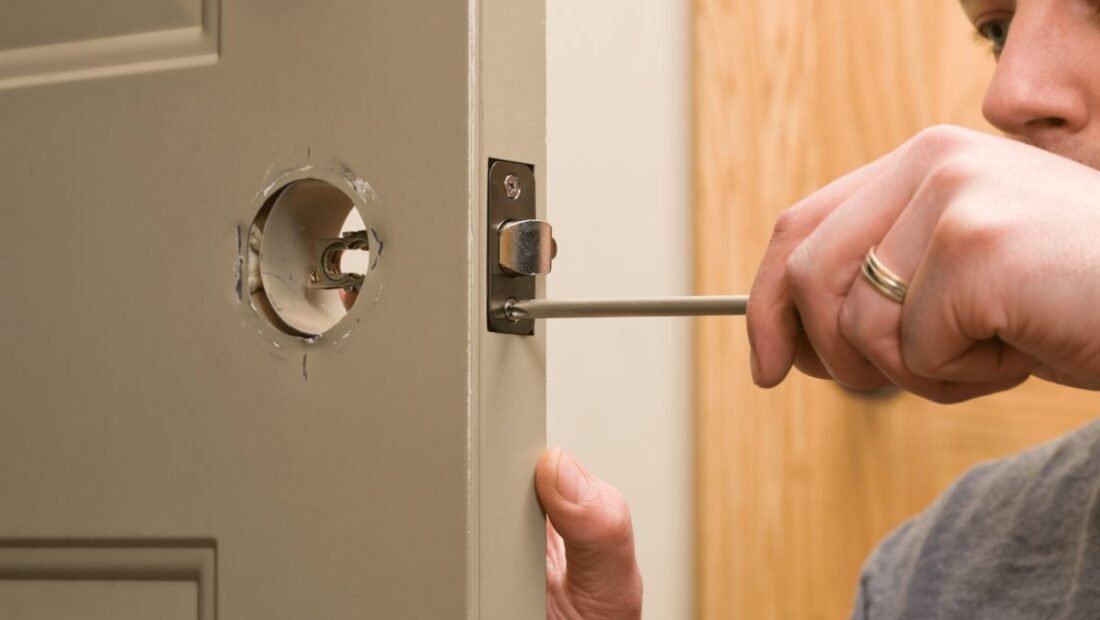
Because the latch bolt is striking the face of the strike plate or the frame instead of entering the hole. Close the door slowly and watch the last inch: the bolt’s angled face is designed to ride over the plate’s lip and snap into the hole, and a bounce means the bolt is meeting something solid first — the plate’s edge, or the wood of the frame — and being pushed back. The usual reasons are alignment (the hole and the bolt no longer share a centerline), a bolt that does not extend fully, or a door that has Sagged or swollen into a new geometry. Everything that follows is about finding which of those three you own.
How do I find where the bolt actually lands?
With the lipstick test, which every locksmith uses and no hardware store sells: smear a little lipstick, chalk or painter’s tape with a dab of petroleum jelly on the end of the latch bolt, close the door gently until it bounces, and open it. The mark on the strike plate or frame shows exactly where the bolt arrives — high, low, or short of the hole — measured in the only units that matter, the door’s own. A mark below the hole means the door has dropped on its hinges (or the frame’s side has risen); a mark above it means the frame has moved or the door has lifted, rarer; a mark centered but shallow means the bolt is not reaching, which is a different fault entirely. Do this test before touching a screwdriver. Guessing at alignment produces doors with three generations of screw holes and a latch that still bounces.
The bolt lands low. Then what?
A low strike is hinge news. Doors drop because hinge screws loosen in the frame, hinge leaves bend under years of weight, or the top hinge’s screws were too short to bite the stud behind the jamb. The fixes ascend: tighten every hinge screw first (a screwdriver, two minutes, and a surprising share of all latch problems end here). Replace the short screws in the top hinge with 3-inch screws that reach the wall stud, pulling the jamb and the door’s top corner back into plane. If the door’s bottom corner drags as well, a thin shim behind the bottom hinge leaf rebalances the swing. Only after the door hangs true should the strike plate be moved — plates get relocated to accommodate sag so often that frames are full of abandoned holes, and each unnecessary move weakens the wood the plate must hold in.
The bolt lands centered, but shallow. Why?
Then the bolt itself is not traveling. Causes: the bolt is gummed with paint (decades of paint jobs narrow both the bolt’s mortise and the strike hole — scrape both clean before anything else), the latch mechanism is worn or dry (a shot of graphite lubricant, never oil, which collects grit), or the strike hole is too shallow because a replacement plate sits thicker than the original. A bolt that retracts fully with the knob but lands short in the frame points to the door sitting too far from the jamb — look at the hinge side: a door can be pulled outward by hinge leaves sitting proud of their mortises. Measure, do not guess; the lipstick mark’s depth, compared against the bolt’s full extension measured with the door open, separates these causes cleanly.
Can I just enlarge the strike hole or move the plate?
Yes — when the misalignment is small and the hinges are proven sound, adjusting the strike is the correct and final fix, not a cheat. For a miss of a millimeter or two, file the strike hole’s edge in the direction of the miss with a metal file; the plate is soft metal and ten minutes of filing buys a permanent cure. For a larger miss, reposition the plate: fill the old screw holes with glued wood slivers or golf tees so the new screws bite solid wood, chisel the mortise to the new outline, and set the plate flush. A plate sitting proud of the frame or sunk below it will catch the bolt’s face wrongly even at perfect alignment, so flush is a requirement, not a nicety. And while tools are out, the same diagnostic patience transfers across the hallway — how to fix squeaky hardwood floors is the same discipline of locating movement before buying hardware. This Old House’s door and hardware repair guides show the plate-moving sequence photographed, for anyone who wants to see the chisel work before attempting it.
When is it the door or the house, not the latch?
Some latching failures are the house talking. A door that latches in winter and bounces in summer is swelling with humidity — its edge can be planed lightly and sealed, because unsealed door edges drink moisture and grow. A door that changed suddenly, together with new cracks at the frame’s corners or other doors in the same wall misbehaving, is reporting foundation or framing movement, and adjusting hardware treats the symptom while the cause compounds; that pattern deserves a builder’s or engineer’s assessment. A door slab that is itself warped — check with a long straightedge or by sighting down its edge — will never meet the frame consistently, and the realistic choices are weatherstrip games for the seasons or replacement of the slab. Fire-rated and exterior doors deserve one additional restraint: their latching is a safety function, and a fire door that does not latch positively gets professional attention promptly, not a filed plate and optimism.
What if the gap around the door is uneven?
The reveal — the gap between door and frame — should be roughly even on all sides, about the width of a nickel. An uneven reveal is the door’s geometry drawn in outline, and it grades the likely fault before the lipstick test is even run. A gap that narrows at the top hinge side and widens at the bottom latch side is the classic dropped door; a gap even everywhere but too wide all around suggests the latch bolt’s reach problem instead. A door that binds at the top latch-side corner while its latch misses low is telling both stories at once — hinge wear below, slight frame movement above — and earns the full sequence laid out here, in order, not a strike-plate move as a first resort. Measuring the reveal takes a minute with a coin and gives the diagnosis a map; the lipstick test then confirms what the map predicted.
Should I plane the door’s edge to make it fit?
Almost never for a latching fault, and last for any fault. Planing removes wood that humidity will make the door miss in the dry season, and it is the one adjustment that cannot be undone in February. It has exactly two legitimate entries in this work: a door whose edge demonstrably swells and binds seasonally, planed minimally at the bind and immediately sealed with paint or finish on all six sides (the unsealed top and bottom edges are where doors drink the moisture that swells them), and a door being fitted to a frame after structural work, by someone accounting for the seasons. If a planed-and-sealed door appears in the plan at any earlier point than last, the plan is wrong. Nearly every latch problem in a standing house is screws, hinges, plates and knowledge — the four renewable resources — and the plane stays in the toolbox as the confession that something unusual is happening.
One small case completes the FAQ: the door that latches perfectly all summer and fails only during parties, when it is opened forty times an evening. Heat and humidity from a full house genuinely swell a door’s edge by the fraction of a millimeter the latch’s tolerance cannot spare. The cure is the same reveal check and hinge discipline, plus patience — a door on the edge of tolerance deserves its strike filed on the generous side of correct, precisely because its geometry breathes with the household itself.
What does a correct finish look like?
The door should close with hand pressure alone — no hip, no slam, no lift of the knob — and latch with a single clean click; the bolt should sit fully in the strike with the door immovable in its frame except for the faintest play. Test it the way the house will use it: at walking pace, with an armful of laundry, at the humidity of the current season. A latch repaired by this diagnostic route stays repaired, because the fix addressed a cause. The filed plate and the moved strike have their place — after the hinges have been cleared of suspicion, in the order the door itself dictated.