
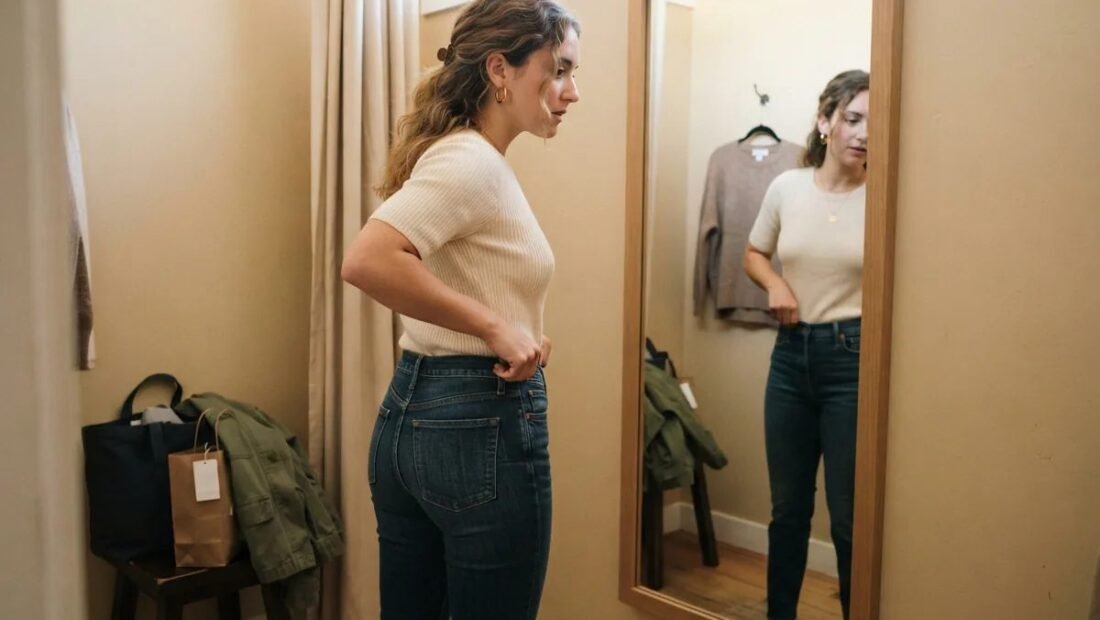
As someone with hips and a waist that differ by a full 12 inches, I’ve tried on approximately ten thousand pairs of jeans. The fitting room finally taught me what works.
Good style is 20% taste and 80% technique — fit, fabric, maintenance, and knowing the tricks. The taste part is yours; the technique part is learnable. Here’s the technique.
Jeans for curvy body types: What the Evidence Shows
Let’s get specific about jeans for curvy body types — what it means, why it matters, and the practical steps that make a difference. Everything below is actionable starting today.
Look for ‘curvy fit’ — it’s a real thing. Major brands now cut jeans specifically for a 10-plus-inch hip-to-waist difference, with smaller waistbands and more room through hip and thigh. This isn’t marketing — the pattern is genuinely drafted differently. It’s the single biggest upgrade for curvy jean shopping. The people who do this consistently swear by it, and the logic holds up.
Rise matters more than brand
Mid to high rise (9 to 11 inches) contains and smooths; low rise creates the dreaded gap and muffin-top simultaneously. Measure your favorite fitting pants’ rise and shop by that number, not by size labels that lie. Small change, real payoff — that’s the pattern with this one.
Stretch is your friend, within limits
1 to 3% elastane gives the give you need through hips and thighs while the denim still holds shape. Over 3% and jeans bag out by noon. The sweet spot: rigid enough to structure, stretchy enough to sit down in. File this under ‘boring but effective,’ the best category there is.
Related reading: our guide to what is the difference between fast fashion and slow fashion covers a closely connected topic worth understanding alongside this one.
The waistband is the whole battle
Gapping at the back waist is the curvy universal complaint. Contoured waistbands (higher in back) solve it structurally. A tailor taking in a waistband costs $15 to $25 and transforms $40 jeans into custom-fit — the best money in denim. Worth trying for two weeks. You’ll know by then if it’s your fix.
Dark washes and clean lines flatter most
Dark indigo with minimal distressing and no whiskering across the hips creates the longest, smoothest line. This isn’t about ‘slimming’ — it’s about the eye traveling uninterrupted. Save the light distressed washes for straight cuts. It sounds simple because it is. The hard part is just doing it consistently.
Try the sit-down test in the store
Stand, sit, walk, squat a little. Jeans that behave standing but torture you sitting will live in your closet unworn. The fitting room is for auditioning real life, not admiring the mirror. Not glamorous, not expensive — just something that works.
Quick Takeaways
- Look for ‘curvy fit’ — it’s a real thing: Major brands now cut jeans specifically for a 10-plus-inch hip-to-waist difference, with smaller waistbands and more room through hip and thigh.
- Rise matters more than brand: Mid to high rise (9 to 11 inches) contains and smooths; low rise creates the dreaded gap and muffin-top simultaneously.
- Stretch is your friend, within limits: 1 to 3% elastane gives the give you need through hips and thighs while the denim still holds shape.
- The waistband is the whole battle: Gapping at the back waist is the curvy universal complaint.
- Dark washes and clean lines flatter most: Dark indigo with minimal distressing and no whiskering across the hips creates the longest, smoothest line.
- Try the sit-down test in the store: Stand, sit, walk, squat a little.
Care: Where Cheap Clothes Go to Die (or Live)
Maintenance is the great equalizer: well-cared-for budget clothes outlast neglected expensive ones. Wash cold, hang or fold knits, address stains immediately, and learn basic repairs — a needle and thread handle 80% of clothing emergencies. A $10 sweater shaver and a $15 steamer are the best investments in your closet.
Read the labels and actually follow them — they’re instructions, not suggestions. And rotate: clothes need rest days between wears to recover their shape. The hardest-wearing wardrobes belong to people who maintain, not people who spend.
A Common Mistake to Avoid
Buying the size that fits the waist and suffering through the hips — or vice versa. Buy for your largest measurement (usually hips/thighs) and tailor the waist. It’s counterintuitive and it’s how every well-dressed curvy person actually does it.
If you want to go deeper on a related topic, see our guide to what are the best affordable alternatives to luxury handbags — and for a different angle on everyday wellness, our guide to what are the wardrobe essentials for a new mom is worth your time.
Accessories: The Multiplier
Accessories do disproportionate work: a scarf, belt, watch, or great bag can make the same basic outfit look different three days running. They’re also the cheapest way to experiment — a $20 accessory trend costs nothing compared to a $200 garment trend.
Invest in the daily anchors: a watch you love, sunglasses that flatter, a bag that works. These get worn constantly and define your look more than any single garment. Then play with cheap trend accessories around them.
For authoritative background, see Good Housekeeping’s beauty and fashion section, and also Vogue’s fashion editorial coverage for a second perspective.
Frequently Asked Questions
What inseam works for petites with curves?
Cropped and ankle lengths are your friend — they show ankle, the slimmest part of the leg. If full-length, hem them; pooling fabric shortens the leg visually.
Are skinny jeans over for curvy figures?
No — a dark skinny with the right rise remains flattering. But straight and bootcut styles are having a moment and they’re more forgiving through the thigh.
Your Next Three Moves
Move one: the audit — gather every relevant item you own and judge each against this article’s standards. Move two: the fix — repair, tailor, or clean the keepers; donate the rest without mercy. Move three: the targeted acquisition — buy the one missing piece that opens up the most outfits, using every rule above.
Do these in order. Most people shop first and audit never, which is exactly backwards — you can’t know what you need until you know what you have. The audit-fix-acquire sequence turns random shopping into wardrobe building.
The Bottom Line
Curvy jean success = curvy-fit cuts, mid-to-high rise, 1-3% stretch, buy for hips and tailor the waist. The waistband alteration is the cheat code nobody talks about enough.




3 Comments