The plastic dry-cleaning bag still hanging on your best coat is not protecting it. It is slowly suffocating it — trapping moisture against the fabric, yellowing light colors, and creating exactly the damp, undisturbed conditions that moths dream about. Storing winter coats for the summer is a fifteen-minute job with a checklist, and the difference between doing it right and doing it the usual way is measured in whether your $300 coat comes out in October ready to wear or comes out smelling of attic and freckled with moth holes. Here is the checklist first, in working order, and then the why behind each item.
The coat-storage checklist
- Clean every coat before it is stored — wash or dry-clean, including the “only worn twice” ones
- Empty pockets, fasten buttons and zips, let coats dry fully after cleaning
- Hang on wide, padded, or wooden hangers that support the shoulders — never wire
- Stuff sleeves and body lightly with acid-free tissue to hold the shape
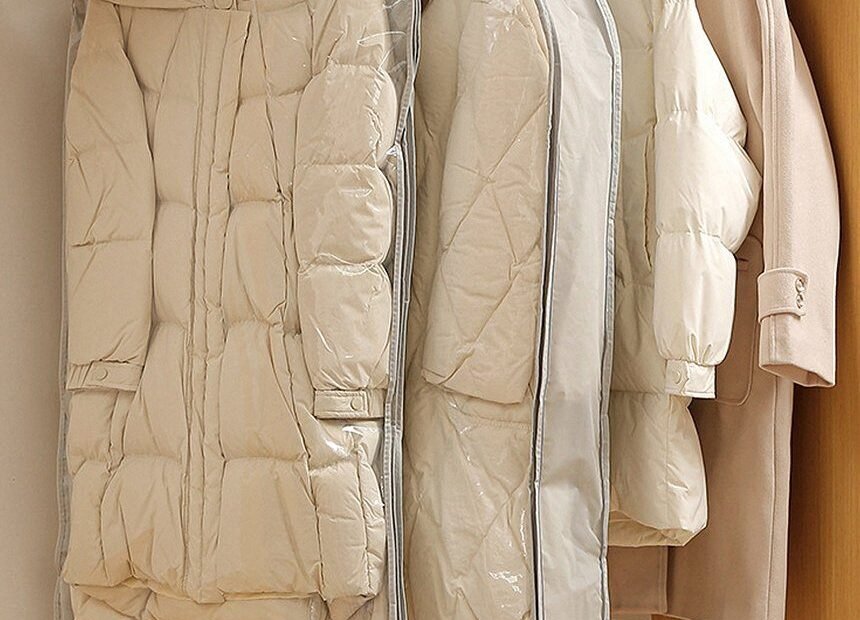
- Cover with breathable cotton garment bags — never plastic
- Add cedar (blocks, rings, or a cedar-lined space) as the moth deterrent
- Choose the coolest, darkest, driest spot you have — target under 50% humidity
- Store down and leather by their special rules (below)
- Calendar one mid-summer check — two minutes, twice a year, protects the whole wardrobe
Step zero: nothing gets stored dirty
This is the item everyone skips and the one that matters most, because it is really moth control in disguise. Clothes moth larvae do not primarily eat clean wool — they eat the food residues, body oils, and perspiration salts embedded in worn fibers, which is why damage concentrates at collars, cuffs, and underarms. The University of California IPM guidance on clothes moths puts cleaning at the top of its prevention list for exactly this reason: laundering or dry-cleaning before storage removes the food and kills any eggs or larvae already present. The coat you wore twice in March is not clean; it is lightly seasoned. Clean them all, and let them dry completely before bagging — storing a coat that is even slightly damp converts your garment bag into a mildew terrarium.
Breathable bags, never plastic
Plastic’s failures are threefold: it blocks airflow so residual moisture stays against the fabric; over months it can off-gas and contribute to yellowing, particularly on light wool and white linings; and it hides the coat from the mid-summer check, so problems develop in the dark. Cotton or canvas garment bags do the actual job — they block dust and light, which are the real enemies, while letting the fabric breathe. Leave the zip or closure slightly open at the top if the storage space runs humid. The dry-cleaning bag, meanwhile, has one legitimate use: the trip home from the cleaner’s. After that, it comes off.
Cedar beats mothballs
Mothballs work by poison gas, which is why they come with warnings: they only function in sealed containers where fumes can concentrate, they leave a smell in fabric that outlasts the summer by weeks, and they are a genuine hazard around children and pets. Cedar is the better household tool — its oils deter moths from settling, it smells like a wardrobe rather than a chemical incident, and it asks only one maintenance task: the oils fade, so refresh blocks once a year by sanding the surface lightly or using cedar oil spray. Be honest about the limit, whichever you choose: deterrents discourage new arrivals, but neither cedar nor scent will save a coat that went away dirty with larvae already aboard. Cleaning is the control; cedar is the fence.
Support the shape: shoulders, sleeves, and hangers
A coat is architecture. Stored on a thin wire hanger, the shoulder line sags and stretches over months into points that no iron fully removes. Use wide contoured, padded, or sturdy wooden hangers that fill the shoulder as your own shoulders do. Button the top button or zip the coat closed so the body hangs as designed, and stuff sleeves and the chest lightly with acid-free tissue (plain white tissue, not colored, which can transfer dye) to keep folds from setting into creases. Knit coats and heavy sweaters break the hanging rule entirely: fold them, because their own weight on a hanger will stretch them out of shape by September — a folded stack in the breathable bag or a clean box serves them better.
Down and leather play by special rules
Down coats and parkas live or die by loft: compressed down loses its insulating fluff and recovers it slowly and incompletely. Store down hanging in its breathable bag or in an oversized cotton storage sack — never vacuum-bagged, never crushed at the bottom of a pile. Leather needs air and a little fat: condition it before storage so it does not dry and crack over the dry months, hang it in a breathable bag (plastic will dry it out and can make it stick to itself), and keep it away from heat sources. Fur, if you own it, is the one category where professional cold storage earns its price; everything else on this page is a home job.
Place: cool, dark, dry — and the basement question
The ideal storage climate is the one least like a summer attic: cool, dark, and dry, with “dry” doing most of the work. Heat accelerates both moth activity and fabric aging; light fades; humidity feeds mildew. A spare-room closet on an interior wall is usually the best spot in the house. The basement question has a measurable answer: only if it is genuinely dry — put a cheap hygrometer there for a week; under 50% humidity is the target, and a basement that cannot hold that line in July will hand your coats back smelling of cellar. Garages and uninsulated attics fail on heat and pests simultaneously and should be last resorts for the cheapest coats, not the best ones. The same cool-dark-dry logic governs the rest of the seasonal rotation, which is why the best way to store seasonal decorations follows a near-identical checklist.
Before cleaning: pockets, labels, and small repairs
The checklist’s first item has a prequel worth the two minutes it takes. Empty every pocket — completely, checking the inside ones too — because tissues disintegrate through a wash, lip balm melts in a warm storage room, and forgotten coins and keys stain linings over months. Read the care label before choosing the cleaning method rather than after: most wool coats are dry-clean only, some washable wools exist, and leather or fur trim on an otherwise washable coat changes the answer to professional care. Then fix the small stuff now, not in October’s first cold snap: the loose button, the pocket seam starting to open, the scuffed leather that wants conditioner. Repairs made in spring are leisurely and cheap; the same repairs in the first week of November happen at panic prices with a queue at the tailor. A coat that goes away clean, empty, and repaired is a coat that comes back as a pleasure rather than a project.
The October return: bringing coats back
Storage done right makes the return almost anticlimactic, but a short revival routine finishes the job. Take coats out of their bags a few days before you expect to wear them and hang them in open air — a few hours near an open window disperses any closet stuffiness better than sprays, which mostly layer scent on top of it. Check the shoulders and creases; most fall out within a day of hanging, and a steamer handles what gravity does not. Water-resistant shells and raincoats deserve one extra step: their water-repellent finish fades over time and through cleaning, so if water no longer beads on the surface, a wash-in or spray-on reproofing restores the function the coat was bought for. Finally, try each coat on once. Fit changes over a summer more often than people expect, and discovering it in October — with the tailor’s queue short — beats discovering it during the first frost with no alternatives.
The mid-summer check, and what to do if you find moths
Put one appointment in the calendar for July: open the bags, look at collars and underarms, shake each coat out in daylight, and confirm the space still smells dry. Two minutes, twice a year, protects a $300 coat — and it is also your early-warning system. If you find live moths, webbing, or fresh damage: isolate the affected coat immediately, clean it (heat in washing or dry-cleaning kills all life stages), vacuum the storage space thoroughly including cracks and shelf edges where larvae hide, and consider freezing smaller woolens — a sealed bag in a home freezer for a week or more is a recognized non-chemical kill step. Then rebuild storage with everything cleaned at once; moth control fails when one dirty item is left behind to restart the colony. Prevention, as the checklist says, is nearly all of it: clean coats, breathable bags, cedar fence, dry room, one summer visit. October-you, pulling out a coat that smells like a coat, sends thanks.