
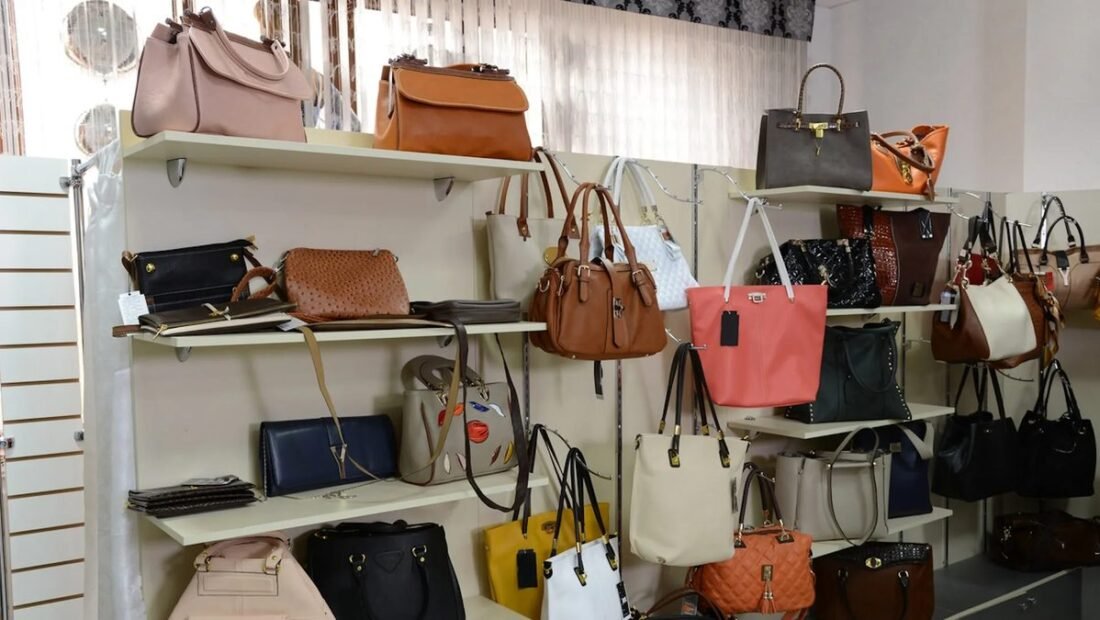
A $2,000 designer tote sits on the wishlist. A $200 alternative sits in the cart. Between those two numbers lies the entire question of affordable luxury handbags: not whether the cheaper bag is identical — it is not — but which route to “cheaper” keeps the parts of luxury you actually notice: the material, the construction, the way it carries, and the way it still looks after two years of Mondays. There are four realistic routes. They are not equal, and the differences are easy to see once you know where a bag hides its budget.
Option one: the $100–$300 sweet spot
The strongest route for most people is the tier the industry calls premium or bridge: real leather or high-grade materials, competent hardware, finished interiors, sold by brands with reputations to protect. Coach’s outlet line, Kate Spade on sale, Charles & Keith and similar labels live here, typically between $100 and $300. What that money buys, concretely: leather that is a material rather than a coating, zippers that run on metal teeth, edge paint that survives a season, and stitching that stays parallel. Under $50, by contrast, hardware and stitching usually betray the price within months — plated clasps flake, handles crack at the stress points, linings tear at the seams. The sweet spot is not cheap. It is simply the lowest price at which a bag stops being a photograph of a handbag and becomes the object itself. Current retail edits of this tier are easy to browse in one place in Who What Wear’s edit of affordable designer bags, which tracks which bridge brands are discounting what.
Option two: modern vegan leather
Vegan leather used to mean shiny plastic that announced itself across the room. The modern versions — the matte, pebbled and woven finishes sold by labels like JW Pei and Melie Bianco at roughly $80 to $150 — are genuinely convincing at conversational distance and pleasant in the hand. The honest trade-offs: these materials do not patina the way real leather does, they will not last decades, and heat plus sharp edges are harder on them. But for trend-driven shapes — the sculptural mini, the woven tote, the color of one particular season — a three-to-five-year working life is exactly what the style itself will have. Paying four figures for a shape you will retire in 2028 is the real waste. For a forever silhouette, leather wins; for a fashionable one, good vegan leather is the rational buy and it is not close.
Option three: authenticated resale
The third route skips “alternative” entirely and buys the actual designer bag, used. Authenticated resale platforms — Vestiaire Collective, Fashionphile, The RealReal — routinely put genuine designer pieces at 40 to 70% below retail, with the discount driven by season and condition grade rather than by any compromise in the object. The skills this route demands are patience and verification. Read condition grades literally (“very good” is not “excellent”), study the photos of corners and handles where wear concentrates, and use the platform’s authentication rather than a seller’s promise. Because the secondary market is also where convincing fakes circulate, it pairs naturally with learning how to tell if a designer bag is fake — stitching, hardware weight, date codes and the smell test all work on resale listings too. Done well, this is the only route where the alternative and the original are the same bag.
Option four: the $60 dupe, weighed honestly
The lookalike dupe — a bag designed to resemble a specific designer piece at a fraction of the price — is the weakest option, and it is worth being precise about why. Its entire budget goes into the silhouette, because that is what photographs. Everything else is starved: the hardware is hollow, the “leather” is a coating on fabric, the strap anchors are glued as often as stitched. A well-made $120 bag outperforms a $60 fake in every way that matters, including how it looks after a year, which is when the dupe’s savings invert into a second purchase. There is also the matter of what a copy signals: at close range, which is where bags are actually seen, resemblance reads as resemblance. The sweet-spot and vegan routes read as good bags. That difference is the whole product.
Reading a bag like an inspector, in ninety seconds
Whichever route you choose, the same inspection separates the convincing from the costume, in the shop or on a listing’s photos. Start with the hardware: zippers should run smoothly on metal teeth with some weight in the pull; clasps should close with a positive, mechanical click rather than a magnetic shrug. Then the stitching: count consistency, not stitches — the thread should run parallel and even, with no skipped or wandering sections, and the thread color should match or deliberately contrast, never almost-match. Edges tell the truth next: painted or folded edges that are clean and complete beat raw or flaking ones at any price. Inside, a finished lining with a proper pocket and no loose threads signals a maker who expected to be inspected. Finally the structure test: set the bag down empty. A well-built bag holds its posture or slumps by design; a badly built one collapses by accident. Ninety seconds of this will sort a shelf of candidates faster than an hour of brand comparison.
Where each route fails: an honest failure map
Balance requires naming the ways each option disappoints. The sweet-spot tier fails at the top of its range, where some bridge brands price on logo rather than construction — a $280 bag built like a $90 one is the tier’s native scam, and the inspection above is the defense. Vegan leather fails with time and heat: it does not age into character the way leather does, and a hot car can start its surface delaminating, so it should be bought for seasons, not decades. Resale fails on homework: misjudged condition grades, undisclosed odors, and the rare authenticated-platform miss all exist, which is why return policies matter as much as prices on that channel. And the dupe fails on arrival, as covered. Knowing the failure modes does not weaken the recommendation; it prices the risk into each route, which is what adults do with money.
How many bags a life actually needs
The routes above are easier to choose once the target is sized correctly, because most people shop for a fantasy rotation. Audit honestly and a real handbag life has three jobs: the daily carry (work, errands, everything — the bag that will clock 300 carries), the small evening or event bag (twenty carries a year, which is why it should never be the expensive one), and optionally a travel or tote role for laptops, markets and weekends. Buy the daily carry at the highest construction level the budget reaches — sweet spot or authenticated resale — because cost per carry is decided there. Let the evening bag be the vegan or trend purchase, where a three-year life is a full life. One great daily bag plus one decent small bag, chosen by the inspection and priced by the carry, outperforms a closet of five mediocre ones on every axis: cost, coherence, and how put-together the carrier looks on any given Tuesday.
Care, storage and the repair question
Whichever route wins, the bag’s economics finish at home. Store leather stuffed to hold its shape, out of plastic (which traps moisture), in its dust bag or a pillowcase, and condition smooth leather once or twice a year — a dried-out bag cracks first at the folds and straps, exactly where stress concentrates. Rotate the daily bag off for a rest day when you can, even if the rotation partner is unglamorous; leather under daily load ages faster than leather rested. And keep the repair option in view before replacing: a restitched seam, a replaced zipper pull, edge re-inking — cobblers and bag spas do this work for a fraction of a new bag’s price, and on a well-made body the repair restores 90% of the bag for 15% of the money. The routes into a good bag were the headline. The care is what makes the carry count — and therefore the entire cost argument — actually happen.
Judge by cost per carry, not by ticket price
Whichever route you take, price it correctly. A $200 bag carried 300 times costs about $0.66 per carry. A $40 bag carried ten times before a strap gives out costs $4 per carry — six times more expensive, on the only math that matters. Before buying, run the same honesty check as a wardrobe audit: which bags in your current rotation actually leave the house weekly, and what shape, size and color are they? The affordable alternative worth buying is the one that matches your real carrying life — the commute tote, the crossbody for weekends, the small evening bag — bought at the best construction level your budget reaches. The recommendation, then: default to the $100–$300 sweet spot for everyday silhouettes, use modern vegan leather freely for trends, treat authenticated resale as the connoisseur’s shortcut to the real thing, and let the dupes go. Luxury, at the distance anyone can actually see, is material and construction. Both are for sale well under $2,000.

1 Comment