
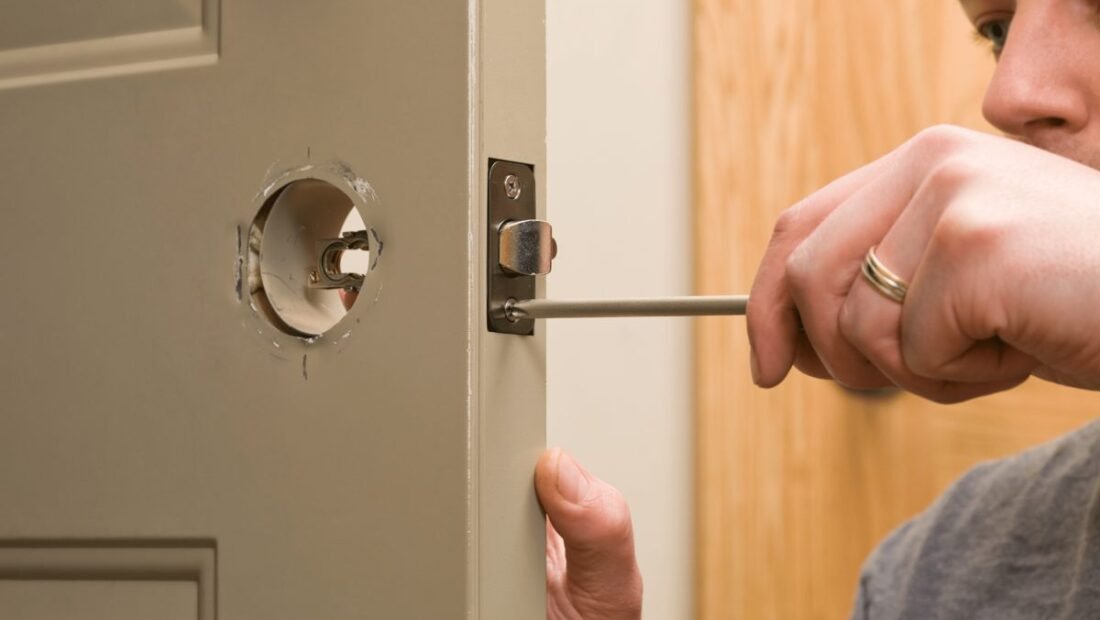
Our bedroom door slowly stopped latching over the course of a year, until it swung open on its own like the house was haunted. The fix took eleven minutes with a screwdriver and involved no new parts. Doors go out of alignment gradually, and the fixes are correspondingly small.
How to fix a door that will not latch properly starts with diagnosing which of the three usual suspects is guilty: the strike plate, the hinges, or the door’s alignment.
How Do I Fix a Door That Will Not Latch Properly?
Diagnose first with lipstick or tape. Apply lipstick to the latch bolt (or stick masking tape on the strike plate), close the door, and see where the bolt hits. If it hits above or below the strike hole, the door has sagged or shifted. If it hits the plate edge, alignment is slightly off. If the bolt does not reach the plate at all, the gap is too wide. Two minutes of diagnosis prevents an hour of wrong fixes.
The strike plate is the culprit most often. How do I fix a door that will not latch properly when the plate is misaligned? Loosen the strike plate screws, shift the plate to meet the latch (you may need to chisel the mortise slightly larger), and retighten. If the screws spin in stripped holes, the pro fix is elegant: remove one screw, drive a 3-inch screw through the plate into the wall stud behind the jamb. This pulls the whole jamb tight and fixes a remarkable number of latch problems permanently. For small misalignments, a metal file can enlarge the strike hole in the needed direction.
- Lipstick test first. Mark where the bolt hits. Diagnose before fixing.
- Shift the strike plate. Loosen, reposition, retighten. Chisel the mortise if needed.
- 3-inch screw into the stud. Through the strike plate or hinge into framing. Fixes sag permanently.
- Tighten all hinge screws. Loose hinges cause most sag. Snug every screw first.
- Replace short hinge screws. Swap one screw per hinge for a 3-inch screw into the stud. Pulls the door plumb.
- File the strike opening. Small misalignments yield to a metal file in minutes.
- Shim behind hinges. Cardboard shims behind a hinge leaf adjust alignment precisely.
- Plane the door edge. For swelling or rubbing: mark, remove, plane, reseal. Last resort, not first.
Hinge sag is the second classic, especially on heavy solid doors. The top hinge bears the load, its screws loosen over years, and the door tips forward until the latch misses the strike. Tighten every hinge screw; if any spin freely in stripped holes, fill with wood glue and toothpicks (or golf tees), let dry, and re-drive. Then replace one short screw per hinge with a 3-inch screw driven into the stud. This single upgrade fixes most sagging doors permanently and takes five minutes.
When the Door Needs More Than Adjustment
Some doors are beyond tweaking. If the door is visibly warped, if the frame itself is out of square from foundation movement, or if humidity swelling is severe and recurring, adjustments become seasonal rituals. Options then: plane the door edge (mark the rub with lipstick, remove the door, plane the marked area, reseal the raw wood against moisture), or in extreme cases rehang or replace. Also check the easy environmental fix: a door that sticks every summer and frees every winter is humidity, and a dehumidifier or better ventilation may solve what tools cannot.
And the haunted-house special: a door that swings open or closed by itself is simply out of plumb. Remove one hinge pin at a time and bend it slightly with a hammer (the bend creates friction), or reposition the hinges. Gravity is the diagnosis; friction is the cure.
Quick Answers to Common Questions
Why won’t my door latch all of a sudden?
Usually gradual hinge loosening reaching a tipping point, or seasonal humidity swelling the door or frame. Sudden failure after years of fine operation points to a screw giving way or a strike plate shifting.
Can I fix a door that won’t latch without tools?
Tightening hinge screws needs only a screwdriver, which is a tool but the most basic one. The lipstick diagnosis needs lipstick. Most latch fixes are screwdriver-level work.
How do I fix a door latch that doesn’t catch?
First determine if the bolt misses the strike (alignment: shift plate or fix hinges) or reaches but does not hold (worn strike or latch mechanism: file, replace, or adjust). The lipstick test distinguishes these in seconds.
Should I plane a door that sticks?
As a last resort after hinge and strike adjustments. Mark the rub area, remove the door, plane sparingly, and seal the exposed wood. Over-planing creates gaps that cannot be un-planed.
My Door Latch Checklist
- Lipstick-test the latch. See exactly where the bolt hits. Two minutes.
- Tighten every hinge screw. The most common fix. Do it first.
- 3-inch screws into studs. One per hinge + strike plate. Permanent sag cure.
- Shift or file the strike plate. Meet the latch where it actually is.
- Plane only as last resort. Mark, remove, plane sparingly, reseal.
What I Would Do Next
Eleven minutes, one screwdriver, three long screws, and the bedroom door latches with a satisfying click for the first time in a year. I had been tolerating the haunted-door routine for months because it seemed like a project. It was not a project; it was a screwdriver. Most door problems are exactly this small.
How to fix a door that will not latch properly: diagnose with the lipstick test, tighten hinges, drive long screws into studs, and adjust the strike plate. Eleven minutes, no new parts, done.
Stop living with the haunted door. Grab the screwdriver.
Related reading: What Should I Know Before Driving in Another Country.
Related reading: How Do I Paint Kitchen Cabinets without Sanding.
Related reading: What Is the Best Way to Store Fresh Herbs Longer.
For official guidance, check out Family Handyman project walkthroughs and EPA guidance on indoor air quality.



