
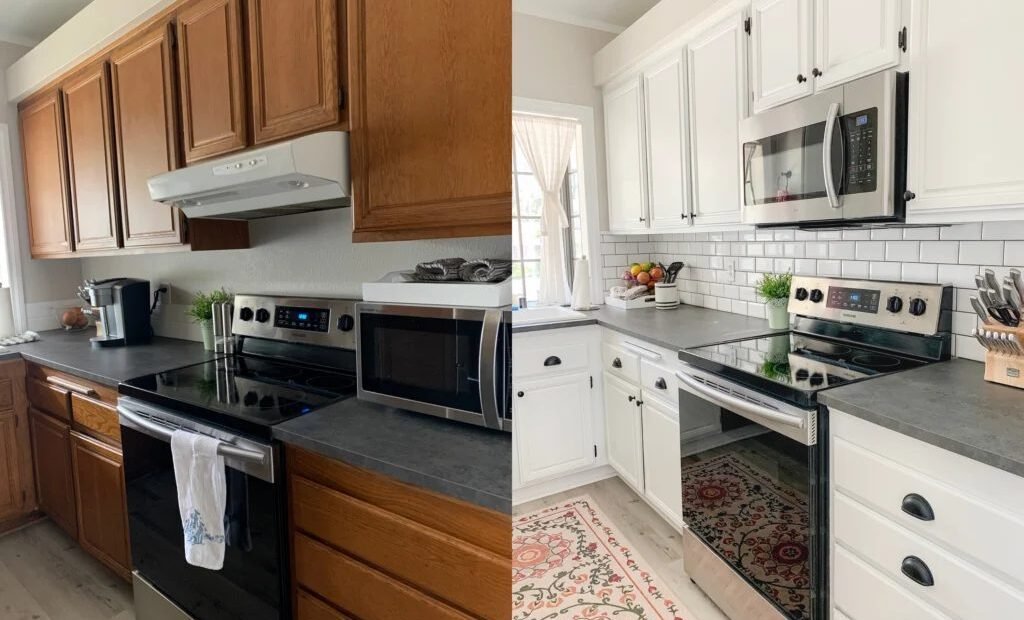
The reason most people never paint their kitchen cabinets is the sanding: days of dust, sore arms, and the fear of ruining the wood. I painted ours without sanding a single door, and three years later the finish is flawless. The sanding step was always about adhesion, and modern chemistry solved adhesion.
How to paint kitchen cabinets without sanding comes down to three things: degreasing like you mean it, bonding primer, and the right paint. Skip any of the three and the shortcut fails.
How Do I Paint Kitchen Cabinets Without Sanding?
Degreasing is the step people skimp, and it is the step that matters most. Kitchen cabinets accumulate years of cooking grease in an invisible film, and no primer bonds to grease. Wash every surface with TSP substitute or a dedicated degreaser, twice, rinsing between. The water should sheet off, not bead; beading means grease remains. This is tedious and unskippable. Every no-sand paint failure I have seen traced back to this step, not the primer.
Bonding primer is the technology that replaces sanding. How do I paint kitchen cabinets without sanding successfully? Apply a shellac-based or dedicated bonding primer (the products literally marketed as bonding primers) over the degreased surface. These primers grip glossy finishes chemically rather than mechanically. One full coat, applied thin and even. Then topcoat with a cabinet-grade enamel: urethane-alkyd or acrylic enamel, never standard wall paint. Two thin topcoats, sanding lightly with 220-grit between coats only if you want a furniture-smooth finish (a quick scuff, not a sanding project).
- Degrease twice with TSP substitute. The water should sheet, not bead. This is the make-or-break step.
- Use real bonding primer. Shellac-based or labeled bonding primer. Not regular primer.
- Remove doors, drawers, and hardware. Label everything with painter’s tape. Paint boxes and doors separately.
- Apply thin coats. Thin primer, two thin enamel topcoats. Thick coats drip and fail.
- Use cabinet-grade enamel. Urethane-alkyd or acrylic enamel. Wall paint chips on cabinets.
- Let it cure, not just dry. Dry to touch in hours; full cure in 2-4 weeks. Treat gently during curing.
- Spray for the best finish. A $100 HVLP sprayer gives factory-smooth results. Brushing works; spraying wows.
- Work in a dust-free zone. Garage with plastic sheeting beats a windy driveway. Dust in wet paint is forever.
The full process in order: empty and remove doors/drawers/hardware, label everything, degrease twice, apply bonding primer, light scuff only if desired, two thin enamel coats, cure patiently, reinstall. Budget a long weekend plus curing time. Material cost runs $100 to $200 for an average kitchen, versus $3,000 to $6,000 for professional cabinet painting or $15,000+ for replacement.
When No-Sand Does Not Apply
Honest limits: if the existing finish is peeling, flaking, or damaged, no primer bonds to failure; you must strip or sand the failing areas. If the cabinets are laminate or thermofoil that is bubbling, painting over bubbles just preserves bubbles. And raw wood with heavy grain (oak) will show grain texture through paint unless you fill it with grain filler first; the no-sand method handles adhesion, not texture. These are the cases where the shortcut becomes a longcut, and recognizing them upfront saves a do-over.
Also, manage the cure-time reality. The cabinets feel dry in a day but reach full hardness in weeks. During curing, avoid slamming doors, skip the aggressive cleaners, and accept that the finish is still settling. Patience here is the difference between a three-year finish and a ten-year one.
Quick Answers to Common Questions
What is the best primer for cabinets without sanding?
Shellac-based primer or a dedicated bonding primer. Both grip glossy surfaces chemically. Avoid standard drywall or all-purpose primers; they lack the adhesion chemistry this method depends on.
Can I paint laminate cabinets without sanding?
Yes, if the laminate is firmly adhered. Degrease, bonding primer, cabinet enamel. If laminate is peeling or bubbling, repair or replace those sections first; paint cannot fix delamination.
How long do painted cabinets last?
With proper degreasing, bonding primer, and cabinet enamel, 5-10 years is realistic. High-use areas around handles wear first; the cure period and paint quality determine longevity.
Should I spray or brush cabinets?
Spraying gives the smoothest, most professional finish and is faster for doors. Brushing works fine with quality enamel and a good brush if you maintain a wet edge. For most DIYers, spray the doors and brush the boxes.
My No-Sand Cabinet Checklist
- Degrease twice. TSP substitute. Water must sheet, not bead.
- Bonding primer, one thin coat. Shellac-based or dedicated bonding formula.
- Label and remove everything. Doors, drawers, hardware. Tape labels.
- Two thin enamel topcoats. Cabinet-grade enamel only. Never wall paint.
- Cure 2-4 weeks gently. Dry fast, harden slow. Treat kindly.
What I Would Do Next
Our cabinets have survived three years of daily cooking, kids, and a dog’s nose prints, and they still look painted-yesterday. The total was $160 and two weekends, and the kitchen transformation remains the best ROI project I have done. The sander stayed in the garage the whole time, exactly where it belongs.
How to paint kitchen cabinets without sanding: degrease fanatically, bonding primer, cabinet enamel in thin coats, and patient curing. $160, two weekends, transformative.
The dust-free shortcut is real. Respect the degreasing and it works.
Color choice deserves thought since you are committing for years. White and warm white remain the safest and most timeless cabinet colors, brightening kitchens and appealing to future buyers. Dark greens and navy have had a strong run and look stunning with brass hardware, but they show dust more and can date faster. Whatever you choose, buy a sample quart and paint a large poster board first; live with it on the counter for three days in all lights before committing to twenty doors.
Related reading: What Is the Best Flooring for Homes with Dogs.
Related reading: How Can I Hide Ugly Cords Behind My TV.
Related reading: How Do I Choose Between a Cruise and an All-inclusive Resort.
For official guidance, check out EPA guidance on indoor air quality and Family Handyman project walkthroughs.



