
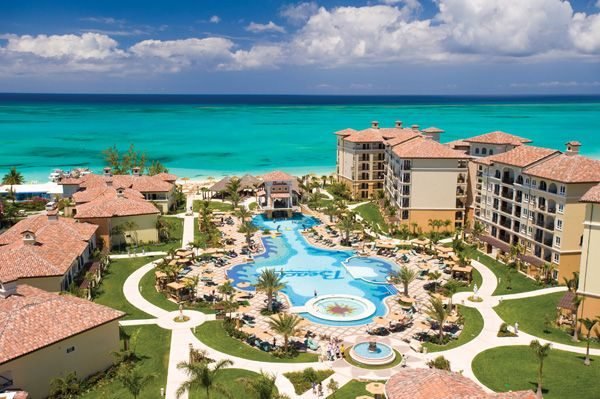
Somewhere this winter, two couples will lie on the same Caribbean beach, in the same week, drinking from the same swim-up bar’s blender — and one couple will have paid $1,800 for their week while the other paid $4,000. The difference is almost never the resort. It is the island they chose, the week they chose, and the four or five “small” costs they did or did not read before booking. All-inclusive pricing looks simple — one number, everything included — and conceals more variation than any other product in travel. This comparison takes the product apart: the destination tiers, the season tiers, and the extras, so the cheap week you book is the cheap week you actually get.
Tier one: the three islands that anchor the budget map
Price in the Caribbean is set first by geography, because islands import everything and some import it farther. The budget tier belongs to three destinations with the scale, the competition, and the flight volume to keep prices honest: Mexico’s Riviera Maya, the Dominican Republic’s Punta Cana, and Jamaica’s Montego Bay and Negril coasts. In this tier, expect roughly $120–$220 per person per night for a genuine all-inclusive — meals, drinks, beach, pools, basic activities — in the shoulder periods, with the big resort zones driving prices down through sheer rivalry. Punta Cana is usually the volume champion: more rooms than anywhere, charter competition, and a constant sale somewhere; the official version of what’s on offer is at the Dominican Republic’s official tourism site. The Riviera Maya counters with the best food-and-culture combination at the price, since the resorts sit within reach of Tulum, cenotes, and Playa del Carmen’s real town. Jamaica trades a little polish for personality — the island’s music and food culture reaches inside the resort gates more than most. Any of the three, booked in the right weeks, produces a sub-$2,000 week for two without a single compromise that feels like one.
Tier two and three: where the same product doubles
Move one ring outward and the same product reprices. Barbados, St. Lucia, Antigua, and Aruba run 50–100 percent more than the big three for equivalent quality — smaller islands, longer supply lines, fewer rooms, and in Aruba’s case a premium for its famously reliable dry weather. The luxury tier — the boutique and big-name five-stars across all islands — is a different product in service but not in structure: better rooms, quieter beaches, restaurants that behave like restaurants, and prices from $400 per person per night upward. The comparison that matters for a budget hunter is intra-tier: within Punta Cana or the Riviera Maya, the spread between a well-reviewed mid-range resort and the zone’s famous flagship is often $800 a week for differences (one more restaurant, a newer lobby) that vanish by day two. Read the recent reviews for the things that actually reach your holiday — beach quality, food at the buffet you will actually eat at, the room’s air conditioning, the pool’s shade — and let the lobby’s marble go unbought.
The season lever: the same resort at two prices
After the island, the week is the price. The Caribbean’s calendar is brutally clear: mid-December through April is high season, when the North’s winter drives rates to their peak; September through early November, the heart of hurricane season, brings the lowest prices of the year — often 30–50 percent below winter highs; and the shoulder windows (May, early June, and late November into early December) split the difference with mostly-good weather. The budget play is not blindly booking the cheapest weeks; it is pricing the risk honestly. A September week trades a small, real weather risk for the largest discount in the market, and the hedge is cheap: book refundable rates, buy the trip insurance you would otherwise skip (a $100 policy against a $1,800 week is rational here in a way it is not in February), and choose the resort partly on its storm-flexibility reputation. Or take the shoulder: May and November deliver most of the discount with a fraction of the risk, and they are where the repeat cheap-Caribbean travelers quietly live. Either way, you are trading a small, managed risk for savings that no haggling at a single property will ever produce.
What “all-inclusive” includes, tier by tier
The label conceals a spectrum, and comparing two resorts means comparing the fine print, not the star count. At the budget end, the plan typically covers the buffet and one or two à la carte restaurants (reservations rationed), local-brand drinks within set hours, the main pool and beach, non-motorized water sports, and the nightly show. The quiet exclusions: premium spirits, the steakhouse and Japanese restaurants beyond a single visit, room service in some properties, Wi-Fi fast enough to matter, and the beach’s best shade, which at a few notorious resorts is rented back to you as cabana inventory. Mid-tier resorts widen the gates — more restaurants without rationing, better house wine, stocked minibars — and the luxury tier adds the service density itself: someone notices your empty glass. None of this makes the budget tier a bad buy; it makes it a buy to price with open eyes. The test that sorts it fastest is the reviews’ drink-and-dinner thread: search recent reviews for “reservation” and “premium” and the property’s real inclusion level surfaces in minutes, unvarnished by the brochure. Two resorts at the same price with different answers to those two searches are not the same product at all.
A worked week: the $1,800 version, assembled
Assemble the winning combination once, concretely. Punta Cana, late May: a well-reviewed mid-range resort at $150 per person per night for a couple sharing — seven nights comes to $2,100 at rack, and the shoulder-season promotion the resort runs against its rivals brings it to about $1,650. Flights on the discount carrier, bags priced honestly, $280 for two. Transfers included by choosing, deliberately, a resort that bundles them — the property two doors down was $60 cheaper on the room and $200 more expensive on the week once its $50-a-head transfers were counted, which is the entire lesson in one line. Excursions: one, booked in town at half the desk price, $90 for two. Tips for the staff who made the week — budget them, they are part of the real price and the right thing besides — $70. Total: roughly $2,090 with everything counted, within sight of the promised $1,800 in slightly cheaper weeks or with a six-night version. Set the same week in February at the same property and the room alone re-prices past $3,000. Nothing about the beach changed. The week did — and the couple who understood the tiers, the season, and the extras got the sand at the honest price.
The extras: where cheap weeks go to die
The all-inclusive number never includes everything, and the leaks are standardized enough to list: airport transfers, which some resorts charge at $50 or more per person each way — a $200 surprise for a couple on a “cheap” week, fixed by pricing the transfer before booking or choosing resorts that include it; the upsold tiers at check-in (premium liquor bands, ocean-view upgrades, the lobster dinner outside the plan); excursions bought at the resort desk at double the price of the same trip booked in town or in advance; spa pricing that assumes captivity; and the departure-side costs — tourist cards, baggage fees on the discount airline that made the fare look miraculous. None of these is hidden, exactly; all of them are simply absent from the headline number. The finishing comparison belongs to the product itself: if the all-inclusive math still feels slippery after the tiers and extras, weigh it against the cruise alternative, which prices its own extras differently — our cruise vs all-inclusive resort: how to choose comparison puts the two one-price vacations head to head. Run the destination tier, the season lever, and the extras list in that order, and the Caribbean’s famous spread — $1,800 or $4,000 for the same beach — resolves into what it always was: a series of choices, most of them made by people who did not know they were choosing. Choose knowingly, and the one-price vacation goes back to being what it was invented to be: the easiest week of the year to budget, because the number you booked is finally the number you pay.
One last discipline separates the repeat winners from the lucky: write the week’s true total down before you pay the deposit — room, flights with bags, transfers, one excursion, tips, insurance — and compare that figure, never the headline rate, against the alternatives still open to you. The resorts are not hiding the real price; they are simply quoting the smallest true number and relying on you not to assemble the rest. Assemble it, once, on paper, and you will never overpay for a beach again — the arithmetic takes ten minutes, and the beach takes care of everything else. The sand, after all, was never the expensive part. It was only ever the invoice you did not read.




2 Comments