
Look at which gaming channels are actually growing right now and a pattern jumps out. They are rarely the channels with the most expensive camera, the brightest lights, or the newest graphics card. They are the channels with the narrowest topic. One game, one problem, one clear viewer. A wide channel has to convince a stranger to care about gaming in general. A narrow channel only has to convince a player that it can solve the exact thing they just searched for. That focus is where a channel starting from zero gets its first real traction.
Starting from zero in 2026 is still possible, but it rewards a plan over enthusiasm. The early videos will draw small numbers. The first 50 uploads on most channels average double-digit views, and that stretch tests patience more than talent. Follow the steps in order: lock a niche, start with cheap gear, publish searchable videos, use Shorts as a funnel rather than a distraction, set up the business side early, and build a routine that survives the slow middle months.
Step 1: Choose a Niche Narrow Enough to Own
Gaming by itself is not a niche. It is a category so large that a new channel disappears inside it. Narrow it until a viewer can describe your channel in one short sentence. Working examples from channels that grow include budget PC building for a named audience, complete guides that cover one game series at 100 percent, retro handheld reviews, calm and detailed farming-sim coverage, and tactical breakdowns for a single competitive title. Each of those promises something specific to someone specific.
Test your idea before you record anything. Try to list 50 video ideas inside the niche in one sitting. If you reach 50 with room to spare, the topic has depth. If you stall around a dozen, the niche is too thin, or you do not know it well enough yet to sustain a channel. Then apply the second test: will you still enjoy this topic at video 100? Picking a game purely because it is trending is the fastest route to quitting, because trends cool in weeks while a channel needs a year of steady work.
Your niche also decides your competition. A general channel competes with every gaming creator alive. A channel devoted to one series, one genre corner, or one kind of player competes with a handful. When someone finishes one of your videos, YouTube needs an obvious next video to suggest, and a tight catalog gives it that suggestion every time. That is also why it helps to think about the hardware your viewers play on. A creator weighing whether the Nintendo Switch is still worth buying in 2026 is really asking where a large, loyal audience still sits, and building for a defined platform audience is exactly the kind of narrowing that works.
Step 2: Start With the Gear You Already Own
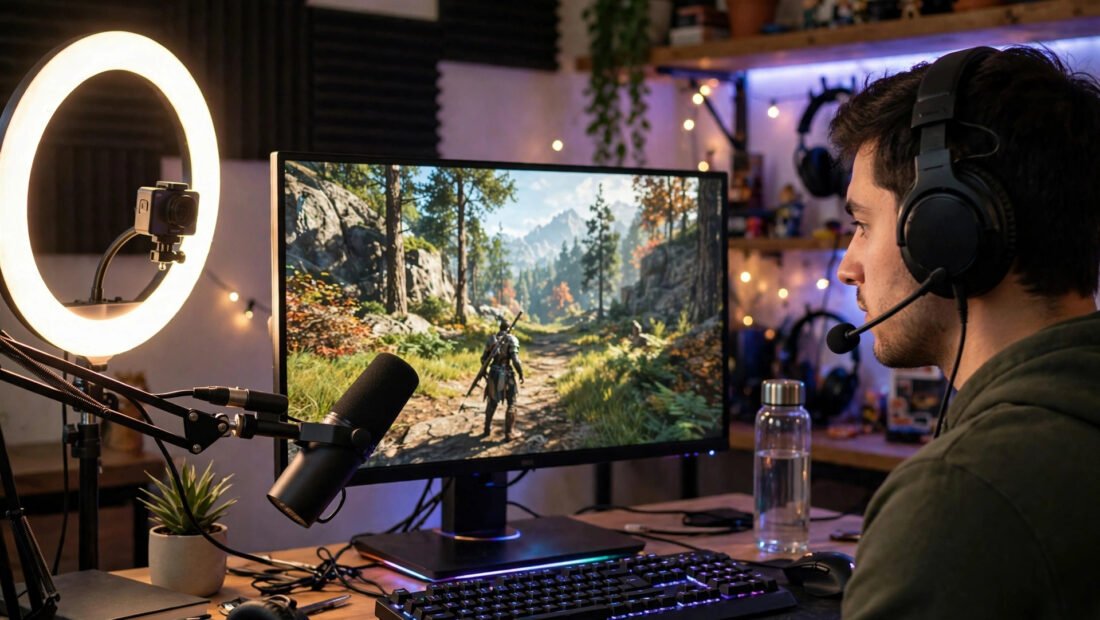
Spend almost nothing at the start. A PC or a console, the free OBS Studio software for recording, and the free version of DaVinci Resolve for editing will carry your first months. Viewers are far less forgiving of bad sound than of modest picture quality. Hiss, echo, and a microphone that peaks on every loud moment will drive people away from a video shot in perfect resolution. Clear, close, even audio keeps them watching.
If you buy one thing, buy a basic USB microphone in the $30 to $50 range. It is the single upgrade that changes how professional a small channel feels. A headset microphone or a phone placed close to you can work for the very first uploads while you confirm you enjoy the process. Capture cards, stream decks, and dedicated cameras belong after an audience exists, not before. Money spent on gear before anyone is watching is money that cannot be spent on the one resource that matters early, which is time.
Set up for consistency: same microphone distance, game settings, and export settings each time. In Texas, record and render in cooler parts of the day where you can, since a gaming PC running for hours through a summer afternoon adds real heat and cost.
Step 3: Publish Videos People Are Already Searching For
Small channels grow through search and suggested videos, not through the home page. That means each early video should answer a question a player is actively typing. Boss guides, best settings for low-end PCs, how a specific item works, how to fix a common error: these queries have clear intent, and a good video can rank for them for years. Use the suggestions that appear as you type in the YouTube search bar to find the exact phrasing players use, then make the video that phrasing deserves.
Packaging decides whether a good video gets clicked. Titles and thumbnails account for most of that decision. Keep thumbnail text to three or four large, readable words. Pair it with a clear image from the game or an expressive face, with strong contrast that stays legible at phone size. Make the title promise one clear payoff, and make the video deliver that payoff early. State the result in the first 15 seconds, then show it. Long animated introductions belong to channels that already have loyal audiences. Yours does not, yet.
Retention is the metric that ties it together. YouTube promotes videos that people keep watching. Cut every dull stretch, every long load screen, every repeated point. After each upload, read the retention graph and note the exact seconds where viewers leave. Fix that failure in the next video. Publish on a schedule you can hold for a year. One strong video a week beats five rushed uploads followed by a silent month. Most channels that break through do so somewhere between video 50 and video 150, so plan your expectations around that stretch from the beginning.
Step 4: Use Shorts as a Trailer, Not the Whole Channel
Short-form video is too large a discovery engine to ignore, and too shallow a foundation to build on alone. The pattern that works is simple. Take the strongest 30 seconds of a long video, a boss kill, a surprising result, a clean before-and-after, and release it as a Short that points viewers to the full guide. Post two or three Shorts a week, and pin a comment on each one linking to the complete video.
Be honest about the conversion. Shorts viewers subscribe quickly and watch long videos at low rates, so a Short with huge numbers may add fewer loyal viewers than a quiet guide with steady search traffic. Shorts still help. They grow the subscriber count, they test which moments hook strangers, and they keep the channel visible between weekly uploads. Just do not drift into being a Shorts-only channel by accident. Reaching 10 million Shorts views can open monetization, but long-form watch time is what builds the loyal, sponsor-friendly audience that supports a channel for years.
Step 5: Handle the Business and Copyright Basics Early
Monetization through the YouTube Partner Program requires 1,000 subscribers and 4,000 hours of public watch time, or 10 million Shorts views, in the relevant windows. For most gaming channels, reaching that line takes 6 to 18 months. Budget for that reality: income is zero for a long stretch, and even channels under 10,000 subscribers that do earn often see only about $50 to $200 a month from ads. Treat early spending accordingly.
Learn the rules before a strike teaches them to you. Gameplay footage and reviews are generally allowed by publishers, but music is the silent problem. Licensed tracks inside a game can trigger claims, and a copyright strike can stall a small channel. Mute licensed in-game music while recording where the settings allow it, and use tracks from the YouTube Audio Library or other properly licensed sources for your own edits. Keep records of any permissions or licenses. When sponsorships eventually arrive, disclose paid relationships clearly, as the rules require.
The practical details live in YouTube’s official help pages for creators, which cover Partner Program requirements, copyright, and channel policies in YouTube’s own wording. Read the monetization and copyright sections once at the start, and again before your first sponsored video. Twenty minutes of reading there is cheaper than one avoidable strike.
Step 6: Survive the Slow Months With a System
Every gaming channel passes through a desert, usually in months 3 through 9, where the effort is high and the results are still small. The creators who cross it share habits more than they share talent. They treat analytics as information about packaging, not as a verdict on themselves. A video that flops usually failed in its title, its thumbnail, or its first 30 seconds, and all three can be improved in the next upload.
They also stay present in their niche’s community. Answer comments. Join the Discord servers and forums where your players talk. Work with channels near your own size on collaborations that put both catalogs in front of the right viewers. And improve one skill at a time, on a monthly rotation: thumbnails one month, hooks the next, audio the month after. Small, steady gains compound. A channel that gets slightly better at one thing each month for a year looks nothing like the channel that started, and that compounding is how zero becomes 10,000 subscribers.
Protect the schedule. Keep two videos in reserve for sick weeks, set a fixed recording block, and agree on quiet hours at home early.
Your first video will be rough. Publish it anyway. Judge the channel at video 50, not at video 5. A narrow topic, cheap and clean gear, searchable videos, Shorts that feed the long work, and patience through the quiet months: that is the whole method, and it is why the channels still standing a year from now got there.




1 Comment