Ten thousand views in a month feels like success. The payout turns that feeling into a maths problem. At typical gaming rates, those views convert to roughly $20 to $50 from ads. That gap between the view count and the money is where most beginner plans fall apart. Profit is not views, and it is not even revenue. Profit is what remains after gear, software, electricity, internet, and a large amount of unpaid time are counted. Weighing game streaming honestly means putting the real numbers on both sides before deciding.
The Core Numbers Behind the Question
YouTube gaming channels commonly earn an RPM of roughly $2 to $5 per 1,000 monetized views. RPM is what the creator keeps after YouTube’s share, measured against all views, not only the ones that carried an ad. Audience location matters a great deal. Viewers in the United States pay best, which helps US-based creators, while a mostly overseas audience at the same view count can earn far less. Season matters too, since advertiser spending rises and falls through the year.
Run the arithmetic at the middle of that range. Ten thousand monthly views at $2 to $5 per thousand gives $20 to $50. To reach $1,000 a month from ads alone, a channel typically needs 300,000 to 500,000 monthly views. That scale rarely arrives quickly. Most channels that get there take 1 to 3 years of consistent publishing. Anyone promising a faster route is usually selling a course, not reporting a result.
The timeline has a shape worth memorising. In months 1 to 6, expect $0, because the channel is usually below monetization thresholds and still finding its format. In months 6 to 12, channels executing well often reach $50 to $300 a month, mostly from ads and early affiliate income. In year 2, consistent growers can reach $300 to $2,000 a month as memberships and sponsorships layer in on top of ads. The spread after that is wide, and it follows audience size and niche value rather than hours streamed.
The Case For: Why It Can Pay
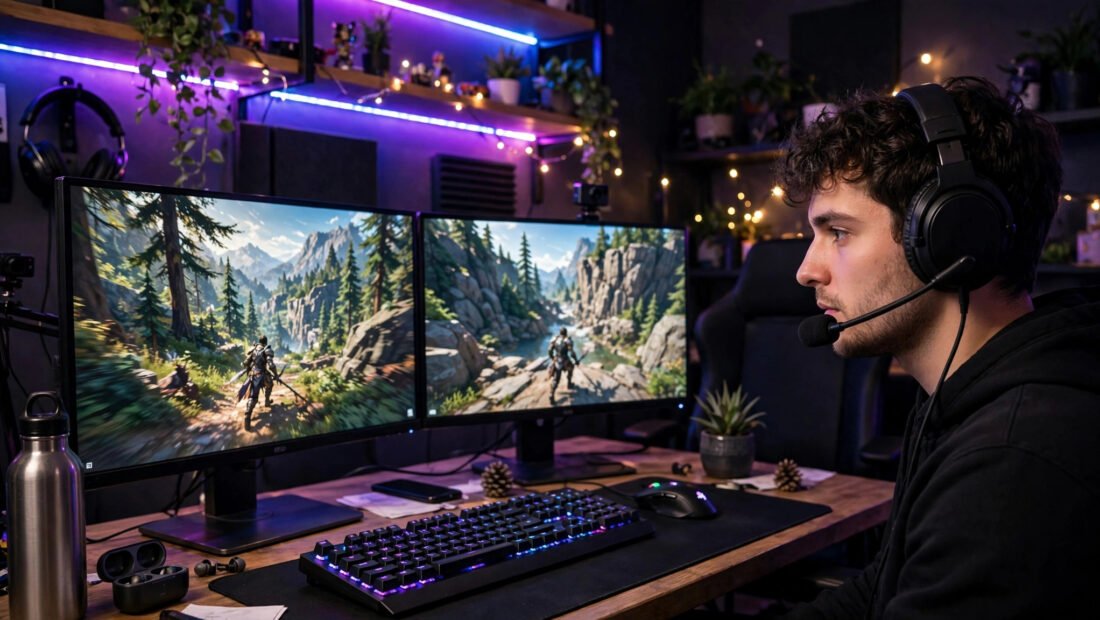
The entry cost can stay low. A beginner does not need a studio. A PC or console may already be in the house. The one purchase that matters early is a USB microphone in the $30 to $100 range, because poor audio drives viewers away faster than modest picture quality. A webcam is optional at the start. The main streaming software, OBS Studio, the free streaming and recording software, costs nothing and is the same tool many large channels still use.
Revenue stacks instead of relying on one source. Ads are only the base layer. Channel memberships bring recurring monthly payments from loyal fans. Super Chats and Super Stickers let live viewers pay to stand out during a stream. Sponsorships, once a channel is established, can pay $20 to $50 per 1,000 views for a dedicated segment, which dwarfs ad rates on the same views. Affiliate links for games and gear commonly pay 4 to 8 percent commission and keep earning from old videos. Merchandise can add real money at scale. A channel earning from four of these at once is far less fragile than one living on ads alone.
The archive keeps working. A stream ends, but edited videos, highlights, and Shorts cut from it stay searchable. One good session can produce a live event, a video, and several short clips. That reuse is the strongest economic argument for the format, since the same hours feed several pieces of content instead of one.
Skills transfer even if the channel stalls. Editing, speaking on camera, reading analytics, and building a small community are useful well beyond gaming. That does not pay a bill by itself, but it softens the downside of a slow first year. Those skills also have value in ordinary jobs: video editing for a local business, social media work, and customer community roles all draw on the same habits, so the year is rarely a total loss even when ad income stays tiny.
The Case Against: Why Most Beginners Lose Money
Time is the largest cost and the easiest to hide. A serious beginner load is 15 to 25 hours a week across streaming, editing, thumbnails, titles, and community replies. Twenty hours a week for a year, valued at minimum wage, is an opportunity cost of more than $7,500. A channel that earns $600 in that year has not turned a profit in any honest sense. It has paid a small amount toward a long apprenticeship.
Live streams alone are weak at bringing in new viewers. YouTube is far better at recommending searchable, edited videos than at sending strangers to a live broadcast from a small channel. Beginners who only stream tend to perform for a handful of viewers for months. Edited, discoverable videos feed live streams with new people. Streamers who skip the edited work skip the growth engine, which is why so many quit around month four with a tiny audience.
The work is mostly not gaming. Streaming is about 30 percent gaming and 70 percent production, community management, and analytics. Titles, thumbnails, pacing, chat moderation, and reviewing retention graphs decide the outcome. People who love playing but dislike performing and editing usually burn out, even when their play is skilled.
Costs creep. Beyond the first microphone, money leaks into editing software, music licensing, thumbnail tools, a better internet plan with stronger upload speed, and higher electricity use from long sessions. Each item looks small. Together they can eat the entire income of a small channel. Buying gear on credit against future earnings is the classic trap, because the earnings may arrive a year later than the bill.
Income is uneven and rule-bound. Ad rates dip, a game falls out of fashion, and a niche can cool. Sponsorship income also carries disclosure duties, and a beginner who hides a paid deal risks penalties and channel trust at the same time. None of this makes the work impossible. It makes the word profitable harder to earn than the word monetized.
What Smart Spending Looks Like as Money Arrives
Upgrades should be bought from revenue, in a set order, only after the earlier tier has earned its keep. With the first $200 earned, improve the microphone if it is still weak and add basic acoustic treatment. Blankets, rugs, and foam panels in an echoing room do more than a costly microphone in the same room.
At $500 or more in earnings, add a decent webcam and proper lighting. A $40 key light does more for perceived quality than a $400 camera used in bad light, so lighting comes before a camera upgrade. At $1,500 or more, a dedicated streaming PC or a capture setup makes sense for console players, since gaming and encoding stop fighting for the same resources. Ergonomic seating also belongs at this stage, because long sessions are now a proven habit rather than a hope.
Face camera sits in the middle of this debate. It helps viewers connect with a person rather than only a voice, and that connection supports memberships. It is not required. Plenty of channels grow on commentary and editing alone, and a beginner who hates being on camera will publish more often without one. Consistency beats a reluctant face camera.
A Workable Beginner Pattern
The channels that break through tend to follow a plain pattern. They pick one niche: one game, one challenge format, or one clear angle. They publish 2 to 3 edited videos a week built around search and curiosity, and they stream 2 to 3 times a week on a fixed schedule so regulars know when to show up. Best moments from each stream become Shorts. Anyone starting from nothing will find the setup steps in the companion page on how to start a gaming YouTube channel from zero.
Three self-checks sort out most decisions. A channel has a chance if the creator would still enjoy making the videos during a full year of near-zero pay. It has a chance if the budget can absorb the timeline without debt. It has a chance if the creator likes the creating at least as much as the playing. Failing two of those three is a strong signal to treat streaming as a hobby with no income expectation, which is a perfectly respectable outcome and often a happier one.
Verdict
Game streaming on YouTube can be profitable for a beginner, but only on a 1 to 3 year view, and only when profit is counted honestly. On ads alone, the early money is small: $20 to $50 for a 10,000-view month, and $1,000 a month needs several hundred thousand monthly views. The real path is stacked income from memberships, Super Chats, sponsorships, and affiliates, fed by edited videos that bring new viewers to the live streams. Start with gear already owned plus a decent microphone, spend nothing on credit, publish on a fixed schedule in one niche, and judge the channel after a large body of work rather than after a slow month. Treated as a cheap, patient side project, it is a fair bet. Treated as a quick wage, it will disappoint almost everyone.