Here is the odd fact of gaming in 2026: a console launched in 2017, with no 4K output and hardware that was modest even on its first day, still fills the used-game shelves at Texas GameStops while newer machines sit nearby gathering dust. The reason is not nostalgia. It is the price curve of its library. Nine years of games have had nine years to fall in price, and that changes the value math completely. A cheap console with thousands of cheap, excellent games is a hard offer to beat, even for hardware that shows its age. Whether it beats the alternatives for you depends on what you play, so here are the honest pros and cons, weighed one by one.
The Pros
The price has finally dropped to impulse level
This is the strongest point in the Switch’s favor. With Nintendo’s newer hardware on the market, the original models have seen permanent price cuts and steady retailer discounts. A Switch Lite now routinely sells for well under $200. Standard models with a game bundled in appear at sale prices during every major retail event. At those numbers you are paying less than the cost of a mid-range PC graphics card for a complete gaming system, controllers and screen included. For kids, casual players, and anyone adding a second console to the house, that is a genuinely low-risk purchase.
The library is huge, mature, and cheap to build
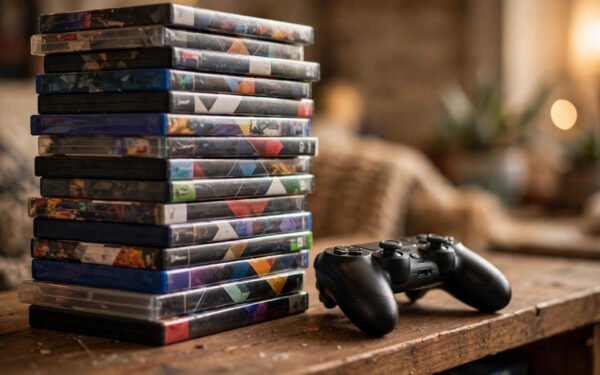
Nine years of releases means thousands of games, and most of the catalog no longer costs full price. Nintendo’s own titles, the Mario, Zelda, and Pokémon games, hold their value stubbornly, but the eShop runs constant sales, and the used physical market is flooded. GameStop shelves and Facebook Marketplace listings across Texas are full of Switch games at $15 to $25. A buyer in 2026 skips the years of waiting and walks straight into the finished library at discount prices. Few consoles in history have offered this much proven quality per dollar.
The hybrid design still does something nothing else does at this price
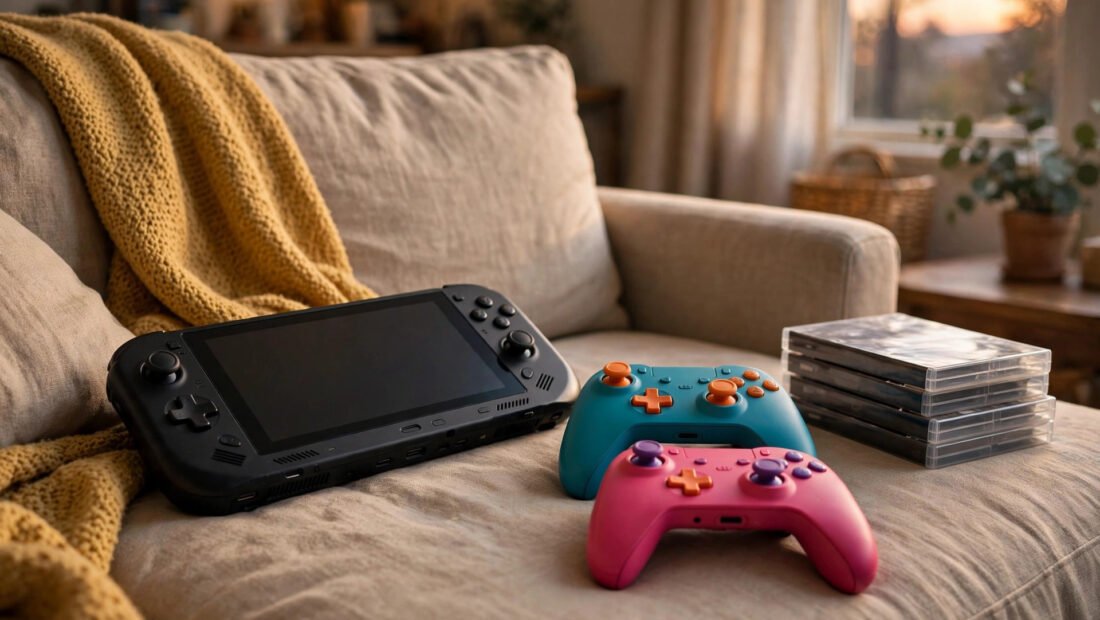
The Switch plays on a TV and then lifts out of its dock and keeps going as a handheld. Phones cannot match it, because touchscreens are a poor substitute for real buttons and sticks in platformers and action games. For travel, for long Texas road trips with kids in the back seat, and for homes where the TV is contested ground every evening, that flexibility is a real daily benefit, not a novelty. Nintendo’s newer hardware charges a premium for the same trick. The original does it for far less.
Local multiplayer and family gaming are built in
Two detachable controllers on the standard model mean two-player games straight out of the box, and the all-ages catalog is the strongest on any platform. Mario Kart 8 Deluxe with one small controller per player remains one of the best living-room experiences in gaming, and it costs nothing extra in subscriptions to play it on the couch.
The Cons
The hardware shows its age with newer games
This is the honest limit. Big new multiplatform releases either skip the Switch entirely or arrive in weakened forms, including cloud-streamed versions that depend on a strong internet connection. If your main interest is the latest graphically demanding titles, this console will disappoint you. That work belongs to a PlayStation, an Xbox, or a gaming PC, and readers weighing that route can look at how to build a gaming PC on a budget for the other side of the spending choice.
The future release pipeline is winding down
Nintendo’s development focus now sits with its successor hardware. The original Switch will keep receiving indie games and remasters, and its store and back catalog remain open, but if you are buying mainly for future Nintendo releases over the next several years, you are buying the platform those releases are moving away from. Its value is in what already exists, which is a great deal, but it is a backward-looking value.
Used units carry two specific risks
Battery wear is the first. A heavily used console from 2018 may hold far less charge than a new one. Stick drift is the second: the analog sticks on older Joy-Con controllers can start registering movement on their own. Neither risk kills a used purchase, but both must be tested before money changes hands. Play a game, let the controller sit untouched, and watch whether the character moves alone.
Storage and accessories add to the real price
The shelf price is not the full price. Budget $50 to $100 more for the basics: a microSD card of at least 128GB, because digital games eat the built-in storage fast, a screen protector on handheld models, and a carrying case if the console will travel. A second pair of Joy-Cons at $70 to $80 becomes close to essential once local multiplayer catches on at home. Nintendo Switch Online, at $20 a year for an individual, is only needed for online multiplayer and cloud saves; single-player and couch play work fine without it.
The Ten Games That Make the Case
The strongest argument for the console is the shelf of games itself. Ten first purchases cover almost any household, and all of them are frequently discounted. The Legend of Zelda: Breath of the Wild and Tears of the Kingdom are two of the best-reviewed games ever made, and either one can justify the console alone. Super Mario Odyssey is joyful and works for all ages. Mario Kart 8 Deluxe is the definitive party game. Animal Crossing: New Horizons is cozy, open-ended, and loved by people who play nothing else. Hades is an indie standout that plays perfectly in handheld mode. Stardew Valley costs $15 and can hold a player for hundreds of hours. Super Smash Bros. Ultimate serves the competitive household. Metroid Dread is tight, fast action. Celeste is a hard platformer with real heart. Pokémon Scarlet and Violet are flawed in places and still beloved, especially by kids. Buy the Nintendo-published titles used, since they rarely drop in price new, and pick up indies during eShop sales.
Which Model Fits Which Buyer
The Switch Lite, at $150 to $200, is handheld only, with no TV docking and no detachable controllers. It is the best value in the lineup and the right first console for a child or a personal handheld for one player. The standard Switch, at $250 to $300 on sale, is the hybrid original and the right pick if there is any chance you will play on a TV or share controllers. The Switch OLED, at $300 to $350 on sale, adds a better screen, a sturdier kickstand, and more storage. It earns its premium only if you will play handheld most of the time; docked to a TV, all three models look the same. Current lineups and model details are listed on Nintendo’s official Switch pages, which are worth a check before buying since sale bundles change often.
Buying new is the safer default at current prices, since you get the warranty and a fresh battery. If you buy used, test for stick drift, check how the battery holds up, and make sure the console is not account-banned before you pay.
How the Switch Compares With the Other Ways to Play
Put the Switch next to its real rivals and its place gets clearer. A phone is already in your pocket and its games are often free, but ads, touch controls, and small screens limit it, and the best phone games rarely match a Zelda or a Mario in depth. A PlayStation or Xbox costs more, demands the TV, and plays the big new releases the Switch cannot run, but its games mostly launch at full price and its back catalog deals rarely reach the $15 to $25 level that Switch cartridges sit at in Texas used shops. A gaming PC is the most flexible option of all and the most expensive to do well, with parts, setup, and upkeep on top of the game prices.
The Switch wins its corner by refusing to compete on power. It competes on total cost of fun: the cheapest complete system, the cheapest deep library, and the only one that follows you from the couch to the car to a plane seat without extra hardware. For a household that already owns a powerful console or PC, it also works as the second system, the one that holds the Nintendo games nothing else can legally play. For a household buying its first and only system on a tight budget, it is often the most games, and the most proven games, that the money can buy in 2026.
One more practical point for Texas buyers: the used market here is deep because the installed base is huge. That means choice, but it also means patience pays. Prices on standard models dip around major sale events and after holiday bundles land, and used cartridges in good condition are easy to find in most metros. A buyer who can wait a few weeks for a sale usually saves enough to cover the microSD card and case.
The Verdict
Weighing both sides: buy the Switch in 2026 if you are a parent buying a first console, a casual or family gamer, a traveler, or anyone who measures value in great games per dollar. At under $200 for a Lite, it is priced like an impulse buy and stocked like a mature platform, and that combination has no real rival right now. Skip it, and save toward Nintendo’s successor hardware or another platform instead, if you mainly chase new releases or care about top-end graphics. The Switch is no longer the future of gaming. It is something rarer and, for the right buyer, better: a finished, discounted library of excellent games on hardware cheap enough that the decision barely needs a debate.