
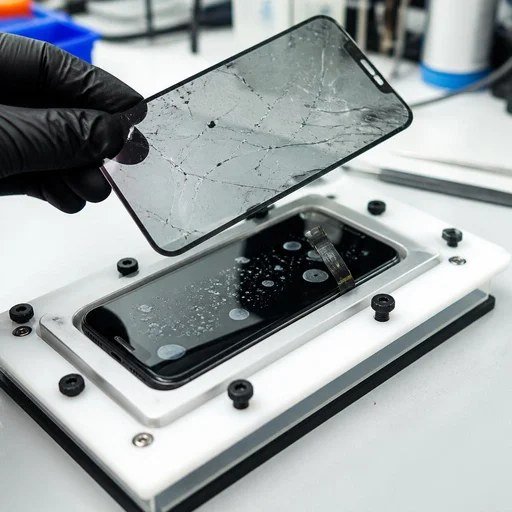
It lands face-down on the concrete with a sound like a dropped plate, and there is that half-second — everyone knows it — where you leave it lying there because turning it over makes it official. Then you pick it up: spiderweb. A cracked screen is the most common phone disaster there is, and the repair market knows you are upset, in a hurry, and price-blind. Slow down for ten minutes and read this instead: what a screen replacement should cost in 2026, and the exact steps to getting one without overpaying.
Before the Steps: Three Things to Know
Your phone’s display type sets the price bracket. Phones with OLED screens (flagship iPhones, Galaxy S-series) carry expensive panels; LCD-screen phones (older iPhones, budget Androids) are far cheaper to fix. Coverage changes everything. If you bought AppleCare+ or Samsung Care+, a screen repair through the manufacturer is typically a flat $29 — less than any shop on Earth. Check before you shop. Labor is the small part. Of a typical third-party bill, only about $30–$60 is labor; the rest is the part itself, which is why quotes cluster by model rather than by shop.
While You Decide: Living With the Crack Safely
A cracked screen is not just ugly — it is mildly hazardous and quietly worsening, and the days before your repair deserve thirty seconds of management. Run a fingertip lightly over the damage: if you feel loose shards or sharp edges, lay a strip of clear packing tape over the crack (or fit that $8 tempered-glass protector now, as a bandage) so the glass stays in the phone instead of in your thumb, and so moisture stays out. Keep the phone dry from here on — the water resistance your phone shipped with is gone the moment the glass breaks, and one rainy walk can turn a screen repair into a logic-board funeral. Watch for the damage spreading: a crack that reaches the edge often takes touch sensitivity with it over the following weeks, and a screen that starts ghost-touching (opening apps, typing by itself) has moved from “schedule a repair” to “back everything up today,” because a phone you cannot control is a phone about to lock you out of your own data.
Step 1: Check Your Coverage Before Any Quote
Five minutes here can save two hundred dollars. If you have AppleCare+ or Samsung Care+, stop shopping and book the manufacturer repair at the $29 screen price — no third-party quote will beat it, and the repair keeps your warranty intact. If your phone is under a carrier insurance plan (the monthly add-on on your phone bill), check its screen-repair deductible, which is often similarly low at authorized shops. No coverage? Continue to Step 2 — and note for later that a standard warranty never covers accidental damage, so “it’s still under warranty” does not help a cracked screen.
Step 2: Learn Your Phone’s Real Price Bracket
These are the honest 2026 ranges at independent repair shops, so you can hear a quote and know where it sits:
| Phone type | Third-party shop | Manufacturer |
|---|---|---|
| Older iPhone (e.g., iPhone 11) / Galaxy A-series | $89–$129 | Higher; often $199+ |
| Newer flagships with OLED (iPhone 15 Pro, Galaxy S24) | $179–$279 | $279–$379 at Apple |
| Budget Android phones | $59–$129 | Varies; often near the phone’s value |
| Most popular phones overall | $79–$249 | Premium, but warranty-safe |
Apple’s own out-of-warranty screen prices by model are published on Apple’s iPhone repair page — check your exact model there before deciding Apple is “too expensive,” because for some models the gap to third-party pricing is smaller than the internet claims, and Apple’s price includes a genuine part and a repair warranty. Independent shops typically save 30–50% against the manufacturer, which is real money — provided the part is honest, which is Step 4.
Step 3: Choose Your Route — Shop, Manufacturer, Mail-In, or DIY
Third-party local shop: fastest (most screen swaps take 30–60 minutes while you wait) and usually cheapest; quality depends entirely on the shop and the part tier they use. Manufacturer (Apple Store, Samsung service): genuine parts, calibrated displays, warranty preserved, highest price, sometimes an appointment wait or a shipped phone. Mail-in repair: competitive prices from national services, at the cost of days without your phone. DIY: a screen kit for many models costs $40–$120 and guides at iFixit are excellent — but one torn cable turns a $90 fix into a dead phone, Face ID and fingerprint sensors punish improvisation, and you void what warranty remains. DIY is for the confident and for phones old enough that the risk is cheap. Most people belong in route one or two.
One route deserves a specific warning: the carrier store. The shop that sold you the phone usually does not repair screens at all — walk-ins get quoted an insurance claim (with its deductible and a refurbished replacement phone rather than your phone repaired) or get referred out to the same independent shops you could visit directly, sometimes with a markup riding along. Insurance replacements make sense when a phone is destroyed or lost; for a plain cracked screen on an otherwise healthy phone, they often cost more than a direct repair and hand you a stranger’s refurbished device in exchange for your own. Walk past the carrier counter and into an actual repair shop, and you keep your phone, your data, and usually a hundred dollars.
Step 4: Ask the Part Question — Word for Word
Here is the sentence that separates a good deal from a trap: “Is that price for an original-quality (OLED/OEM-grade) screen, or a standard aftermarket one — and what warranty comes with the part?” Cheap aftermarket LCD conversions on OLED phones exist and are the true story behind most suspiciously low quotes: they work, but they are thicker, dimmer, hungrier on battery, and sometimes lose features. A legitimate shop will answer the question directly and offer tiers — many will happily install the better panel for $40–$80 more, which on a phone you will keep for two years is nearly always the right upgrade. The related warning: a $49 iPhone 14 screen replacement advertised online means an inferior part, zero warranty, or a bait price that changes once your phone is open on their bench. Real parts cost real money; that is not a scam, it is physics.
Step 5: Run the Repair-or-Replace Math Honestly
Compare the repair quote against two numbers: what the phone is worth fixed, and what a replacement you would actually accept costs. The working rule: if a quality repair is under half the phone’s replacement cost and the battery still holds a decent day’s charge, repair wins — a $150 screen fix on a healthy phone beats an $800 replacement every time. If the quote approaches the phone’s whole value (common with budget Androids, where a $120 screen meets a $150 phone), or the battery is also dying and the storage is also full, the repair is propping up a phone that is finished. The same arithmetic governs its bigger cousins, by the way — our breakdown of tablet screen replacement costs runs the identical calculation at tablet scale.
Handing It Over: Prep and Pickup Checks
Two short rituals protect you at the counter. Before: back the phone up (cloud or computer) the night before, then use the privacy mode your phone provides rather than handing over an unlocked life — Apple offers a repair state in its diagnostics flow on recent models and Samsung builds a dedicated Maintenance Mode that hides your data while technicians work; ask the shop which they prefer, because a reputable shop will have an answer and a worrying one will ask for your passcode. Note the phone’s condition with photos, including any existing dings the repair did not cause. After: before you pay and leave, test the new screen properly — swipe through every corner and edge, type a sentence in Notes, check Face ID or the fingerprint reader, look at a white screen and a dark screen for uneven brightness, and make a quick call to test the earpiece and proximity sensor (the screen should blank against your ear). Get the warranty terms for the part in writing on the receipt — 90 days is common, lifetime part warranties exist at better shops — because the time to learn a repair has no warranty is not when it fails in month two.
Step 6: Protect the Next Screen (Cheapest Step in This Guide)
You have just learned what a screen costs; armor is priced accordingly. A tempered-glass screen protector ($8–$15) sacrifices itself on exactly the fall you just had, and a case with a raised lip ($15–$40) keeps the glass off flat surfaces entirely. Together they cost less than the labor line on your repair bill. Add a backup habit — automatic cloud backup tonight, while the lesson is fresh — because the fall that cracks a screen sometimes kills the phone, and data is the one part no shop can replace at any price. Then turn your phone back over, look at the clean new glass, and enjoy the half-second of relief that started all this.


1 Comment