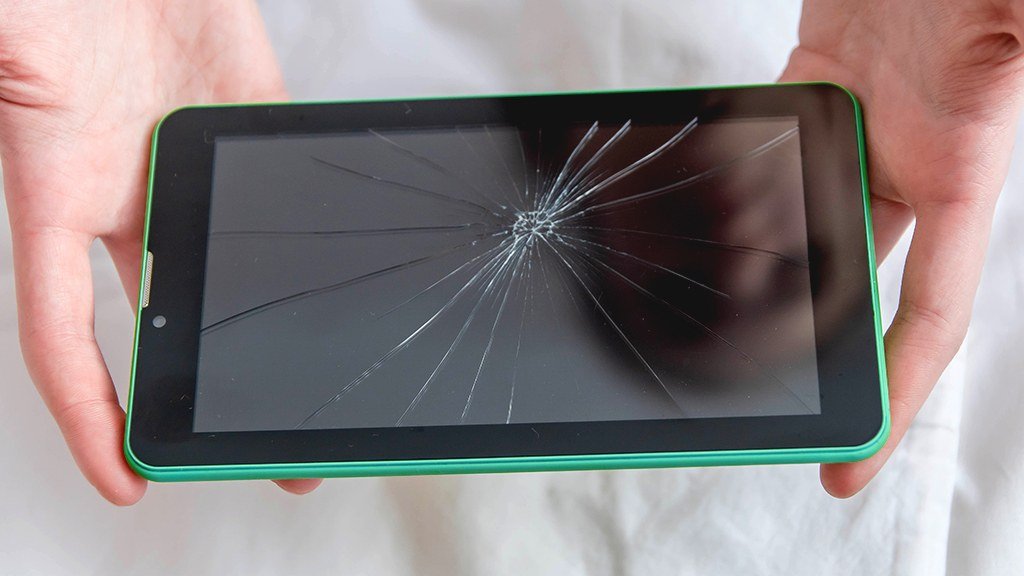
It starts as a hairline — one thin crack across the corner of the screen that you can only see at certain angles. A month later it has sent out a branch. By the time the tablet slides off the sofa arm and lands face-down on the tile, the question is no longer whether it is cracked but what on earth the repair will cost. And that turns out to be a genuinely strange market, where the same injury — broken glass — can cost $30 or $449 depending on the badge on the back.
Here is the full landscape: why the prices scatter so widely, what each brand actually charges, and how to decide between repairing, living with it, and replacing the tablet outright.
Why one cracked screen costs ten times another
The spread is not random; it follows the construction of the screen. Cheap tablets use a separate glass layer over the display, and replacing broken glass alone is a modest job. Premium tablets use laminated displays, where the glass, touch layer, and screen are fused into a single unit bonded to reduce reflections and thickness. Drop one and you are not buying glass — you are buying an entire display assembly, often the single most expensive part in the device.
Size multiplies it further. A large flagship screen contains more of everything, and manufacturers price their official repairs to match. This is why the range across tablets runs from about $30 at the very bottom to $449 at the top, with most common tablets landing somewhere between $100 and $250 — and why the brand-by-brand numbers below matter more than any average.
Apple’s official prices, and the AppleCare question
Apple’s pricing is at least predictable, because it is fixed and public on Apple’s official iPad repair pages. Without AppleCare+, a standard iPad screen repair runs $199. An iPad Air costs $249 to $299 depending on the generation. The iPad Pro sits at the top: $379 to $449 depending on size. These are out-of-warranty prices for a screen with no other damage — bend the frame in the same drop and the quote becomes a conversation about replacing the whole device.
AppleCare+ rewrites the maths entirely: with the plan in place, any of those screen repairs costs $49. The plan itself runs about $69 to $129 for iPads depending on model. Run the numbers plainly and AppleCare+ pays for itself with a single accident — one drop turns a $379 bill into $49 plus a plan you already bought. For tablets carried by children, commuters, or the chronically clumsy, it is less an upsell than an inevitability discount.
The third-party route for iPads
Independent repair shops will fix most iPad screens for $100 to $200 — often half the official price or less. The trade-offs are real, though, and worth understanding before you save the money. Parts quality varies enormously between shops: a good shop fits a quality display; a bad one fits glass that feels different under your finger, shows colors slightly off, and may not support features like True Tone correctly.
There is also a downstream consequence Apple does not hide: Apple may refuse future service on an iPad fitted with a third-party screen. If the tablet is old and out of warranty anyway, that threat has little weight. If it is a recent Pro you might one day trade in or have serviced officially, the cheap repair can become the expensive one later. Ask any shop two questions — what grade of screen they fit, and what warranty covers their work — and judge the answers as much as the quote.
Samsung and the rest of the Android side
Samsung’s official service for Galaxy Tab screens runs roughly $150 to $300 depending on the model — noticeably gentler than Apple’s top end, reflecting somewhat cheaper display assemblies on most models. Third-party shops typically charge $80 to $180, and Samsung tablets are generally considered easier to repair than iPads, which keeps independent prices honest. The same laminated-display logic applies, though: the biggest, brightest flagship tablets cost the most wherever you take them.
The Amazon Fire exception: repair loses to replacement
Budget tablets flip the whole calculation. A new Fire HD 10 regularly sells for $100 to $150 on sale, while a professional screen repair runs $80 to $120. Paying nearly the price of a new tablet to mend an old one — with its aging battery and slower chip — rarely makes sense, which is why Fire tablets are effectively disposable at screen-crack time. The relevant purchase is upstream: Amazon’s protection plans for these tablets run about $30 to $50 and make sense precisely because kids’ tablets live hard lives and die by the screen.
The option nobody prices: living with the crack
If the crack is a hairline, the touch layer works everywhere, and no glass is lifting or shedding slivers, there is a legitimate $10 answer: a tempered glass screen protector laid over the crack. It smooths the surface under your finger, helps stop the crack spreading, and keeps tiny shards where they belong. Plenty of people run a tablet like this for years. The moment touch starts failing, glass starts lifting, or the crack reaches the point where you are picking fragments out of your thumb, that verdict expires — a broken screen you keep touching is a minor injury on a schedule.
Doing it yourself, honestly assessed
Replacement screens for many tablets sell online for tempting prices, and video guides make the job look serene. The reality involves heat guns, adhesive, hair-thin ribbon cables, and glass that must come off in one piece while it is actively shattered. For a cheap tablet you would otherwise throw away, a DIY attempt is a reasonable gamble — you are risking a corpse. For anything worth real money, the labor you are saving is the small part of the bill; the part and the risk are the large parts, and both stay yours.
Before you commit: getting a quote you can trust
Screen prices are unusually quotable — this is not a repair where the shop must open the device to know. Get the number three ways and let them discipline each other: the manufacturer’s published price for your exact model, one quote from a reputable local shop (given the model and a photo of the damage), and the price of a comparable replacement tablet, new or refurbished. Two warnings from the pattern of complaints in this trade. If a quote is far below every other — half the going rate — the saving is coming out of the part, and the part is the repair. And if a shop will not say what grade of screen they fit or what warranty covers the work, the low number is the whole answer about them.
One more check costs nothing and occasionally pays for the whole repair: is the tablet still under any warranty or protection you forgot you had? Manufacturer warranties do not cover drops — but some credit cards extend purchase protection that does cover accidental damage in the first months, and household insurance sometimes covers electronics with a deductible worth comparing against the repair quote. Five minutes of checking paperwork before five hundred dollars of screen.
Kids’ and school tablets deserve their own sentence in this economics, because they break screens at rates adults find statistically implausible. For a tablet that lives in a child’s backpack, the decision framework inverts: assume the crack, price the protection instead. A rugged case and glass protector at purchase, a protection plan whose screen fee is a known $49-style number rather than a retail quote, and a hard rule that the flagship tablet is not the school tablet — these turn the repair question from a crisis into a line item. The cheapest cracked-screen strategy ever devised is choosing, in advance, which tablet is allowed to be dropped.
One more number to check before deciding, because it quietly flips many verdicts: what the cracked tablet is worth as a trade-in or resale today. Retailers and manufacturers discount trade-ins for cracked screens steeply — but not always to zero, and occasionally a promotion values a damaged tablet generously against a new one. If the trade-in credit plus the repair quote you were about to pay comes within sight of a new tablet’s price, the upgrade wins and the crack becomes someone else’s refurbishment problem. Broken screens feel like liabilities. Sometimes they are coupons.
So: repair, tolerate, or replace?
Price it in this order. Check the official price for your exact model first — it is the anchor everything else is measured against, and the same logic shops use for phones, as our look at what phone screen replacement really costs shows. If the tablet is worth more than twice the repair and the battery is healthy, repair it — officially if it is new and valuable, third-party if it is older and the shop is reputable. If the repair quote approaches the price of a new equivalent — the Fire-tablet situation — replace it and put the difference toward a case and a glass protector, which together cost $25 to $40 and are cheaper than every number in this article. And if the crack is cosmetic and the touch is true, spend the $10, cover it, and let the tablet live. Not every crack is a bill. Some are just a story the screen tells.