
Here’s the thing about is cloud storage safer than an external hard drive — the internet is full of answers, but half of them contradict each other and the other half are ads in disguise. I dug through the noise so you don’t have to, and pulled together what actually holds up: real expectations, realistic costs and timelines, and advice that works in the real world.
By the end of this guide you’ll know exactly what you’re dealing with, what your options are, and which one makes sense for your situation. Let’s get into it.
Is Cloud Storage Safer Than an External Hard Drive: What You Need to Know
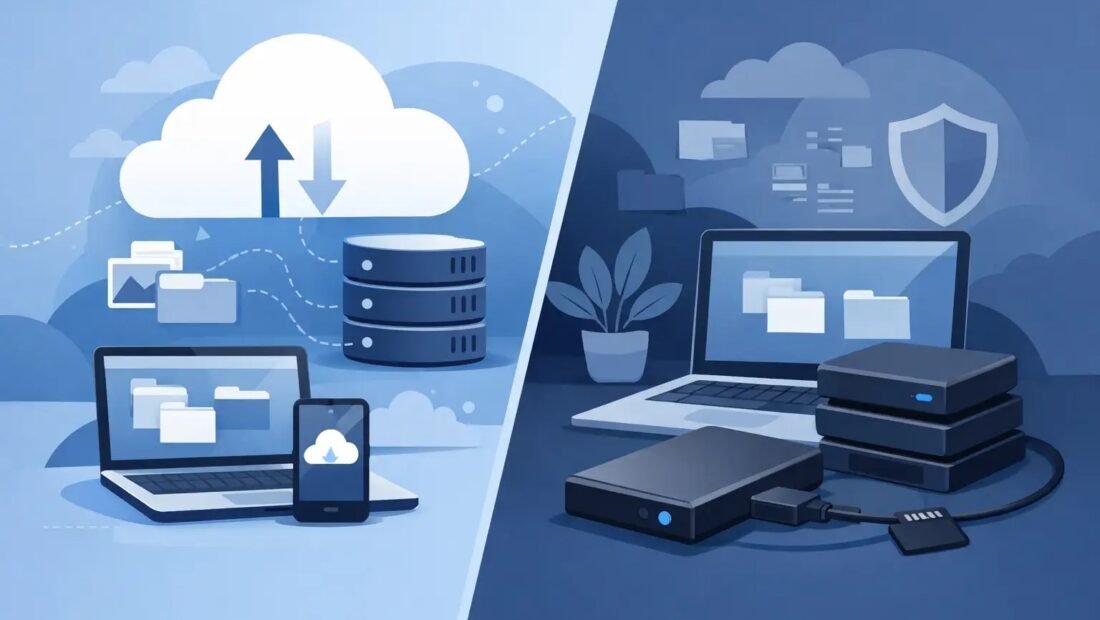
Asking whether cloud storage or an external hard drive is safer is like asking whether a seatbelt or an airbag is safer — the real answer is that they protect against different disasters, and you want both. But if forced to choose one, the cloud wins for most people. Here’s the honest breakdown of how each one fails.
External hard drives fail in depressingly physical ways. The drives themselves die — average lifespan is 3 to 5 years of regular use, and they often die suddenly and completely. They’re stolen in burglaries, destroyed in fires and floods (usually sitting right next to the computer they were backing up), dropped off desks, and corrupted by power surges. A backup drive stored next to the computer protects against almost nothing except the computer’s own drive failing. Worth reading next: How Much Does it Cost to Register an Llc in the Us.
Looking Closer at Your Options
The cloud’s failure modes are different and, for most people, rarer. Your data lives in professionally managed data centers with redundant copies across multiple locations — Google, Apple, and Microsoft don’t lose data to a dropped drive. The risks are account-based: someone hacks your account (fixable with strong passwords and 2FA), you forget to pay and the account lapses (providers give long grace periods and warnings), or the company changes terms. Widespread permanent data loss at a major provider is essentially unheard of. For the official guidance, see Consumer Reports’ buying advice.
Ransomware is the scenario where the difference gets stark. Modern ransomware encrypts everything connected to your computer — including that external drive sitting plugged in on your desk. Cloud storage with version history (Google Drive, iCloud, Dropbox, OneDrive all keep prior versions) lets you roll back to pre-attack files with a few clicks. An always-connected external drive offers zero such protection; only a drive you plug in, back up, and unplug again is ransomware-safe.
Smart Moves to Make Now
- External drives die physically: 3–5 yr lifespan, theft, fire/flood, drops, power surges.
- Cloud risks are account-based (hacking, lapsed payment) — actual data loss at major providers is essentially unheard of.
- Ransomware encrypts plugged-in external drives; cloud version history lets you roll back.
- External drive wins on privacy: encrypted local storage, no third party involved.
- Cloud wins on automation — manual backups die within months; automatic ones survive.
- Pro answer: both (3-2-1 rule). Forced to one: cloud for most people.
Here’s What Really Matters
Privacy is the external drive’s genuine advantage. Your files never leave your possession — no company scanning, no subpoenas to a third party, no breach of someone else’s servers exposing your data. If you encrypt the drive (BitLocker on Windows, FileVault on Mac — both free), it’s about as private as digital storage gets. For sensitive documents, that control has real value that the cloud can’t match.
Cost and convenience tilt cloud-ward for most. Two terabytes in the cloud costs $100/year (Google One) versus a $70 external drive that lasts years — the drive is cheaper long-term. But the cloud backs up automatically, works from anywhere, and never needs remembering. Every manual backup system I’ve ever seen dies within months; automation is a safety feature, not just a convenience. Worth reading next: How do I Set Prices for Handmade Products I Sell Online.
The verdict professionals actually use: both, in the 3-2-1 arrangement — your files, a cloud copy (automatic, offsite), and a local external copy (fast, private, under your control). If you must pick one, pick the cloud: it protects against the disasters that actually strike households — theft, fire, dead drives, ransomware — while the external drive’s advantages matter mostly to the privacy-conscious and the well-disciplined.
Where People Go Wrong
- Keeping the ‘backup’ drive plugged in 24/7 next to the PC — ransomware and surges take both.
- Storing the external drive in the same room as the computer and calling it disaster protection.
- Skipping 2FA on the cloud account, then blaming ‘the cloud’ when the account gets hijacked.
- Never testing restores — discovering your backup is corrupt during an actual emergency.
Questions People Ask
Can cloud providers just delete my files?
No — providers give extensive warnings before any account action, and paid accounts have long grace periods. Accidental provider-side deletion is virtually nonexistent at major services.
How do I encrypt an external drive?
Windows: right-click the drive > Turn on BitLocker. Mac: Disk Utility > erase/format as APFS Encrypted. Store the recovery key somewhere safe and separate.
What about NAS — best of both worlds?
A home NAS (like Synology) gives local control plus cloud-like features, but costs $300+ and still needs an offsite copy for fire/theft protection. Great for enthusiasts; overkill for most families.
How often should I restart my phone and computer?
A weekly restart is a good habit for both phones and computers. It clears temporary memory glitches, finishes pending updates, and kills runaway background processes that drain battery and slow things down. You don’t need to power off nightly — modern devices handle standby well — but if something starts acting strangely, a restart is always the first troubleshooting step worth trying.
Is it safe to buy refurbished electronics?
Yes, when you buy from reputable sources. Manufacturer-refurbished programs (Apple, Dell, Samsung) include new batteries or thorough testing plus a full one-year warranty — often indistinguishable from new. Third-party refurbishers like Back Market add their own warranties. Avoid no-name sellers with 30-day warranties and no return policy; the seller matters more than the ‘refurbished’ label.
The Bottom Line
The cloud is safer than a typical external hard drive setup for most people — it survives theft, fire, dead drives, and ransomware better. External drives win on privacy and one-time cost. Use both per the 3-2-1 rule; if you choose one, choose the cloud and protect it with 2FA.
Worth reading next: Is Franchising a Good Way to Start a Business With No Experience.
The takeaway is simple — know your options before you’re forced to pick one under pressure. Bookmark this guide, follow the action plan, and you’ll handle it like a pro.



