
What is the best way to back up family photos? It’s a fair question, and the honest answer is: it depends — but not in the annoying way. It depends on a handful of specific factors, and once you know what they are, you can figure out your situation in about five minutes. That’s what this article is for.
I’ve seen too many people overpay, waste a weekend, or pick the wrong option simply because nobody gave them the full picture. So here it is: the full picture, written like I’d explain it to a friend over coffee.
What is the Best Way to Back Up Family Photos: What You Need to Know
Family photos are the one thing on your devices that’s truly irreplaceable — everything else can be re-downloaded or re-bought. Yet most families keep their entire photo history on a single phone that could be lost, stolen, or dropped in a lake tomorrow. The fix isn’t complicated, but it does need to be automatic, because manual backups are backups that don’t happen.
The gold standard is the 3-2-1 rule, used by IT professionals everywhere: 3 copies of your data, on 2 different types of storage, with 1 copy offsite. For family photos that translates to: the originals on your phone, a copy on a cloud service, and a copy on an external hard drive at home. Any single disaster — dead phone, hacked cloud account, house fire — still leaves you with your memories. For more on this topic, see Is Cloud Storage Safer Than an External Hard Drive — it pairs well with what you just read.
Here’s What Really Matters
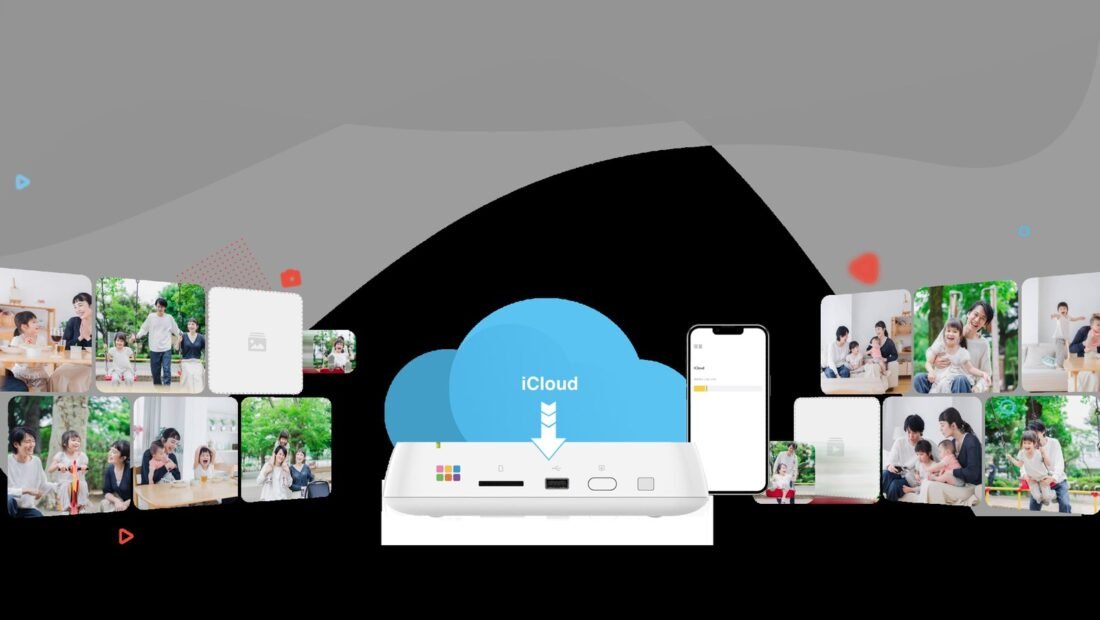
Start with cloud backup because it’s automatic. Google Photos (15GB free, then $2/month for 100GB or $10/month for 2TB) or iCloud (50GB for $1/month, 200GB for $3/month) backs up every photo over Wi-Fi without you thinking about it. Turn it on today on every family phone — this single step protects against the most common disaster, a lost or broken phone. Use ‘Storage saver’ quality in Google Photos to stretch free space, or original quality if you pay for storage. For the official guidance, see Consumer Reports’ buying advice.
The second layer is a local copy on an external hard drive. A 2TB portable drive costs $60 to $80 — enough for hundreds of thousands of photos. Once a month (set a recurring phone reminder), plug it in and copy the month’s photos over, or use free software like FreeFileSync to automate it. Keep this drive somewhere safe but accessible; a fireproof safe is ideal for the truly irreplaceable stuff.
Smart Moves to Make Now
- Follow the 3-2-1 rule: 3 copies, 2 storage types, 1 offsite.
- Cloud auto-backup first: Google Photos or iCloud on every family phone — protects against lost/broken phones.
- Monthly local copy to a $60–$80 2TB external drive (FreeFileSync automates it).
- Offsite: cloud counts; ultra-safe adds a drive at a relative’s house, updated twice yearly.
- Digitize prints at 600 DPI+ with a scanner or Google PhotoScan, then back those up too.
- Automate everything — manual backup systems always die within months.
The Details Most Guides Skip
For the offsite copy, you have options. The cloud backup already counts as offsite for most families. But the belt-and-suspenders move is a second external drive kept at a relative’s house or in a safe deposit box, updated twice a year. It sounds paranoid until you meet someone who lost everything in a house fire — then it sounds like the bargain of the century.
Don’t forget the shoebox problem: old printed photos and pre-digital camera files. A $100–$200 photo scanner (or a scanning app like Google PhotoScan, free) plus a rainy weekend digitizes decades of prints. Scan at 600 DPI minimum for prints you might want to reprint. Those scanned files then join the same 3-2-1 system — because a scanned photo with no backup is just a digital version of the same single point of failure. Related: our breakdown of What is the Difference Between an Llc and a Sole Proprietorship covers the numbers in detail.
The real secret to all of this: automation beats discipline. Every manual backup system eventually fails when life gets busy. Cloud auto-backup on every device, plus a scheduled monthly local copy, runs itself — and that’s the system that actually protects your photos five years from now, not the elaborate plan you abandon by March.
Common Mistakes to Avoid
- Keeping the only copy on a phone — the most losable, breakable device you own.
- Paying for cloud storage but never verifying backups actually complete (check quarterly).
- Backing up to an external drive and storing it next to the computer — one fire takes both.
- Scanning precious prints at low resolution, then discarding originals — you can’t re-scan quality you never captured.
Questions People Ask
Google Photos vs iCloud — which is better?
iPhone families: iCloud integrates seamlessly. Mixed/Android families: Google Photos. Both are excellent; the best one is whichever you’ll actually leave turned on.
How much cloud storage does a family need?
The average family adds 5–15GB of photos yearly. 200GB ($3/month iCloud or $30/year Google One) comfortably covers most families for years.
Are my photos private in the cloud?
Both Google and Apple encrypt photos in transit and at rest. Enable two-factor authentication on the account — that’s what actually determines your privacy.
How often should I restart my phone and computer?
A weekly restart is a good habit for both phones and computers. It clears temporary memory glitches, finishes pending updates, and kills runaway background processes that drain battery and slow things down. You don’t need to power off nightly — modern devices handle standby well — but if something starts acting strangely, a restart is always the first troubleshooting step worth trying.
Is it safe to buy refurbished electronics?
Yes, when you buy from reputable sources. Manufacturer-refurbished programs (Apple, Dell, Samsung) include new batteries or thorough testing plus a full one-year warranty — often indistinguishable from new. Third-party refurbishers like Back Market add their own warranties. Avoid no-name sellers with 30-day warranties and no return policy; the seller matters more than the ‘refurbished’ label.
The Bottom Line
Turn on cloud auto-backup (Google Photos or iCloud) on every family phone today, add a monthly copy to a $70 external drive, and let the cloud serve as your offsite copy. That’s the 3-2-1 rule in practice — automatic, cheap, and the difference between a scare and a tragedy.
If that sounds familiar, you may also want our guide to What is the Cheapest Way to Get a Business Phone Number.
Bottom line: a little homework now saves you money and stress later. Use the steps above, skip the common mistakes, and you’ll come out ahead of most people dealing with this.



