
Nobody wakes up excited to figure out how much does a basic desktop computer setup cost for a home office, but here we are — and honestly, it’s worth getting right. A little knowledge upfront can save you real money, real time, or a real headache. I learned several of these lessons the expensive way so you don’t have to.
This guide covers the essentials without the filler: what’s normal, what to watch out for, step-by-step actions that work, and a clear bottom line. Skim the headings if you’re in a hurry, or read the whole thing if you want to get it right the first time.
How Much Does a Basic Desktop Computer Setup Cost for a Home Office: What You Need to Know
Setting up a home office desktop doesn’t require the $2,000 battle stations YouTubers show off. A genuinely good basic setup — computer, monitor, keyboard, mouse — runs $450 to $600 if you shop smart, and stepping up to $800–$1,000 buys comfort and longevity worth having. Here’s what each budget actually gets you.
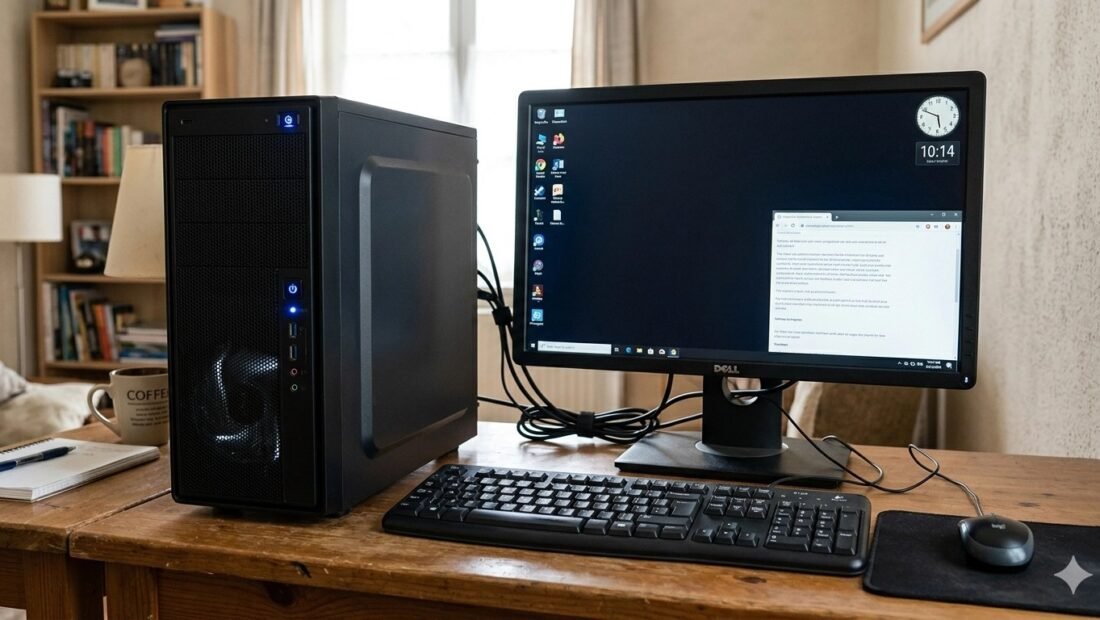
The $450–$600 budget build is the value king. A refurbished Dell OptiPlex or HP EliteDesk mini PC ($200–$280) with an 8th-gen i5 or better, 16GB RAM, and a 512GB SSD handles office work flawlessly — these business machines are built to last and whisper-quiet. Add a 24-inch 1080p IPS monitor ($110–$140), a Logitech MK270 wireless keyboard-mouse combo ($25), and basic speakers or a headset. Total: around $500 for a setup that embarrasses many $800 all-in-ones. Worth reading next: How do I Remove a Virus From my Windows Computer.
Breaking It Down Further
At $800–$1,000, you buy new and buy comfort. A new mini PC or small-form-factor desktop with a current-gen i5/Ryzen 5 ($450–$550), a 27-inch 1440p monitor ($200–$250) — the resolution jump is the single biggest quality-of-life upgrade for desk work — plus a decent mechanical or Logitech MX keyboard ($70–$100) and an ergonomic mouse ($50–$80). This tier is where work-from-home stops feeling like a compromise. For the official guidance, see Consumer Reports’ buying advice.
The $1,200+ tier adds dual monitors and ergonomics. Two 27-inch 1440p displays ($400–$500 together) transform multitasking — email on one screen, work on the other — and most people who try dual monitors never go back. Add a monitor arm ($40–$80) to reclaim desk space, and consider the chair separately: a $200–$300 ergonomic chair affects your workday more than any computer component.
What to Do About It
- $450–$600: refurbished business mini PC + 24″ 1080p monitor + wireless KB/mouse — the value king.
- $800–$1,000: new mini PC + 27″ 1440p monitor + quality keyboard/mouse — the comfort tier.
- $1,200+: dual 27″ monitors + monitor arm; budget the chair separately ($200–$300).
- Splurge on monitor + chair (2,000 hrs/year of use); save on the PC via refurbished.
- Hidden costs: UPS backup ($60–$100), webcam ($50–$80), cables/surge protector ($30–$50).
- Check employer WFH stipends ($500–$1,000); buy monitors on back-to-school/Black Friday sales.
The Part Most People Miss
Don’t forget the hidden costs that ambush budgets. A UPS battery backup ($60–$100) protects against the power flickers that corrupt unsaved work. A webcam better than laptop quality ($50–$80) matters if you’re on video calls all day. And budget $30–$50 for cables, a surge protector, and maybe a USB hub — the unglamorous stuff that makes everything actually work together.
Where to save vs. splurge: save on the PC itself (refurbished business machines are incredible values), splurge on the monitor and chair (you stare at one and sit in the other for 2,000 hours a year). Never splurge on RGB lighting or a ‘gaming’ aesthetic for office work — that money buys zero productivity. And check your employer’s WFH stipend; many companies cover $500–$1,000 of home office gear. For more on this topic, see How do I Write a Simple Business Plan for a Small Bakery — it pairs well with what you just read.
Timing your purchase saves real money too. Back-to-school (July–August) and Black Friday bring the deepest monitor and peripheral discounts, while refurbished business PCs are consistently cheap year-round on Dell Outlet and similar. Buying the monitor on sale and the PC refurbished is the classic $500-setup formula.
Common Mistakes to Avoid
- Blowing the budget on a flashy PC while using a dim 10-year-old monitor — the screen matters more daily.
- Skipping the UPS; one power flicker during a storm can corrupt hours of unsaved work.
- Buying a ‘gaming’ PC for spreadsheet work — paying for a GPU you’ll never use.
- Forgetting ergonomics: a $500 PC with a $50 chair is a backache waiting to happen.
Questions People Ask
Desktop or laptop for a home office?
A desktop gives more performance per dollar and better ergonomics with a real monitor; a laptop gives flexibility. Many people do both: laptop + docking station + monitor, best of both worlds.
Is refurbished reliable for daily work?
Business-class refurbished (Dell OptiPlex, HP EliteDesk) is extremely reliable — these were $1,000+ machines built for 5-year corporate lifecycles. Buy from manufacturer outlets with warranties.
What internet speed do I need for home office?
100 Mbps down is plenty for video calls and cloud work; prioritize stable latency over raw speed, and use Ethernet for the desktop if possible.
How often should I restart my phone and computer?
A weekly restart is a good habit for both phones and computers. It clears temporary memory glitches, finishes pending updates, and kills runaway background processes that drain battery and slow things down. You don’t need to power off nightly — modern devices handle standby well — but if something starts acting strangely, a restart is always the first troubleshooting step worth trying.
Is it safe to buy refurbished electronics?
Yes, when you buy from reputable sources. Manufacturer-refurbished programs (Apple, Dell, Samsung) include new batteries or thorough testing plus a full one-year warranty — often indistinguishable from new. Third-party refurbishers like Back Market add their own warranties. Avoid no-name sellers with 30-day warranties and no return policy; the seller matters more than the ‘refurbished’ label.
The Bottom Line
A genuinely good home office desktop setup costs $450–$600 built around a refurbished business PC and a 24-inch monitor, or $800–$1,000 new with a 27-inch 1440p display. Splurge on the monitor and chair, save on the PC, don’t skip the UPS, and check for an employer stipend before spending your own money.
For more on this topic, see How do I Hire my First Employee for a Small Business — it pairs well with what you just read.
Bottom line: a little homework now saves you money and stress later. Use the steps above, skip the common mistakes, and you’ll come out ahead of most people dealing with this.



