Saturday night, a sprained ankle swelling on the coffee table, no insurance card in your wallet. Two doors present themselves: the urgent care clinic on the corner, and the emergency room across town. One of them will cost roughly the same as a nice dinner out. The other can cost more than your rent. Without insurance, choosing the right door — and knowing how the bill is built once you are through it — is the whole financial game. Here is the comparison, the price anatomy, and the handful of sentences that lower the total.
The four doors, compared
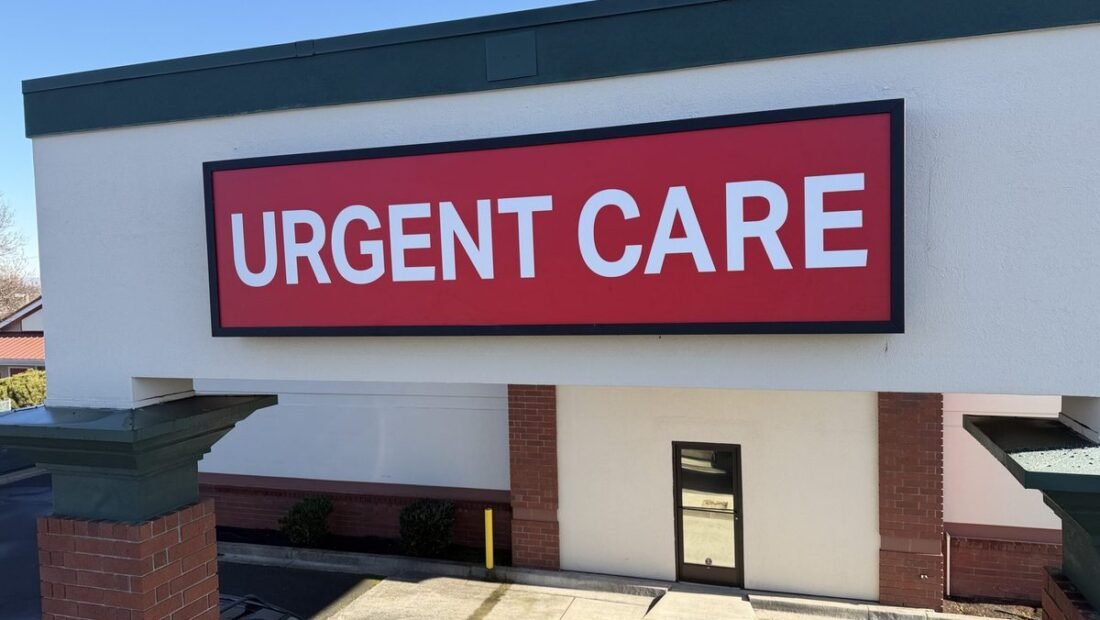
Urgent care centers are the middle option and usually the right one for the uninsured: sprains, minor cuts, fevers, infections, sprains, simple fractures, and illnesses that are miserable but not dangerous. The self-pay base rate at most US urgent care centers runs $100 to $250 for the visit itself — the clinician’s exam and diagnosis. Walk-in, same-day, no appointment infrastructure required.
Retail clinics — the CVS MinuteClinic and Walgreens-style clinics inside pharmacies — undercut even urgent care for simple stuff, typically $99 to $139 for minor issues: colds, strep tests, ear infections, simple rashes. Their scope is narrower (no X-ray on site in most cases, no stitches beyond the trivial) but for genuinely minor problems they are the cheapest professional door in American medicine.
Telehealth is the newest door and often the cheapest of all for the right problems — rashes, pink eye, sinus complaints, medication questions, many mental-health visits — with self-pay video visits frequently landing under the retail-clinic range. It cannot stitch, splint, or swab, but for “look at this and tell me if it matters,” it is hard to beat. It also has a triage superpower: a clinician on video can tell you, for the price of the cheapest visit on this page, whether your problem needs hands and an X-ray today or a pillow and tomorrow — which converts an anxious guess into a purchased certainty.
The emergency room is the outlier on price and the essential option for genuine emergencies. The average ER visit runs well past $1,000 before treatment extras, because you are paying for a facility staffed and equipped for catastrophes at 3 a.m. That capability is exactly what you want for chest pain, stroke signs, severe bleeding, difficulty breathing, major trauma, or a head injury with vomiting or confusion — and it is financial vandalism to buy it for a sprained ankle. HealthCare.gov’s coverage options for people without insurance are also worth a look before you need care: a marketplace plan, Medicaid eligibility after an income change, or a qualifying life event may insure you more cheaply than one uninsured year of paying retail.
How the bill grows: the add-ons
The base rate buys the visit, not the answers. Everything diagnostic stacks on top, and knowing the rough prices lets you participate in the decisions. X-rays typically add $100 to $250. Stitches for a real laceration run a few hundred dollars. Lab work varies wildly — a strep test is cheap; a broader panel is not — and any imaging beyond plain X-ray (ultrasound, CT) escalates fast. Two questions protect you, asked politely and without apology: “What will that test cost, and will the result change what we do today?” A test that will not change today’s treatment is a test that can often wait, be done more cheaply elsewhere, or be skipped on a clinician’s own judgment. Good clinicians respect the question because they ask it themselves when the patient is their own family.
The discount that exists because you ask
Here is the worst-kept secret in American cash medicine: most urgent care centers offer 20 to 40 percent off their listed rates for self-pay patients — but you usually have to ask. The script is twelve words: “I’m paying out of pocket — what is your self-pay rate for this visit?” Asked when you call ahead or at check-in, before treatment, it routinely saves $50 or more, because the listed price is a negotiation anchor written for insurance companies, not a price anyone expects a person to pay. Calling two nearby centers and comparing self-pay rates takes four minutes; urgent care is one of the few corners of health care where prices are genuinely shoppable, and the centers know it.
If the bill still lands hard: payment plans are normal, unglamorous, and available at most centers for the asking — monthly installments at no drama. And know the backdrop: medical debt under $500 no longer appears on credit reports under the bureaus’ recent policy changes, and nonprofit hospitals (a different tier from urgent care, but relevant if an ER visit happens) carry legal obligations to offer charity care and financial assistance that they do not advertise. The same ask-first habit runs through all uninsured care, incidentally — the numbers in our breakdown of how much a teeth cleaning costs without insurance reward exactly the same phone call.
A worked example: the Saturday-night ankle, priced both ways
Same ankle, same X-ray, two doors. At the urgent care center on Sunday morning: a self-pay visit at $140 after asking the question this article keeps recommending (listed at $185, discounted because you asked), an ankle X-ray at $120, a walking boot fitted for $60, and a follow-up recommendation to your regular doctor. Total: about $320, paid $80 down with the rest on a three-month plan. At the emergency department on Saturday night: a facility fee and physician charge that commonly total $900 to $1,500 before the same X-ray, the same boot, and discharge paperwork saying “follow up with your doctor.” The medicine in both rooms is competent; the X-ray is the same X-ray. The price difference buys the ER’s readiness for the heart attack that did not happen in the next bay — readiness you were not using. That is the entire logic of urgent care, and it is why the comparison matters most precisely to the people with the least cushion: the uninsured.
After the visit: the itemized bill is negotiable too
If a bill arrives higher than the quote — it happens — do not pay the first envelope out of reflex. Request an itemized statement and read it like a restaurant check from a place you suspect of creativity: duplicate charges, tests listed that you do not remember receiving, a “facility fee” that was never mentioned. Errors in medical billing are common enough that reviewing the itemization is standard advice from patient advocates. Then call the billing office with the same sentence that worked at check-in — “I’m self-pay; is there a prompt-pay or cash discount on this balance?” — because a discount for immediate payment of the remainder is routinely available and never advertised. Keep notes of names and dates. None of this is adversarial; billing departments do this dance daily, and the uninsured patient who asks politely and specifically is simply playing the game at the level it is actually played.
Can they turn you away if you cannot pay?
The honest answer differs by door. Private urgent care centers and retail clinics are businesses: they may require payment or a deposit upfront for non-emergency care, and they can decline non-urgent treatment if you cannot pay — which is precisely why the call-ahead price conversation matters. Hospital emergency departments are different by law: under the federal EMTALA statute, an ER must provide a medical screening exam and stabilizing treatment for an emergency condition regardless of ability to pay. The bill still exists afterward — EMTALA governs treatment, not forgiveness — but no one in a true emergency should delay care out of fear of the desk. That distinction is the last comparison on this page and the most important one: price-shop the sprains, and never, ever price-shop the chest pain.
One preparation costs nothing and pays off in every scenario: know your two nearest urgent care centers’ self-pay rates and hours before anyone is hurt, the way you know where the flashlight is. Urgent care quality varies — a center affiliated with a hospital system can usually escalate smoothly if your “minor” problem turns out not to be — and the time to discover that a clinic closes at 8 p.m. is not 8:20 with a crying child. Add your medications and allergies to a note in your phone while you are at it; in a strange clinic, stressed, you are a less reliable historian than you think, and accurate information is the one currency every door accepts.
So the Saturday-night ankle resolves like this: urgent care in the morning (or a retail clinic if it is plainly minor), a call ahead for the self-pay rate, a polite question before any add-on test, and a payment plan if the total still stings — a $150 problem, solved at $150 prices. Save the four-figure door for the nights it is actually for, and uninsured care becomes a budget line instead of a catastrophe. That transformation — from dread to arithmetic — is the real deliverable of knowing the prices: the next Saturday-night injury gets a decision instead of a panic, and decisions are almost always cheaper.