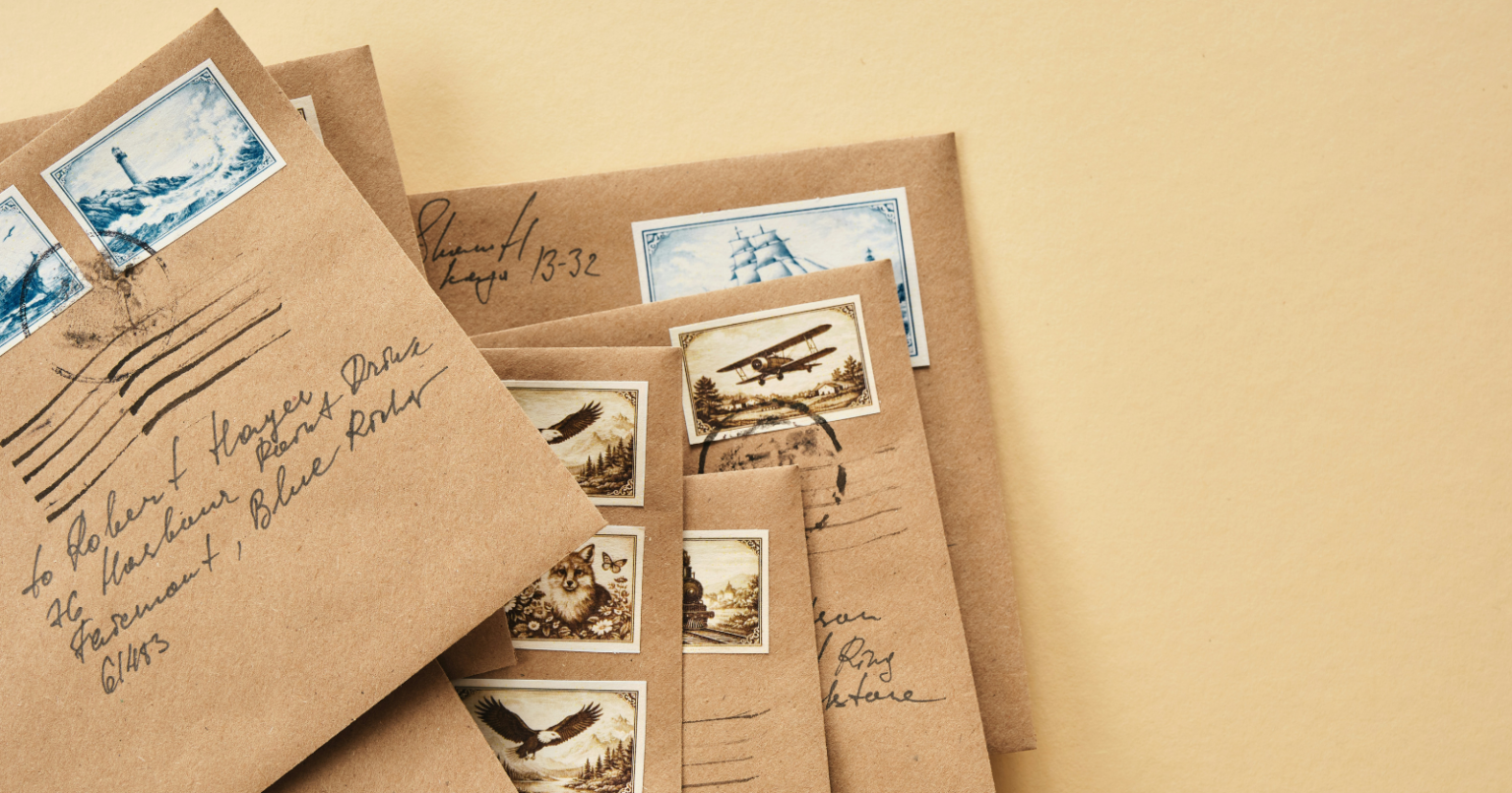
Somewhere in your kitchen drawer there is probably a book of Forever stamps you bought years ago for a lot less than today’s price — and here is the part people never quite believe: those old stamps still mail a letter at the current rate, whatever that has become. That one design decision explains most of how stamp pricing works in 2026. Here is the checklist first, then every number behind it.
The Stamp Buyer’s Checklist
- ☐ A standard letter (up to 1 oz, normal envelope) needs exactly one Forever stamp — $0.82 in 2026
- ☐ Each additional ounce adds $0.29 — a 2 oz letter costs $1.11 all-in
- ☐ Square, rigid, or lumpy envelopes carry a non-machinable surcharge of about $0.46
- ☐ Postcards mail for less: $0.65
- ☐ Businesses with postage meters pay $0.78 for the same 1 oz letter — a built-in 4¢ discount
- ☐ A book of 20 Forever stamps costs $16.40 — and never expires or loses value
- ☐ International letters use a Global Forever stamp or equivalent postage — check the current rate before mailing
- ☐ Buying stamps before an announced price rise is the only guaranteed saving in this whole guide
How We Got to $0.82
The current price of a First-Class Forever stamp is $0.82, effective July 12, 2026, when the US Postal Service raised it from $0.78 — a 4-cent jump inside a broader ~5% adjustment across mailing services. If the number feels steep for a little square of paper, the recent history explains the feeling: the stamp cost $0.58 in 2021, and USPS has raised prices roughly twice a year since, citing delivery costs and a mandate to close its long-running financial gap. One figure held mercifully steady in the latest change: the additional-ounce rate stayed at $0.29, which matters more than the headline if you mail anything heavier than a birthday card. The Postal Service publishes its full official price lists through USPS Postal Explorer, which is the source to trust over any blog’s summary — including, if rates change again, this one.
The Climb, Year by Year
For anyone who feels the price moved while they were not looking, it did — in steps. The Forever stamp cost $0.58 through most of 2021, then climbed the stairs roughly twice a year: $0.63 in early 2023, $0.66 that July, $0.68 in January 2024, $0.73 in July 2024, $0.78 in July 2025, and now $0.82 since July 2026. That is a 24-cent rise in about five years — over 40 percent — after decades in which a few cents per decade was the norm. Worth noticing, for the collectors of useful trivia, is what did not change character through all of it: every one of those older, cheaper stamps still works. The drawer is a small museum of postal history that remains legal tender for letters.
What a Forever Stamp Actually Is
The Forever stamp, introduced in 2007, is a promise rather than a denomination: it covers the postage for a 1-ounce First-Class letter forever, at whatever the rate happens to be when you use it. Buy a book at $0.82 today and those stamps will still mail letters if the rate reaches a dollar in 2030. This is why the drawer book from the first paragraph works, why there is never a reason to buy 4-cent “make-up” stamps for old Forever stock (that ritual belongs to the older denominated stamps), and why stamp prices rising has a small silver lining for anyone holding a drawerful. You can also still use old denominated stamps — the ones printed with a cent value — in any combination that adds up to the current rate; US stamps do not expire. The official word on mailing basics lives at USPS’s guide to sending letters.
Beyond the Basic Letter: Where the Extra Cents Live
Most overpayments and most returned mail come from the edges of the simple case, so walk them once. Weight: one ounce is about four sheets of paper plus an envelope — a useful kitchen-scale intuition. A stuffed or thick envelope crosses into 2 ounces and the $1.11 total quickly. Shape and stiffness: letters must bend to run through sorting machines. Square envelopes, envelopes with clasps or buttons, and anything rigid or oddly lumpy fail that test and draw the non-machinable surcharge of about $0.46 on top of postage — the reason fancy square wedding invitations cost more to mail than they look like they should. Postcards: the bargain of the system at $0.65, provided they stay within postcard size limits; oversize “postcards” get charged as letters. International: a 1-ounce letter abroad needs a Global Forever stamp or postage equal to the current international rate, and heavier or larger pieces step up by destination group — check the rate for your country before guessing, because underpaid international mail comes back slowly or not at all.
Buying Stamps: Books, Coils, and Commemoratives
The stamp itself comes in formats worth knowing. The book of 20 ($16.40 at today’s rate) is the household standard, sold at post offices, grocery stores, pharmacies, and ATMs in some areas. Coils of 100 suit offices and anyone with a stamp dispenser habit. Sheets of commemorative stamps — the picture stamps honoring everything from national parks to cartoon characters — cost exactly the same per stamp and mail exactly the same letters; the premium editions collectors buy are a hobby purchase, not a postage one. Two warnings complete the picture. Never buy stamps from online marketplaces at deep discounts: counterfeit Forever stamps, printed abroad, are a large and documented fraud category, and mail bearing them can be seized as abandoned — the “deal” costs you the letter. And stamps are not returnable or exchangeable for cash, one more reason the pre-increase stock-up should be sized to what your household will actually mail over a year or two, not a decade.
What One Stamp Does Not Cover
The 82 cents buys a ride for a standard letter inside the United States — nothing more, and the extras are where mailing budgets quietly leak. Certified Mail, the service that proves you mailed something (a contract, a legal notice, a tax document), adds a few dollars per piece, and a return receipt proving delivery adds a few more on top. Packages are a different universe with weight-and-zone pricing that starts at several dollars, not cents. Priority Mail buys speed and flat-rate boxes rather than ounces. None of this is fine print; it is the actual structure. The stamp is the base fare of the postal system, and like a base fare everywhere, the journey you actually take may cost more — which is precisely why the checklist at the top of this guide starts with weight, shape, and destination rather than with the sticker price of the stamp itself.
Why the Price Keeps Climbing
Three forces, briefly. First, the Postal Service is required to largely fund itself from its own revenue while delivering to every address in a growing country six days a week — the most expensive delivery network in the nation, run on stamp money. Second, letter volume keeps falling as bills and letters move online, which spreads those fixed costs across fewer pieces of mail. Third, the regulator-approved pricing system in recent years has allowed increases above inflation to address USPS’s accumulated losses. Whether you find that fair or not, the practical conclusion for a household is simple: rates have risen roughly twice a year lately, so stamps are one of the few purchases where buying ahead of an announced increase is a genuine, legal, risk-free saving — Forever stamps are, in effect, a tiny hedge that never expires.
Ways to Spend Less on Postage
Beyond stocking up before an increase: use the metered rate if you run a small business — postage meters and online postage services charge $0.78 for the letter everyone else mails at $0.82, and the software usually pays for itself in saved post-office trips. Weigh before you stamp: a $15 kitchen scale ends the two-stamp guesswork on anything chunky, and over-stamping “to be safe” is a quiet tax plenty of households pay weekly. Keep envelopes standard: choosing rectangular, flexible envelopes avoids the non-machinable surcharge entirely. Buy stamps where you already are: grocery and pharmacy counters sell books at face value, so there is never a reason to pay a reseller’s markup online. And if your mailing is mostly incoming business paperwork, the savings run the other way — the clients who pay you promptly usually do it by the methods in our guide to writing an invoice that gets paid on time, electronic or otherwise.
The One-Sentence Version
A stamp costs $0.82 in 2026 — but the stamp in your drawer, bought at $0.58 in a fatter year, still does the whole job. That was always the deal. It is right there in the name — and it may be the last product in American life whose promise has survived every price rise since completely intact.