
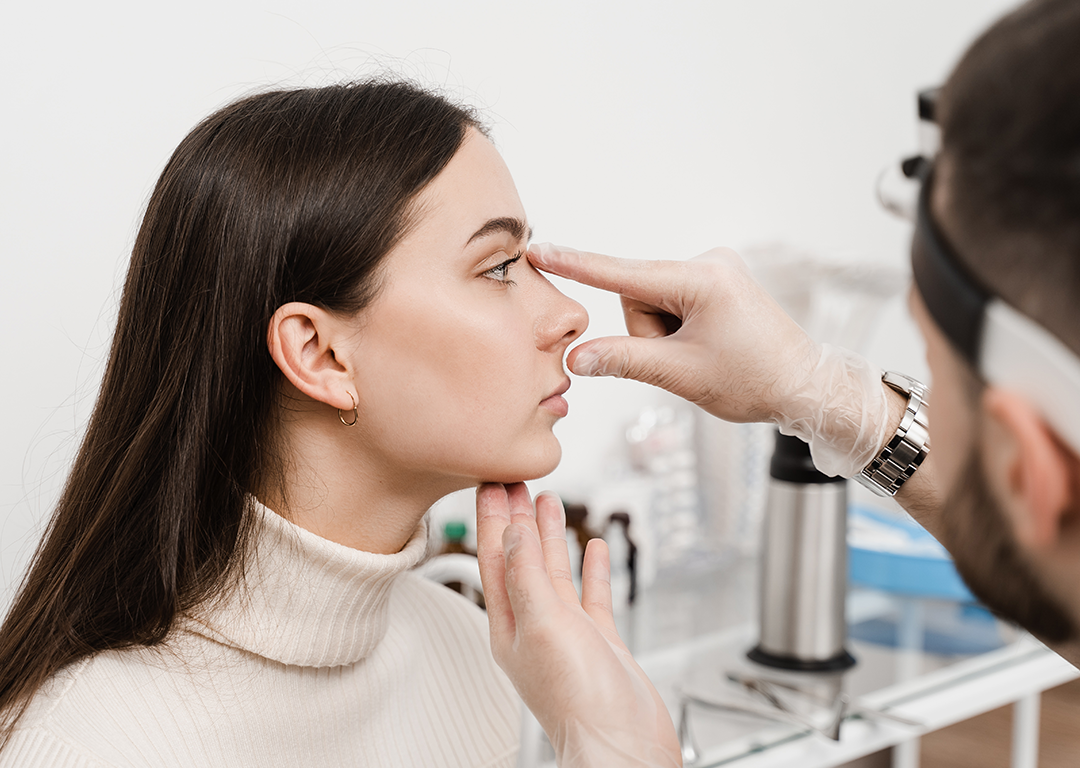
Maya and Danielle had their noses done in the same year, by surgeons with the same credentials, and if you put their final bills side by side you would swear one of them had been robbed. Maya paid $8,400, all in, in a mid-sized Midwestern city. Danielle paid $16,900 in New York. Neither was robbed. Walk through both of their stories line by line and you will understand everything about what a nose job costs in 2026 — because the difference between their bills is not a mystery or a markup. It is arithmetic.
Meet Maya: the $8,400 Nose Job
Maya, 29, wanted the classic cosmetic fix: a bump on the bridge softened, the tip slightly refined. Her nose breathed fine; nothing about it was broken. Her surgeon — board-certified, fifteen years in practice, in a city where RealSelf reviewers report average rhinoplasty prices around $6,200 (Michigan is the commonly cited example) — quoted her a primary cosmetic rhinoplasty in his practice’s own accredited surgical suite.
Her bill, itemized: surgeon’s fee about $5,200 (below the national surgeon’s-fee average of roughly $7,637 reported by the American Society of Plastic Surgeons, because her case was straightforward and her market is not coastal); anesthesia around $1,400; facility about $1,300; pre-op bloodwork a few hundred; medications, splint, and supplies the rest. Total: $8,400, one surgery, one week of obvious bruising, follow-ups included. Maya sits near the happy bottom of the national range — most Americans pay between $7,000 and $15,000 all-in — and understanding why she landed there tells you the rules.
Meet Danielle: the $16,900 Nose Job
Danielle, 41, was solving a harder problem. She had broken her nose as a teenager, had it operated on once in her twenties, and by forty she could barely breathe through the left side and disliked what she saw in the mirror. Her case was two operations wearing one coat: a revision rhinoplasty (re-operating a nose that already has scar tissue and altered anatomy) combined with functional work — a deviated septum and collapsed nasal valve repaired so she could breathe.
Her bill, itemized: surgeon’s fee just over $10,000 — revision specialists are a small, in-demand subset of surgeons, and New York is among the most expensive surgical markets in the country, with reported averages around $12,300 on RealSelf against that ~$6,200 Michigan figure; anesthesia near $3,000, because revision-plus-functional cases run long; a hospital-grade facility at about $3,200, chosen because of the case’s length and complexity; pre-op testing including a sinus CT scan; and medications and supplies. Total: $16,900. She also learned the case’s one mercy: because part of her surgery was medically necessary breathing repair, her insurer covered a portion of the functional component — the facility and anesthesia time attributable to it — trimming what could have been a bill north of $19,000. Patient-reported prices nationally average about $12,239 on RealSelf, with real reviews ranging from $5,000 to $25,000; Danielle is simply what the top of that range is made of.
Reading Their Two Bills Teaches You the Whole Price List
Line the two stories up and the standard cost stack appears, with 2026’s typical ranges: surgeon’s fee $6,000–$12,000+ (the biggest line and the biggest variable — Maya’s simple primary case in a mid-priced market came in under it, Danielle’s revision specialist above its middle); anesthesia $1,500–$3,500, scaled by hours, not by difficulty of your nose per se; facility $2,000–$5,000, scaled by whether it is the surgeon’s own suite or a hospital; pre-op tests $200–$500; and medications and supplies $200–$500. Every quote you ever receive is some arrangement of these five lines. If a quote arrives as one round number, ask for it in this shape — the American Society of Plastic Surgeons publishes procedure cost information in the same broken-down spirit, and any office that itemizes for them can itemize for you.
The Four Decisions That Moved Their Prices
Primary versus revision was worth the most money between them. A first-time nose is a known landscape; a revision is archaeology, and it prices like it — expect revision work to run 30–50% above an equivalent primary case. Geography was worth nearly as much: the same surgeon, transplanted, would quote differently in New York than in Michigan, because every input costs more. Open versus closed technique — an external incision across the columella versus incisions hidden inside — influences operating time and therefore anesthesia and facility lines, though surgeons choose it on anatomy, not price. And functional work bundled in raised Danielle’s total while simultaneously unlocking the only insurance contribution either woman saw: cosmetic reshaping is never covered, but documented breathing obstruction, once properly tested and coded, sometimes is. The strategic lesson writes itself — if you have a genuine breathing problem, get it assessed on its own merits before you book anything cosmetic, because combining the two in one operation is both medically sensible and the only version of this surgery an insurer will ever help pay for.
The Third Patient Who Paid $900
There is a third character worth meeting: the one who paid under a thousand dollars and got a better nose in an afternoon. She had a non-surgical “liquid rhinoplasty” — dermal filler injected to smooth a bump or lift a tip, no operating room, no anesthesia line, results visible before she left the chair. It belongs in any honest cost guide because for mild concerns it may genuinely be the right purchase — with three catches. It is temporary (filler in the nose typically lasts a year or so), it can only add volume, never remove it (it camouflages a bump by building around it — the nose ends up slightly larger, not smaller), and the nose is one of the highest-risk areas on the face for filler complications, which makes the injector’s expertise non-negotiable. The pricing logic is identical to other injectables — our guide to what lip filler costs per syringe shows the same per-product, per-expert math — and for the right small problem, it is the best money on this page.
What Their Bills Did Not Show
Follow both women one month past surgery and a second, quieter invoice appears. Maya took a week off work — desk job, camera off for the first days — and spent perhaps $60 on the soft supplies of recovery: saline spray, gauze, a wedge pillow to sleep elevated, and a great deal of lip balm, because you breathe through your mouth for a while. Her follow-up visits were included in the surgeon’s fee, as is standard. Danielle’s month cost more in every currency: ten days before she felt presentable, a longer swelling arc (revision noses can hold swelling for many months, with the tip the last to settle), one extra trip back for a check on her breathing, and the patience tax of knowing her final result would not declare itself for a year. Neither woman paid for a touch-up — small asymmetries are usually watched for a year before anyone revises, and reputable surgeons typically waive their own fee for a minor revision in that window while facility and anesthesia charges still apply. If you are budgeting, hold back a contingency of 10% beyond the quote, not because you expect disaster, but because recovery has a long tail of small expenses and you will enjoy it more with the money already mentally spent.
Saving Money Without the Regret
Both women were offered cheaper doors and declined the same ones, which makes a tidy rule. Neither chose a surgeon on price — in a field where the result sits in the center of your face, the discount version is the expensive one if it needs redoing, and Danielle’s entire story is a monument to what revision costs. Neither traveled abroad for a package deal: medical tourism quotes for rhinoplasty can be half the US price, but they strand your follow-up care on another continent, and the first person you want after a nosebleed at day six is your actual surgeon. Where they did save is instructive. Maya chose an excellent regional surgeon over a famous coastal name — the single biggest legitimate saving in this guide. Danielle combined her cosmetic and functional work into one anesthesia event instead of two separate surgeries, and got the insured portion working for her. And both got more than one quote: not to find the cheapest surgeon in America, but to learn their own case’s going rate — which is how you discover whether the number in front of you is a market price or an outlier with good marketing.
So What Will Yours Cost?
Place yourself honestly in the story. Straightforward cosmetic change, first surgery, mid-priced city: Maya’s neighborhood, $7,000–$10,000. Add a premium market, a famous surgeon, or complex tip work: $10,000–$15,000. Add revision status or significant functional repair in a top market: Danielle’s territory, $15,000 and up, possibly with an insurance contribution toward the breathing side. Then get two itemized quotes, in the five-line shape, and watch how fast the national range becomes your specific number. Maya and Danielle were never charged inconsistently. They were charged precisely — for different noses, different cities, and different operations that happen to share a name.




1 Comment