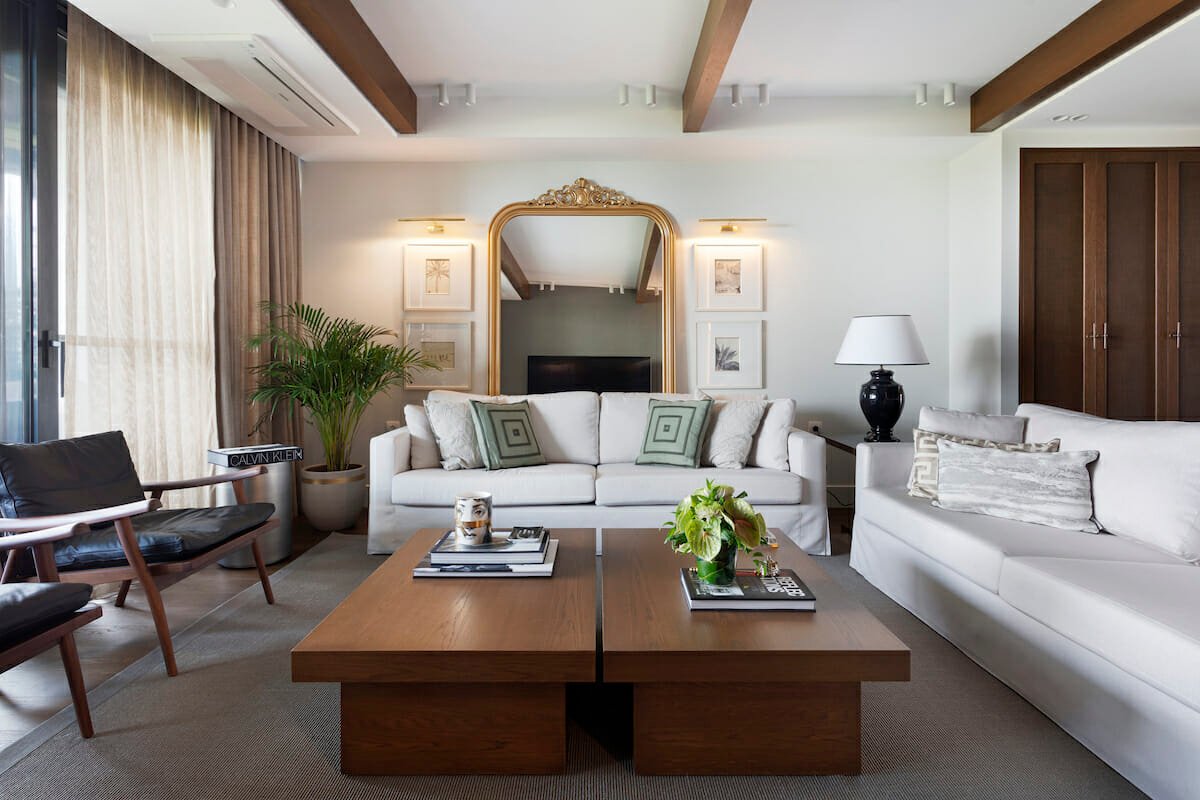
Ask three designers to price the same living room and you may get three numbers that seem to belong to different projects: $1,800, $6,500, and a percentage of a furnishing budget not yet set. None of those quotes is necessarily wrong. Designers charge in different ways, and until you understand those ways, comparing quotes is like comparing rent in one city with a house price in another. The room is the same. The math is not.
The National Picture in 2026
Most homeowners in the United States pay $50 to $200 per hour for interior design help. A full single-room project usually lands between $2,000 and $12,000, and a whole-home project can run from $10,000 to well past $50,000. According to HomeAdvisor’s national cost data, the average homeowner spends around $5,500 on a complete interior design project. That average hides a wide spread, but it is a useful anchor. If a quote for one ordinary room comes in at twice that figure, you should be able to point to a clear reason: a large space, custom work, a top-tier designer, or a scope that includes far more than picking paint and furniture.
A short consultation sits at the other end of the scale. A one- or two-hour session usually costs $150 to $500. That buys advice, not a finished plan, but it buys the most valuable part: a trained eye catching layout and color mistakes before money is spent on the wrong sofa or tile.
Hourly Billing, Hour by Hour
Hourly billing is the easiest model to follow. You pay for the designer’s time, usually at $50 to $200 per hour. Junior designers sit near the low end. Established designers in large cities can charge up to $500 per hour. You can see where the money went, and you can stop the work at a set number of hours if the budget is tight.
This model suits small projects, single questions, and homeowners who plan to do their own shopping and legwork. Its weakness is uncertainty. A project that keeps growing, a room that needs round after round of new options, or a client who changes direction three times can push the hours up fast. If you choose hourly billing, ask for a cap or a check-in point. For example, agree that the designer will pause and report after ten hours, so you can decide whether to continue before the bill grows.
Flat Fees and the Value of a Fixed Number
A flat fee is one price for a defined job. A designer might charge $4,500 for a complete living room design that includes a floor plan, a shopping list, and 3D renderings. Across the market, flat fees range from about $1,000 for a simple refresh to $10,000 or more for multi-room work.
The strength of this model is budget certainty. You know the design cost before work starts. The risk sits in the fine print. A flat fee is only as clear as the scope written under it. How many revision rounds are included? Most agreements allow two or three. What happens if you reject the whole direction and want to start again? That may be billed as new work. Before signing, make sure the agreement lists each deliverable in plain words: floor plan, color palette, furniture list, renderings, ordering help, and install-day support, or whichever of those you are actually buying.
Charging by the Square Foot
Some designers price by size, at roughly $5 to $15 per square foot. The math is simple. A 400-square-foot living room at that rate costs $2,000 to $6,000 in design fees alone. This model is common on larger projects and on commercial work, where size is a fair guide to the amount of planning involved.
Its flaw is that size and difficulty are not the same thing. A small kitchen with plumbing, electrical work, custom cabinets, and tight clearances can take far more design time than a large, simple bedroom. If a designer quotes by the square foot, ask how complex rooms are handled. A blended quote, part square footage and part fixed fee for the kitchen or bath, is often fairer to both sides.
The Percentage Model and Its Built-In Tension
Under the percentage model, the designer takes 10 to 20 percent of the total project cost. That total can include furniture, materials, and contractor labor. On a $40,000 living room renovation, the design fee would be $4,000 to $8,000.
This model is common on large, full-service projects where the designer manages purchasing and trades over many months. It does carry a tension worth naming. When the fee rises with the budget, the designer earns more if you spend more. Good designers resist that pull and will talk you out of needless upgrades. Still, protect yourself. Set a firm total budget in writing, and ask the designer to flag any choice that would push the project past it before the purchase is made, not after.
What the Fee Covers, and What It Does Not
A design fee pays for expertise: space planning, color palettes, furniture and material choices, floor plans, renderings, and coordination with contractors. It does not usually pay for the things themselves. The sofa, the rug, the tile, and the light fixtures are separate costs, and so is the labor of painters, electricians, and installers.
Two charges surprise homeowners most. The first is the furniture markup. Many designers buy furnishings for clients and add a markup of 10 to 40 percent. Others pass along some or all of their trade discount instead. Both arrangements exist in the market, so ask which one applies before any ordering begins. The second is extra work outside the contract: added revision rounds, showroom trips, travel time, and shopping time. Some designers fold those into the fee. Others bill them by the hour. Neither approach is wrong, but a surprise line item is always unwelcome, so get the policy in writing.
Paint is a good example of how design and trade costs sit side by side. A designer may choose the colors, but the painting bill is its own line item, and it helps to know what it costs to repaint a three-bedroom house interior before you set the overall budget for a refresh.
Location, Reputation, and the Texas Picture
Where you live moves the quote a lot. Designers in New York, Los Angeles, and San Francisco charge at the top of every range. The same project in a mid-size city can cost half as much. Texas sits in the middle ground. In Houston, Dallas, Austin, and San Antonio, expect rates near the national middle for most designers, with well-known firms in high-demand neighborhoods charging toward the upper end. Smaller Texas cities and towns usually price lower, though a designer who has to travel a long way may add travel time to the bill.
Experience moves the price too. A designer with 15 years of work and a published portfolio charges more than someone building a client list. That premium can be worth paying. Seasoned designers tend to prevent the expensive errors: furniture that does not fit through the door, paint with the wrong undertone for the light in the room, or tile ordered in the wrong quantity. One avoided mistake can cover a good share of the fee.
Scope and Complexity: The Quiet Price Drivers
A color consultation costs a few hundred dollars. A full renovation with contractor management is a five-figure commitment. Between those poles, every added layer raises the price. Custom millwork takes drawing and revision time. Structural changes need plans and coordination. Smart-home systems need planning with electricians. A cosmetic refresh, by contrast, is the cheapest way to use a designer well: layout, color, furniture, and lighting, with no walls moved.
Timeline matters as well. Rush work costs more. A project that must be finished in six weeks gives the designer less room to wait for sales, trade deliveries, and contractor openings, and some designers add a premium for that pressure. A relaxed four-month schedule is almost always cheaper to run. If your date is fixed by a move or an event, say so at the first meeting so the timeline cost is part of the quote, not a late addition.
Designers, Decorators, and E-Design
The words designer and decorator are often used as if they mean the same job. They do not. Designers usually handle spatial and technical work: layouts, lighting plans, and renovation planning, and some hold formal training or certification for that work. Decorators focus on furnishings, color, and finishes. Designers generally charge more because the work carries more technical risk. For a room that only needs a new look, a decorator may be the right, cheaper hire. For a kitchen or bath remodel, use a designer.
Online design services add a third option. E-design packages often run $500 to $1,500 per room. You send photos and measurements, and you receive a plan, a layout, and a shopping list to carry out yourself. The trade-off is clear: you save money and lose the in-person help with ordering, deliveries, and install day. For a single bedroom or a rental refresh, that trade is often a good one.
Ways to Keep the Bill Down Without Ruining the Result
Start with a consultation if you are unsure. A $200 to $400 session can produce a color scheme, a layout, and a shopping list that you carry out at your own pace. Do your own sourcing if you have the time. Buying furniture yourself from the designer’s list avoids the 10 to 40 percent procurement markup, though you also take on returns and delivery problems yourself.
Phasing helps too. Pay once to design the whole house, then carry out one room at a time as money allows. Finally, look at talented newer designers. Those building their portfolios often charge 30 to 50 percent less than established names, and for a straightforward room their work can be excellent. Ask to see finished rooms, not just mood boards, and check that trade discounts of 10 to 25 percent off retail, where offered, are clearly described. On the right project, those savings can offset much of the fee itself.