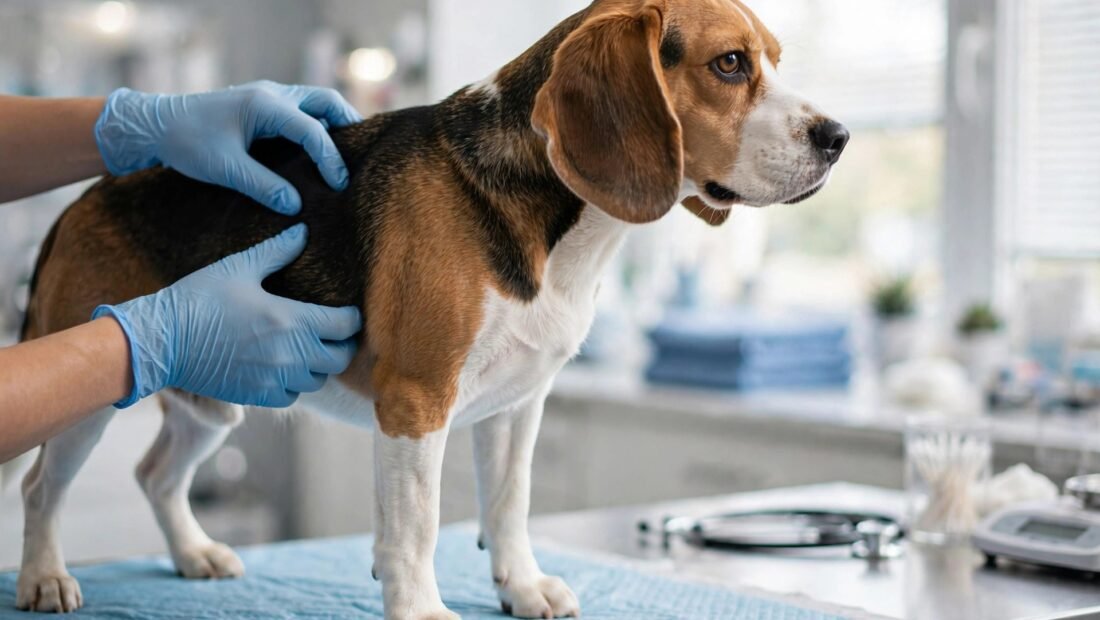
Press your fingers along your dog’s ribs. If you have to push hard, the way you might press a firm mattress to feel what is underneath, that pressure itself is the answer. At a healthy weight, ribs are easy to feel under a thin layer of fat, with light touch. Needing to dig for them means extra fat is in the way, and that extra fat is doing quiet damage long before a pet looks obviously round.
Most overweight pets did not get there through one bad choice. They got there through a handful of common mistakes, repeated daily for months. Start with those mistakes, because fixing them is the plan.
Mistake 1: Guessing Portions Instead of Measuring Them
The scoop in the food bag is not a measuring tool, yet it decides most pets’ diets. A heaped scoop can hold a third more than a level one, and that gap repeats at every meal. Bag feeding charts add to the problem. Those charts are starting points written for active, unaltered dogs, not for a neutered indoor companion who naps most of the day. Many owners end up feeding 20 to 30 percent too much without ever feeling careless.
The same guessing applies to cats. A bowl topped up whenever it looks low has no portion at all. The pet eats small amounts all day, no one sees a full meal happen, and the total climbs past what the cat needs.
Mistake 2: Forgetting That Treats Are Food
Treat creep is rarely counted. A training treat here, a piece of cheese there, scraps from a child’s plate, and a bedtime biscuit can add a second hidden meal. Treats should stay at or below 10 percent of daily calories. That limit is easy to blow past: a single large Milk-Bone has about 115 calories, which can be roughly a quarter of a small dog’s entire daily need.
Multi-person homes make this worse. One person gives the morning treat, another gives the after-walk treat, and a visiting grandparent adds a third round no one else knows about. The pet is not overfed by any one person. The pet is overfed by a system with no shared count.
Mistake 3: Keeping the Same Portions After Neutering
After spaying or neutering, most pets need roughly 20 to 30 percent fewer calories. Appetite often stays the same or grows, so the pet begs the same amount while needing less. Owners who keep filling the bowl to the old line watch steady gain over the next few months and assume the surgery itself caused it. The cause is simpler: needs dropped and portions did not.
Mistake 4: Trying to Exercise Away a Diet Problem
Extra walks help health, mood, and muscle, but they rarely cancel out overfeeding. A short extra walk burns far fewer calories than a heaped scoop adds. Owners who rely on exercise alone often walk more, see no loss, and give up on the whole effort. Food intake is the main lever. Movement supports it.
Texas summers make this mistake harder to spot. From June through September, outdoor activity drops because heat makes midday walks unsafe, especially for overweight and flat-faced breeds that overheat fast. Portions stay at winter levels while activity falls for months, and weight climbs quietly until fall.
Mistake 5: Letting Pets Eat Each Other’s Food
In multi-pet homes, the bold pet eats its own meal and then finishes the shy pet’s meal too. The shy cat may look like the problem is pickiness, while the real problem is theft. Free-choice feeding, where food sits out all day for any pet to visit, makes accurate portions impossible for every animal in the house.
Mistake 6: Cutting Food Hard and Fast, Especially for Cats
Once owners see the problem, many swing the other way and slash portions sharply. For dogs, a sudden large cut brings hunger, scavenging, and begging that wears owners down. For cats, rapid loss is dangerous on its own. Cats that lose too fast can develop hepatic lipidosis, a serious liver condition. Cats should lose only about 0.5 to 2 percent of body weight per week, under a vet’s plan. Slow is not a lack of effort for cats. Slow is the safe method.
First, Check the Weight the Right Way
Before you change food, run three checks at home. First, the rib check described above, with light pressure along both sides. Second, look down from above. Behind the ribs, a healthy dog or cat shows a visible waist that curves inward. A straight side or an outward bulge points to extra weight. Third, for dogs, look from the side. The belly should tuck up behind the ribcage. A belly that hangs level or sags is carrying fat.
Vets score this on a nine-point Body Condition Score, where four to five out of nine is ideal. Owners commonly score their own pets one to two points leaner than a vet would. Long fur hides shape, especially in cats, so trust feel over looks. The loose belly flap on cats, called the primordial pouch, is normal anatomy and not fat by itself, but it is also not proof that the rest of the cat is lean. Ask your vet for an honest score and a target weight at the next visit, and build the plan from that number. That visit is also a good moment to confirm how often your dog should see the vet, since weight checks fit naturally into regular preventive care.
Why the Extra Weight Cannot Wait
Extra weight shortens life and makes the remaining years harder. In the Purina lifespan study, dogs kept lean lived a median of 1.8 years longer than their overweight siblings from the same litters. That gap came from weight alone. Joints suffer next. Every extra pound raises stress on knees, hips, and elbows, so arthritis starts earlier and hurts more. In Texas heat, an arthritic overweight dog moves less, gains more, and falls behind faster each summer.
Obesity also raises the risk of diabetes, most sharply in cats, where treatment is daily, costly, and lifelong. Fat restricts breathing and traps heat, so overweight pets handle long Texas summers worse and face higher risk during heat waves or power outages. Surgery and anesthesia carry more risk and often more cost for heavy pets, from dental cleanings to joint repairs. For background on weight risks and prevention, the American Veterinary Medical Association’s pet weight resources give owners a clear picture of why small daily amounts matter so much.
The Correct Way: A Plan That Works in Order
Step one: get a target and a calorie number from your vet. Do not guess either one. The vet sets an ideal weight from frame and body condition, then sets daily calories, often about 70 to 80 percent of the calories needed to maintain that target weight. If weight has climbed despite careful feeding, ask about thyroid or other metabolic testing, because conditions such as hypothyroidism in dogs and Cushing’s disease can drive gain that diet alone will not explain.
Step two: weigh the food. A simple kitchen scale, which can cost around $12, beats any scoop. Weigh each meal, count every treat inside the daily total, and make sure every person in the home follows the same numbers. Write the daily amount on the food container if it helps the whole household stay aligned.
Step three: feed for the goal weight. For mild cases, reducing the current food to the vet’s calorie target may be enough. For larger losses, a veterinary weight-management food can help because higher protein and fiber keep a pet feeling fuller on fewer calories. Slow-feeder bowls and puzzle feeders stretch a small meal into a longer one, which reduces begging. Split the daily amount into more, smaller meals if hunger between feedings is the main struggle.
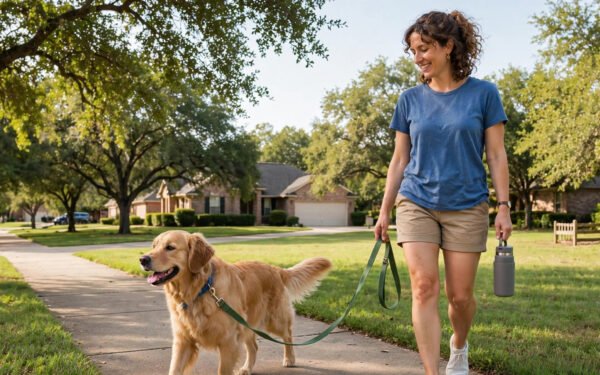
Step four: add movement slowly and safely. Add about five minutes a week to leash walks instead of jumping to long hikes. Swimming is an excellent choice for arthritic overweight dogs, and many Texas veterinary rehab clinics offer it. For indoor cats, try wand-toy play for about ten minutes twice a day. In summer, walk early in the morning or after sunset, bring water, and stop at once for heavy panting, drooling, or lagging. Overweight pets reach their limit fast in heat.
Step five: weigh every month and adjust slowly. Aim for loss of about 1 to 2 percent of body weight per week for dogs, and the slower 0.5 to 2 percent range for cats. Weigh monthly at the vet or on a home scale that the pet can stand on calmly. If loss stalls for a full month, the vet may trim calories by about another 10 percent. Plateaus are normal. Quitting at the first plateau is the usual reason plans fail.
Special Cases That Need Their Own Rules
Senior pets need care with protein. An older pet that looks padded may actually have lost muscle under the fat. Cutting protein too hard speeds muscle loss, so seniors need a vet-led plan that protects muscle while fat comes off. Multi-pet homes need separate feeding as a firm rule: different rooms with doors closed, or microchip feeders that open only for the right pet. Without separation, steps two and three cannot be accurate.
Maintenance is the final step, and it lasts. Pets that return to old portions usually regain the weight within a year. Maintenance calories are only a little higher than weight-loss calories, so the scale, the measured meals, and the treat count stay in place for good. That sounds strict, but it becomes routine within a few weeks, and the payoff is measured in comfort, mobility, and time.
Run the rib check tonight with a light hand. If you have to press hard, book the vet visit, get the target number, and start with measured food this week. No dramatic overhaul is needed. Just the mistakes stopped, in order, and held steady for months.