Your green smoothie went down at eight, virtuous and bright. By 9:45 you are standing in front of the pantry, hunting for a muffin, a handful of crackers, anything. The smoothie did not fail because it lacked kale. It failed because it was never built to hold you.
The short answer: a smoothie keeps you full when it is built like a meal. Aim for 20 to 30 grams of protein, a real source of fat, fiber-rich fruit or greens, and enough volume to fill a large glass, about 16 to 24 ounces. That build lands near 400 to 550 calories and should hold you for 3 to 4 hours. Miss the protein or the fat, and you have a tasty drink that acts like a snack, no matter how green it looks.
Why does protein matter so much?
Protein is the part that turns a drink into breakfast. It slows how fast the meal leaves your stomach, and it is the nutrient most tied to feeling fed for hours rather than minutes. Aiming for 20 to 30 grams puts a smoothie in the same range as eggs, toast, and yogurt eaten on a plate. Greek yogurt is the easiest base, with a cup giving you a strong start before anything else goes in. A scoop of protein powder does the same job with almost no bulk. Cottage cheese blends smoother than most people expect and adds solid protein. Silken tofu disappears into fruit flavors and works well if dairy is off the table.
What matters is the total, not the source. Half measures are the common trap: one spoon of yogurt in a sea of fruit looks like an effort but adds almost nothing. Check your usual blend honestly. If the protein comes only from milk and a sprinkle of seeds, it is probably landing well under the range, and that shortfall explains the 10 a.m. hunger better than willpower does. Guidance from Harvard’s Nutrition Source guide to protein points the same way: spread solid protein across meals instead of saving it all for dinner.
What does fat do in a filling smoothie?
Fat slows digestion. A smoothie with no fat moves through you fast, even if the fiber count looks good on paper. One or two tablespoons of peanut butter or almond butter change the whole feel of a blend. So does a spoon of chia or ground flax, half an avocado, or a handful of walnuts. The fat also carries flavor, which is why a smoothie with nut butter tastes like food and a fat-free one tastes like a chore.
You do not need much. This is not a call for half a jar of peanut butter. One real serving is enough to stretch the meal out by an hour or more. Skip it, and even a high-protein shake can leave you oddly restless soon after. Include it, and the same shake settles in and stays.
Where does the fiber come from?
Fiber adds bulk, and bulk is part of how your body registers a meal. Whole fruit beats juice here every time, because blending keeps the fiber that juicing throws away. Berries are the workhorse: sweet, tart, and full of fiber for their size. A big handful of spinach adds fiber and volume with almost no taste once fruit is in the mix. Half a banana gives body and sweetness. Rolled oats blend into a shake like a soft meal, especially if they soak in the liquid for a few minutes first.
Frozen fruit pulls double duty. It thickens the blend, chills it without watering it down as much as a pile of ice, and keeps well in the freezer for busy weeks. Frozen cauliflower and zucchini sound odd, yet both vanish into a flavored shake while adding bulk. Start with fruit and spinach if those feel like a stretch. The goal is a thick glass that feels substantial, not a purity contest.
How big should a meal smoothie be?
Size counts more than most recipes admit. A small 10-ounce smoothie, however well built, often fails to trigger the simple physical signal of a full stomach. A 16 to 24 ounce shake does. Ice, milk, or water stretch the blend without piling on sugar, and a thick texture helps it feel like a meal rather than a drink you barely noticed.
Calories follow from the build. A smoothie with 20 to 30 grams of protein, real fat, and fiber-rich produce usually lands between 400 and 550 calories on its own. That number scares some people, but compare it honestly with the alternative: a 200-calorie fruit blend at eight, then a muffin, a sweet coffee, and a handful of office snacks before noon. The bigger smoothie is often the smaller day.
Why do all-fruit smoothies leave you hungry?
Take the classic cafe blend: banana, berries, orange juice, and a spoon of honey. It tastes fresh and feels light. It can also carry around 60 grams of sugar with about 3 grams of protein. Sugar with almost no protein, fat, or staying bulk digests fast. Blood sugar rises, then drops, and the drop feels like hunger even though you drank plenty of calories an hour earlier. That is the spike, the crash, and the pantry trip by 10 a.m., right on schedule.
None of this makes fruit the enemy. Fruit is where the fiber, flavor, and much of the nutrition live. The fix is company. Put that same fruit next to Greek yogurt, nut butter, and seeds, and it stops acting like candy and starts acting like breakfast. Readers building meals on a budget will find the same pattern in cheap high-protein meals for a tight budget: protein and fiber together are what stretch both fullness and money.
Three recipes that follow the formula
Peanut Butter Banana Power Shake
Blend 1 banana, 2 tablespoons of peanut butter, 1 cup of Greek yogurt, 1 tablespoon of chia, milk to loosen, and a handful of ice. It comes out thick, cold, and rich, at roughly 550 calories with about 35 grams of protein. This is the heaviest of the three and the best pick for a long morning with no lunch in sight until one. If it feels too thick to drink, add milk a splash at a time rather than cutting the yogurt.
Berry Green Machine
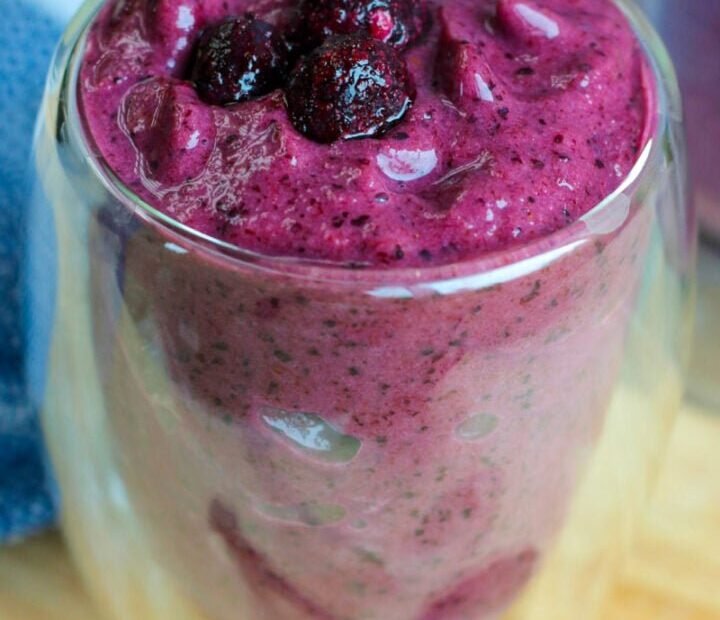
Blend 1 cup of mixed berries, a big handful of spinach, 1 scoop of vanilla protein powder, 1 tablespoon of almond butter, half a banana, water, and ice. It lands near 400 calories with about 30 grams of protein, bright and cold, with the spinach present in color only. This is the lightest of the three builds and suits a morning when lunch comes early. Swap water for milk if you want it creamier and a bit more filling.
Chocolate Oatmeal Shake
Blend half a cup of rolled oats, 1 tablespoon of cocoa, 1 scoop of chocolate protein powder, 1 tablespoon of peanut butter, half a banana, milk, and ice. Let the oats sit in the milk for five minutes before blending if you like a smoother result. It tastes like dessert and performs like a meal, at roughly 500 calories and about 32 grams of protein. A pinch of salt sharpens the cocoa more than extra sweetener does.
What mistakes undo a good smoothie?
The first mistake is too little protein, covered above but worth repeating because it causes most failures. The second is no fat at all, often the result of years of fat-free advice. A shake built on skim milk, fruit, and ice has stripped out the very part that slows it down. The third is size: a dainty glass that is gone in four sips rarely holds anyone, no matter what went into it. Make the full build and pour the full glass.
The fourth mistake is speed. Drinking a smoothie in two minutes is easy, since there is nothing to chew. Fullness signals take about 20 minutes to register, so a smoothie drained at the counter can feel like nothing happened, and the hunger that follows is partly just timing. Sip it slowly while you get ready, or make it spoon-thick so it takes real time to eat. A thick shake eaten with a spoon feels like a meal in a way a thin one never does. That small change alone rescues many smoothies that looked right on paper.
A final quiet mistake is building every smoothie on juice. Juice adds sugar and liquid but no fiber and no protein, so it crowds out better options. Use whole fruit for sweetness and milk or water for liquid, and let juice be an occasional flavor note instead of the base.
Can a smoothie really replace breakfast?
Yes, when it meets the same test a plate of food would meet. Does it carry 20 to 30 grams of protein? Does it include a real fat? Does it bring fiber and enough volume to fill you? If the answers are yes, the form does not matter. Your body does not care that breakfast came through a straw. It cares what arrived.
Build the next one that way. Pick a protein base, add nut butter or seeds, load the fruit and a handful of greens, and pour a full 16 to 24 ounces. Then check the clock at noon. If lunch, not the pantry at 9:45, is your next stop, the formula has done its work.