
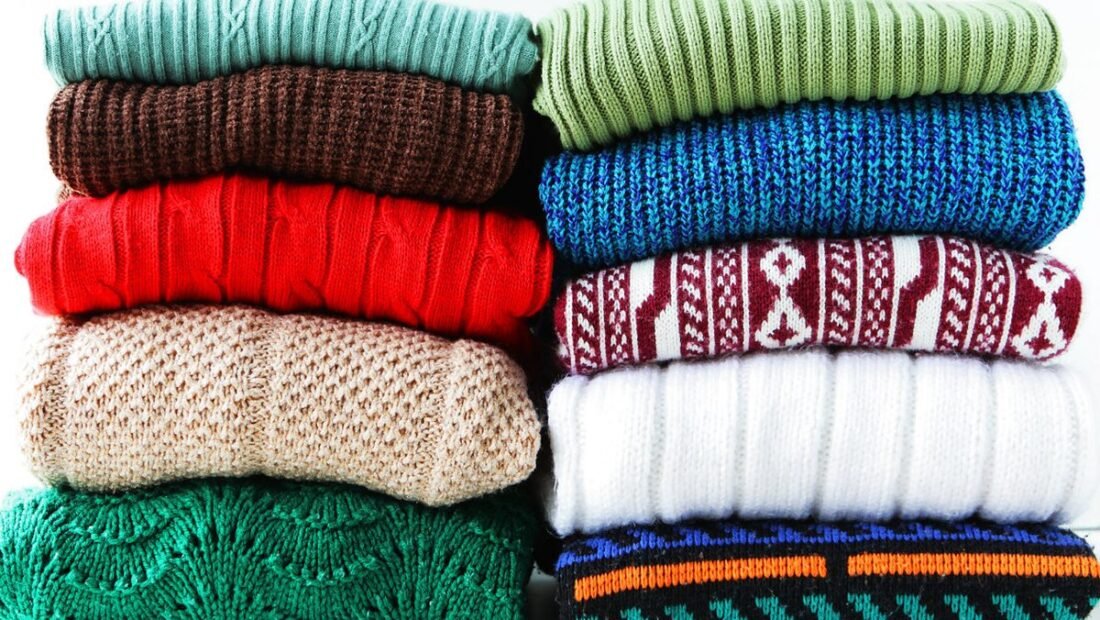
Why does a brand-new sweater grow fuzzy balls after two wears, while a ten-year-old one stays smooth? The difference is not luck. Pilling is a process with a timeline — it begins at the yarn, accelerates at predictable friction points, and is decided mostly by a handful of handling choices repeated across a sweater’s life. A pill is a tiny tangle of short fibers that have worked loose from the yarn, migrated to the surface and knotted together under friction. You cannot repeal the physics. You can slow the migration at every stage, and the stages, in the order a sweater meets them, are these.
Stage one, at purchase: read the yarn before the label
Pilling is largely decided in the spinning. Long fibers, tightly twisted, make a smooth, strong yarn with few loose ends available to migrate; short fibers, loosely spun, shed ends from the first wear. Expensive does not guarantee the good kind: cheap cashmere is famously made from short fibers (length is where cashmere’s cost lives), so a budget cashmere can pill faster than a decent lambswool, while well-made merino and long-staple cotton knits resist for years. In the shop, rub the knit firmly against itself for ten seconds and look at the surface — if it has already hazed, the timeline is short. Tightly knit, smooth-surfaced sweaters pill slower than fluffy, brushed, loosely knit ones, which trade durability for softness. This is a genuine trade, not a defect: buy the fluffy sweater for joy, knowing its maintenance bill comes due sooner.
Stage two, in wear: manage the friction points
Pills appear where rubbing happens — under the arms, at the sides where arms swing, where a bag strap crosses, under a seatbelt, where a coat’s rough lining grinds. You manage them by inserting sacrificial surfaces: a smooth layer between the sweater and a coarse coat lining, a bag carried on the other shoulder or by hand on knit days, a camisole or tee under an itchy knit so it needs washing less often. Rotation is the second wear-stage defense. A sweater worn two days running pills measurably faster than one rested a day between wears, because rest lets the knit recover its shape and lets moisture — which weakens fibers and encourages migration — leave fully. Two sweaters alternating will outlast the same two worn in sequence. Industry care guidance lines up behind this rhythm; The Woolmark Company’s guide to caring for wool treats rest between wears as basic maintenance for wool knitwear, and the reasoning transfers to every natural knit.
Stage three, wash day: inside out, cold, gentle, contained
Washing is where a year’s pilling can happen in twenty minutes, because wet fibers are weak fibers and agitation is industrial-grade friction. The protocol is fixed: turn the sweater inside out (the inside can pill invisibly all it wants), cold water, gentle or wool cycle, mild detergent, and — the step that changes everything — a mesh laundry bag, which cuts the sweater’s contact with the drum and with other garments’ zippers, hooks and rough seams. Wash knits with knits, never with denim or anything bearing hardware. Hand washing in cool water with a soak-and-press method is gentler still and worth it for the best pieces. Frequency matters as much as technique: sweaters worn over a layer often need washing only every few wears, and every avoided wash is avoided migration.
Stage four, drying and storage: never hang a wet knit
A wet sweater hung on a hanger stretches under its own water weight into a permanent shoulder-scarred shape, and a stretched knit is a looser knit — looser yarns pill faster, so drying errors compound into pilling later. Dry flat on a towel or a mesh rack, reshaped by hand to its measurements, away from direct heat. Storage follows the same principle: fold knits, never hang them, in a drawer or on a shelf with room to breathe. The full seasonal storage routine — cleaning before storing, breathable containers, moth defense — is the same discipline described for coats in the best way to store winter coats in summer, and knits deserve it more, being both more fragile and more attractive to moths.
Diagnosis before treatment: which pills mean what
Not all pilling is the same report, and a minute of diagnosis before maintenance saves both sweaters and effort. Pills concentrated under the arms and at one side usually indict friction geometry — a bag strap, a rough coat lining, a seatbelt — and the fix is at Stage two, not at the shaver: treat the cause or the pills return on schedule. Pills distributed evenly across the whole garment, appearing within the first few wears, indict the yarn itself — a short-fiber, loosely spun knit declaring its nature — and the honest management is acceptance plus gentle de-pilling, because no handling regime fully redeems a yarn that was born to shed. Pills that arrive late, after a season or two of clean service, usually indict a change: a new wash routine, a new machine, a rougher laundry companion, hotter water. That pattern is the encouraging one, because something changed and can be changed back. And pills on a secondhand or inherited sweater carry no verdict at all beyond its past life — de-pill once, thoroughly, and let its future under your care write the next report. Read the pattern before reaching for the tool, and half of prevention becomes obvious.
Stage five, maintenance: the $10 rescue that actually works
For pills that have already formed, the tools are a sweater comb and an electric fabric shaver — about $10, and the difference between them is speed versus gentleness. Lay the sweater flat, work in one direction with light pressure, and never press: the goal is to skim the tangles off the surface, not to plane the knit. Electric shavers are faster on large flat areas like the body; combs are safer on delicate or loosely woven knits. Done occasionally, de-pilling restores the smooth surface and, by removing the loose fibers, slightly slows the next round. Done obsessively, it thins the garment — treat it as a seasonal service, not a weekly ritual.
Storage, the quiet stage between wears
Where a sweater waits matters more than most owners suspect. Fold knits, always — hanging stretches a knit under its own weight, and the shoulder horns and lengthened body that result are structural damage no de-pilling addresses. Fold them with air around them: a compressed stack in an airtight box in a humid room is a mildew invitation, and moths prefer the undisturbed, unwashed sweater (their larvae feed on the soil in the fibers, which is the practical argument for washing before seasonal storage rather than after). Cedar and lavender are mild deterrents, not force fields; clean and dry is the real defense. Bring stored knits back with a day of airing before wearing, and rotate the stack so the same sweater is not always folded on the same creases. Storage is Stage zero and Stage infinity at once — the stage the sweater is in for 95% of its life — and treating it as part of the timeline rather than a pause in it is what separates wardrobes that age gracefully from drawers of surprises.
One more storage detail earns its place here because it targets pilling directly: friction does not stop in the drawer. A sweater folded against a rough-textured garment — a sequined top, a coarse tweed, a jacket with exposed zips — rubs microscopically every time the drawer opens, and over a season that is a slow Stage-two problem in Stage-zero clothing. Keep knits with knits, zippered and embellished pieces bagged or separated, and the gentlest fibers in the drawer farthest from hardware. It is a small discipline with a compounding return, because the sweater that rests undisturbed is also the sweater whose fibers recover their loft between wears — rest being, at every stage of this timeline, the closest thing knitting has to a repair mechanism.
Kids’ knits and the high-friction household
The timeline scales down to small sweaters with one change of emphasis: children’s knits live a life of concentrated friction — playgrounds, backpacks, seatbelts, the floor as a default location — and they are outgrown on a schedule no sweater can beat. For kids, the purchase stage does the heavy lifting: choose the durable fibers and tight spins from the start, accept de-pilling as routine maintenance rather than decline, and size with a little growing room, since a slightly large sweater pills less at the seams than a strained one. Hand-me-downs reverse the usual economics — a quality knit, de-pilled and mended, can serve three children, while a cheap one barely serves one — which makes children’s knitwear the strongest cost-per-wear argument in the whole wardrobe. The timeline is the same. Only the tempo changes.
Stage six, the wardrobe level: how many knits, in what fibers
The last stage is not about a single sweater but about the rotation as a whole, because pilling pressure is partly a numbers problem. A wardrobe that asks two sweaters to cover five cold days a week will wear them at a rate their yarn cannot repay; four to six knits in rotation, each resting more days than it works, stretches every timeline above at once. The fiber portfolio matters too: put the daily-wear slots into the durable fibers — merino, lambswool, tightly spun cotton blends — and let the delicate ones, the mohair and the budget cashmere, be occasion pieces whose low wear count matches their fragility. Blends deserve a fair hearing here: a wool blended with some nylon is measurably harder-wearing at friction points, trading a degree of natural feel for seasons of extra service, while acrylic-heavy blends pill fast and look tired doing it. Read the label the way you read the yarn at purchase, and the rotation plans itself.
Can pilling be prevented entirely? No. It can be made slow enough to be a non-issue on well-bought knits, and kept cosmetic on the rest: choose long fibers, break the friction, rest between wears, wash cold and contained, dry flat, and shave gently when the fuzz arrives. That is the whole timeline, and it is shorter than the life it buys.



1 Comment