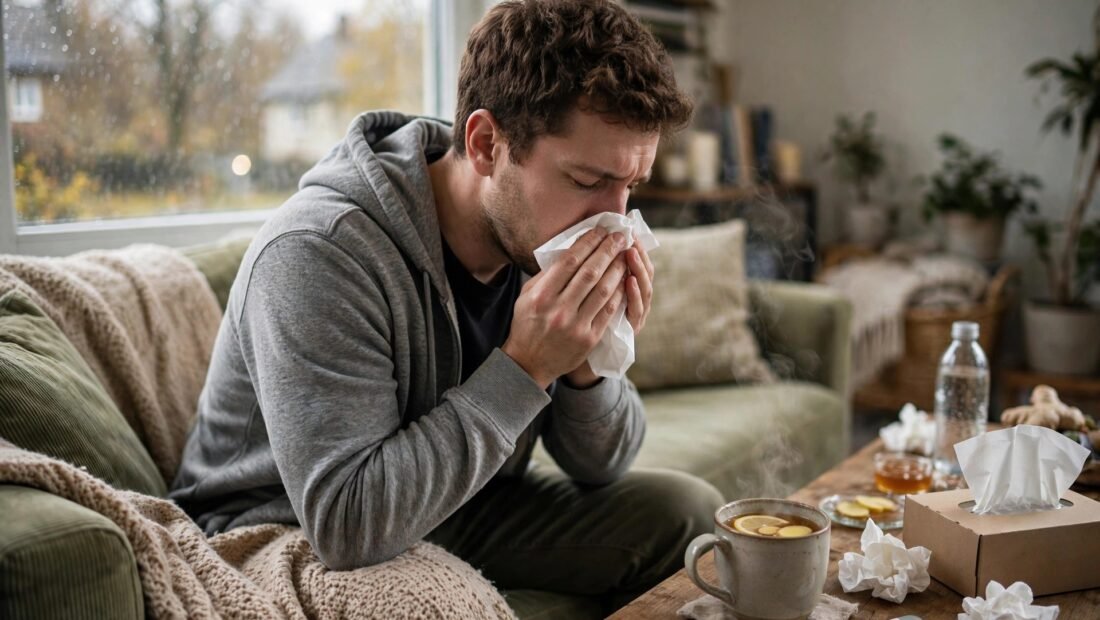
Everyone knows both types: the colleague who catches every office cold and the friend who hasn’t had so much as a sniffle in years, despite identical exposure. It’s tempting to chalk it up to luck, but immunology says otherwise. How often you get sick is driven by a measurable mix of genetics, immune history, sleep, stress, age, and behaviors — most of which you can actually influence. Texas’s long allergy seasons and crowded indoor summers add local twists worth understanding.
Here’s the science of why some people get sick more often — and what the frequently-ill can realistically change.
Your Immune System’s Starting Hand: Genetics and History
Some susceptibility is dealt at birth. Variations in immune genes (like the HLA complex, which helps the immune system recognize invaders) make some people naturally better at fighting certain viruses. But the bigger factor is immune history: every infection and vaccination trains your adaptive immune system, building a library of remembered threats. The rarely-sick friend may simply have a deeper library — more past exposures, more cross-reactive antibodies.
Age cuts both ways. Children get sick constantly because every virus is new — 6-10 colds a year is normal for kids. Adults average 2-4. Older adults get fewer colds (deep libraries) but face worse outcomes when infections land, as immune response slows with age — immunosenescence. So “always sick” in a 30-year-old and “always sick” in a 75-year-old mean different things.
Sleep: The Immune System’s Night Shift
This is the single most underrated factor. Studies consistently show that people sleeping under 6-7 hours are several times more likely to catch a cold when exposed to a virus than those sleeping 8+. During sleep, the immune system releases cytokines, produces infection-fighting antibodies, and consolidates immune memory. One bad week of sleep measurably suppresses immune function; chronic short sleep keeps it suppressed.
The mechanism involves T-cells too: research has shown that sleep enhances the ability of T-cells to adhere to and destroy infected cells, partly because stress hormones that inhibit this adhesion drop during sleep. If you’re the person who’s always sick and always tired, fix the sleep first — it’s the highest-leverage intervention available. Falling asleep faster without pills is a good starting point if insomnia is the barrier.
Stress: The Immune Suppressant You Produce Yourself
Chronic stress elevates cortisol, which suppresses immune function — fewer lymphocytes, blunted inflammatory response, slower wound healing. The classic Carnegie Mellon studies found that chronically stressed people were roughly twice as likely to develop colds after viral exposure. Short-term stress (a presentation, a workout) can actually boost immunity; it’s the unrelenting kind — caregiving, financial strain, toxic jobs — that grinds defenses down.
This creates vicious cycles: stress suppresses immunity, illness creates more stress (missed work, medical bills), which further suppresses immunity. Breaking the cycle anywhere helps everywhere. Even ten minutes of daily stress reduction measurably lowers cortisol over time — small, consistent recovery beats occasional vacations.
The Usual Suspects: Lifestyle Factors That Add Up
Exercise: moderate regular exercise boosts immune surveillance — immune cells circulate more vigorously after activity. But extreme endurance training without recovery temporarily suppresses immunity (the “open window” after marathons is real). The sweet spot: 150 minutes of moderate activity weekly.
Nutrition: no superfood prevents colds, but deficiencies hurt — vitamin D (common in office workers), zinc, and protein all support immune function. Texas’s abundant sunshine helps with D, though sunscreen and indoor jobs blunt the benefit. Chronic undereating or crash dieting suppresses immunity measurably.
Alcohol and smoking: heavy alcohol use impairs immune cell function; smoking damages the respiratory tract’s physical defenses (the cilia that sweep pathogens out), making smokers dramatically more susceptible to respiratory infections.
Hand hygiene and exposure: some “always sick” people simply touch their faces constantly, work in germ-dense environments (schools, healthcare, open offices), or have small children — the notorious vector. Behavior and environment matter as much as biology.
The Texas Factor: Allergies Masquerading as Illness
Here’s a Texas-specific twist: much of what feels like “always being sick” is actually allergies. Cedar fever (December-February), oak (spring), ragweed (fall), and mold (year-round in humid areas) produce congestion, sneezing, fatigue, and sinus pressure that mimic colds. If your “colds” last weeks, recur seasonally, and never include fever, suspect allergies — an allergist’s testing can distinguish them, and the treatments differ completely.
Texas heat also drives people indoors into air-conditioned crowds all summer — malls, offices, schools — which is prime respiratory-virus territory. And the state’s rapid growth means constantly mixing populations with different immune histories. If you moved to Texas recently and feel perpetually ill, your immune library is simply meeting new local variants — it typically settles within a year or two.
When Frequent Illness Needs Medical Attention
See a doctor if: you’re sick more than 6-8 times a year as an adult, infections are unusually severe or slow to resolve, you get the same infection repeatedly (recurrent sinus infections, bronchitis), or frequent illness started suddenly after a period of good health. These patterns can signal underlying issues — from undiagnosed allergies or asthma to immune deficiencies, thyroid problems, or chronic conditions. The CDC’s guidance on recurrent infections is a useful reference for what’s within normal range.
Also consider: some medications (including common ones like corticosteroids and certain biologics) suppress immunity — if frequent illness started with a new prescription, ask your doctor, don’t just stop taking it.
What Actually Reduces How Often You Get Sick
In order of evidence strength: sleep 7-9 hours consistently (biggest lever), manage chronic stress (the cortisol-immunity link is solid), exercise moderately and regularly, eat adequately (enough protein, no severe deficiencies), vaccinate (flu annually, COVID boosters per current guidance, Tdap — vaccines are literally immune training), wash hands and stop touching your face, limit alcohol, don’t smoke, and treat allergies (which masquerade as illness and inflame airways, inviting real infections).
What doesn’t have good evidence: megadose vitamin C (may slightly shorten colds, doesn’t prevent them), “immune-boosting” superfood regimens, and most supplement stacks. Save your money for sleep and vegetables.
Conclusion
Getting sick often isn’t bad luck — it’s usually a readable combination of sleep debt, chronic stress, immune history, environment, and (in Texas, frequently) undiagnosed allergies. The empowering flip side: the biggest levers are all controllable. Sleep enough, manage stress, move regularly, vaccinate, and treat what’s actually allergies. You may never become the person who never catches anything — genetics and history set the floor — but most “always sick” people can become “rarely sick” people with a few sustained changes.
For the immunology behind susceptibility, NIH resources on immune health is the authoritative source.
Frequently Asked Questions
Is it normal to get sick 5-6 times a year?
For adults, 2-4 colds a year is typical; 5-6 is on the high side but not necessarily abnormal, especially with young kids or high-exposure jobs. More than that, or infections that are severe or slow to heal, warrants a doctor visit.
Why do I get sick when I’m stressed?
Chronic stress raises cortisol, which suppresses immune function — fewer infection-fighting cells, weaker responses. The effect is well-documented: stressed people are roughly twice as likely to catch colds after exposure.
Can lack of sleep really make you sick more often?
Yes — it’s one of the strongest predictors. People sleeping under 6-7 hours are several times more likely to develop colds after viral exposure than 8-hour sleepers, because sleep is when the immune system does critical maintenance.
Are my constant “colds” actually allergies in Texas?
Possibly — Texas’s year-round allergens (cedar, oak, ragweed, mold) cause congestion and fatigue mimicking colds. Clues it’s allergies: no fever, seasonal pattern, symptoms lasting weeks, itchy eyes. An allergist can test definitively.
Do immune-boosting supplements work?
Mostly no. Correcting a genuine deficiency (vitamin D, zinc) helps; megadosing beyond sufficiency doesn’t. The proven interventions are sleep, stress management, exercise, vaccination, and hygiene — unglamorous but effective.