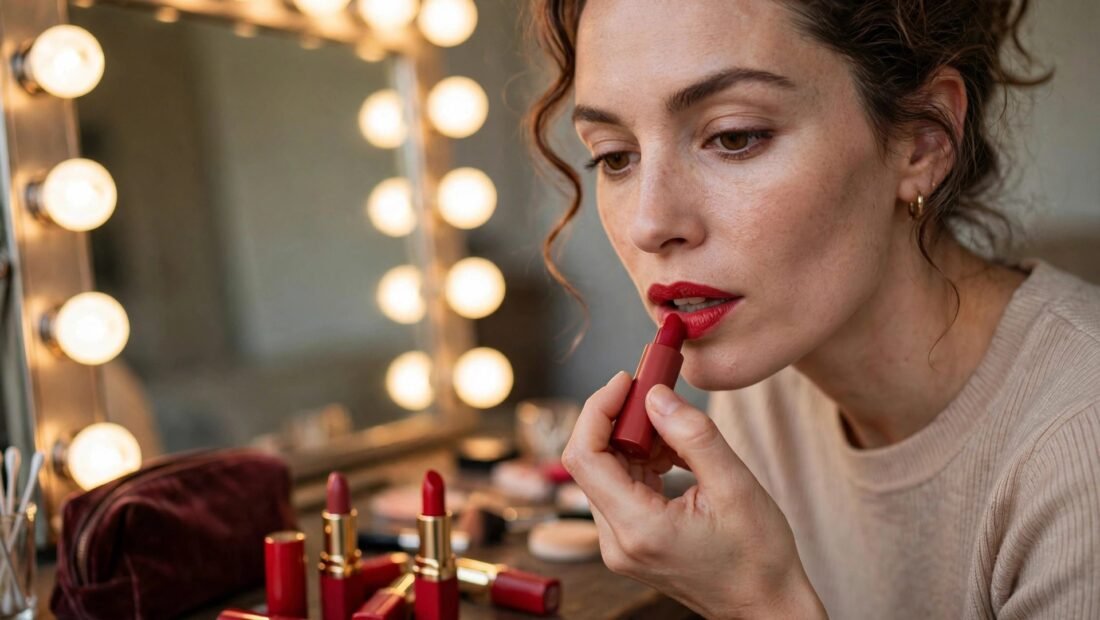
Red lipstick is the one makeup product with a century of mythology: power, glamour, confidence in a tube. It’s also the product most people buy wrong — ending up with a shade that makes teeth look yellow, skin look sallow, or the whole face look harsh. The secret the beauty industry doesn’t advertise: there is no single “perfect red.” There’s a perfect red for your undertone, your depth, and the occasion — and finding it is a system, not luck. Here’s the method, Texas-tested for heat-proof wear.
Step 1: Start With Undertone (Again)
Undertone determines which reds harmonize and which clash:
- Warm undertones (golden, peachy; greenish wrist veins; gold jewelry flatters): choose orange-reds, brick reds, tomato reds, warm cherry. These echo your skin’s warmth. Blue-based reds will look harsh and separate on warm skin.
- Cool undertones (pink, rosy; bluish veins; silver flatters): choose blue-reds, berry reds, true cherry, crimson. The blue base brightens cool skin and — bonus — makes teeth look whiter. Orange-reds turn brassy on cool skin.
- Neutral undertones: the lucky middle — true neutral reds work, and you can borrow from both sides. Start with a classic true red and adjust toward warm or cool based on what you see.
- Olive undertones: often flattered by deeper, slightly muted reds — brick, terracotta-red, deep cherry. Very bright blue-reds can look separate on olive skin.
If you haven’t determined your undertone, our guide to colors for warm skin tones walks through the vein, jewelry, and white-paper tests — the same logic applies to every color you wear, lips included.
Step 2: Factor in Depth and Contrast
Your skin’s depth (fair to deep) and your natural contrast level refine the choice:
- Fair skin: true reds and blue-reds pop beautifully; very dark oxblood reds can overwhelm. Sheer red formulas are the low-risk entry point.
- Light to medium skin: the widest range — most reds work. Match intensity to the occasion (see below).
- Tan to deep skin: rich, saturated reds — brick, classic red, deep berry — show up vibrantly. Very sheer or pale reds can look washed out; go bold.
- Low-contrast coloring (fair skin, light hair, light eyes): softer reds — sheer cherry, muted brick — harmonize better than opaque brights.
- High-contrast coloring (dark hair, fair skin; or deep skin with bright eyes): bold, opaque reds look intentional and striking.
Step 3: Choose Finish and Formula for the Occasion
- Matte liquid lipstick: maximum longevity, boldest color — and the least forgiving. Demands precise application and exfoliated lips. Best for events, not for Texas summer days (matte + heat + dryness = cracking).
- Classic bullet (satin/cream): the versatile workhorse — comfortable, reapplyable, flattering across ages. The best “first red” format.
- Sheer/stain: red’s training wheels — buildable color, forgiving application, natural finish. Ideal for daytime, work, and red beginners.
- Gloss over red: layering clear or red gloss over a satin bullet adds dimension and youthfulness; skip if you hate maintenance (gloss migrates).
Texas heat rule: long-wear satin bullets and stains survive Texas summers; creamy bullets melt and feather, matte liquids crack in dry heat. Whatever the formula, lip liner in a matching shade — filled across the whole lip, not just the outline — is the longevity insurance that prevents the dreaded ring-around-the-lips fade.
The Teeth Question
The #1 fear: “will this red make my teeth look yellow?” Blue-based reds (cool cherry, crimson, berry-red) create an optical illusion of whiter teeth — the blue counteracts yellow tones. Orange-based reds do the opposite, emphasizing any yellowness. If tooth color worries you, default to blue-reds regardless of undertone — the teeth benefit outweighs minor undertone mismatch for most people. (And no lipstick fixes actual staining — that’s a dentist conversation, not a makeup one.)
Testing Like a Pro
- Test on lips, not hands. Hand skin differs in tone and undertone from lips — the only true test is the lip itself. Use disposable applicators at counters; blot and layer at drugstores.
- Check in daylight. Store lighting lies about red especially. Step outside or to a window before deciding.
- Wear it for an hour. Reds change as they settle — some deepen, some fade patchily. The hour test reveals the true color and the wear pattern.
- Test against your actual wardrobe. The perfect red for your skin can still clash with your closet. Hold it against your most-worn colors.
- Start with one, not five. Buy the single best candidate, wear it for a week, then decide if you need variations. Five impulse reds is how drawers fill with almost-rights.
Budget note: the perfect red doesn’t require a luxury price tag — drugstore reds from heritage brands perform superbly. The polished look on a budget absolutely includes a great red lip; shade match matters infinitely more than brand prestige.
Red for Different Occasions
One red rarely serves every context. The practical approach: two reds — a polished everyday red and a statement red.
- Work/daytime: sheer or satin finishes in muted brick, soft cherry, or warm red. Blot once after applying for a lived-in stain effect that reads professional, not dramatic. Pair with minimal eye makeup — red lips plus heavy eyes overwhelms in daylight.
- Evening/events: full-opacity matte or satin in your most saturated undertone match. This is where the blue-red showstopper or the rich orange-red earns its place. Pair with defined (not heavy) eyes.
- Texas summer outdoor events: stains win — they survive heat, humidity, drinks, and food with minimal maintenance. Pack the bullet for touch-ups, not the liquid matte (which cracks in dry heat).
And don’t neglect the lips themselves: red shows every flaw — exfoliate weekly (a damp washcloth works as well as any scrub), moisturize nightly, and note that the American Academy of Dermatology recommends SPF lip protection daily, since lips burn and age like any other skin. Cleveland Clinic’s skincare guidance similarly flags the lips as one of the most sun-neglected areas — a red lip with SPF underneath is both beautiful and smart.
Conclusion
Your perfect red lipstick = undertone-matched base (warm→orange-reds, cool→blue-reds, neutral→true reds) + depth-appropriate intensity + occasion-appropriate formula + Texas-heat-proof wear strategy (liner filled in, satin or stain formulas). Test on lips in daylight, wear-test for an hour, and start with one. Red lipstick isn’t about bravery — it’s about fit. Find the fit and the confidence follows automatically.
Frequently Asked Questions
How do I find my perfect red lipstick shade?
Match to undertone first: warm undertones suit orange-reds and bricks; cool undertones suit blue-reds and berries; neutral suits true reds. Then adjust intensity for your skin depth, test on lips (not hands) in daylight, and wear-test for an hour.
What red lipstick makes teeth look whiter?
Blue-based reds — cool cherry, crimson, berry-red. The blue undertone optically counteracts yellow in teeth. Orange-based reds emphasize yellowness, so default to blue-reds if tooth color concerns you.
Can I wear red lipstick with fair skin?
Absolutely — true reds and blue-reds are stunning on fair skin. Start with a sheer formula if bold feels intimidating, and avoid very dark oxblood shades that can overwhelm fair complexions.
What is the best long-lasting red lipstick for hot weather?
Long-wear satin bullets and lip stains survive heat best. Fill in the whole lip with matching liner first, blot, and reapply the bullet — this layered method outlasts any single product in Texas summers.
Should older women wear red lipstick?
Yes — with formula adjustments. Creamy satins and sheer stains flatter mature lips; avoid very matte liquids that emphasize lip lines. A well-chosen red is ageless.