
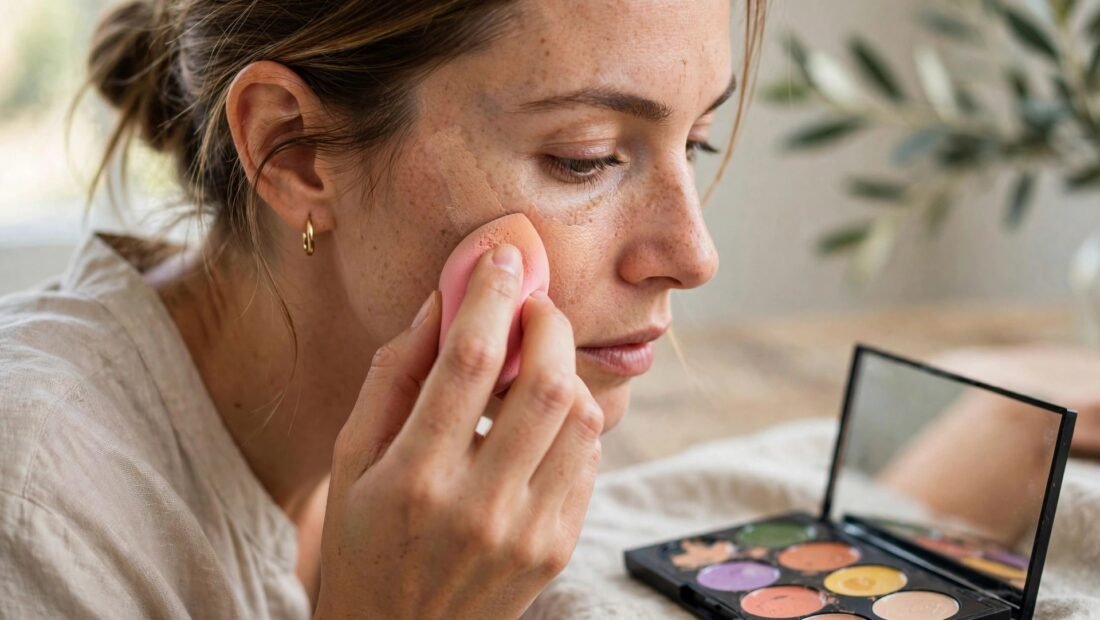
The spot is brown, the corrector is peach, the foundation is beige, and the covered result somehow looks grey. That grey cast is the clue. Dark-spot coverage is a colour problem before it is a coverage problem. Piling beige product over a brown or blue-grey mark does not cancel the colour underneath, so the mark shows through as a dull shadow and the rest of the face ends up wearing more makeup than it needs. Fix the colour first, in the right order, and the coverage can stay light.
Know Which Kind of Spot You Are Covering
Sun spots are flat brown patches built up over years of ultraviolet exposure, and they are extremely common in Texas. They sit in the upper layers of skin and respond to coverage in a fairly predictable way. Once the colour is neutralised, a light base usually evens them out well.
Post-inflammatory hyperpigmentation, shortened to PIH, is the mark left after acne, a scratch, or other irritation heals. Fresh marks often carry a red or purple tone. Older marks settle into brown. The age of the mark changes the corrector choice, which is why one product can work beautifully on an old mark and fail on a fresh one on the same face.
Melasma forms larger, often symmetrical patches, commonly across the cheeks, forehead, and upper lip. It is driven by hormones and triggered by sun and heat. Its colour often has a grey-brown cast, and its size makes it the hardest of the three to cover. Heavy product over a large patch looks obvious. Thin, layered colour correction is the only approach that stays natural on melasma.
Depth matters as well. Pigment near the surface covers more easily. Deeper pigment reflects light differently and tends to show through as that grey shadow even under a fair amount of product. Expecting one layer of foundation to erase deeper pigment is where most of the frustration starts.
Colour Theory: Why Peach Works and Beige Alone Does Not
Correctors cancel colour using the opposite side of the colour wheel. Brown and blue-grey pigmentation is softened by peach and orange tones. Red marks are softened by green. Yellow sallowness is softened by lavender. Once the spot’s colour is brought closer to neutral, foundation on top needs far less opacity to finish the job.
Heavy foundation alone fails for a simple reason. It lays a skin-coloured layer over a dark colour without changing that colour first. The dark tone mixes visually with the beige and reads grey or muddy, especially in daylight. To hide it by opacity alone, the layer has to get thick, and thick layers settle into lines, emphasise texture, and look like a mask. In Texas heat they also separate and slide sooner.
Depth of corrector must match depth of skin. Fair skin usually needs a soft peach or light salmon; orange on fair skin is too strong and shows through as a warm patch. Medium skin sits in the peach to orange-peach range. Tan skin generally needs a true orange. Deep skin needs orange-red to brick tones, because a pale peach on deep skin turns ashy and makes the area look greyer than the spot did. The corrector should sit close to your own skin depth, with the warmth doing the cancelling.
Skin Prep: The Base Decides How Evenly Everything Sits
Makeup spreads evenly on moisturised skin and grabs in patches on dry skin, clinging to flakes and making spots look darker at the edges. Start with your normal moisturiser and give it a few minutes to absorb fully. Product applied over a still-wet, slippery base tends to move around and thin out in the wrong places.
Sunscreen belongs in the prep step during the day, applied after moisturiser and allowed to set before makeup. Ultraviolet light darkens every type of spot covered here, so covering a sun spot while skipping sunscreen works against itself. Let the sunscreen settle for several minutes so the corrector does not slide on top of it. Smooth, hydrated, protected skin is the canvas. Everything after this step is thin layers on that canvas, and the quality of the canvas decides how thin those layers can be.
One practical note before colour starts: work in daylight or the brightest neutral light you have. Bathroom lighting with a yellow cast hides the grey shadow you are trying to cancel, and the result often surprises people at the front door.
Corrector Placement: Only on the Spot, Less Than You Think
Apply corrector only to the spot itself. Use a small flat brush or a clean fingertip and place a pinhead amount at the centre of the mark. Pat outward gently to soften the edge so the corrector fades into the surrounding skin. Do not swipe, because swiping drags the product off the darkest part and spreads colour where none is needed.
Corrector spread across the whole cheek creates a new problem: a large warm patch that foundation then has to cover. Kept to the spot, it does one job quietly. Build it in two whisper-thin layers if one is not enough, patting each layer and checking in the mirror between them. The goal at this stage is not invisibility. The goal is a spot whose colour now looks close to the skin around it, slightly warm rather than brown or grey.
For several small PIH marks, work spot by spot instead of dotting quickly and blending everything at once. Corrector dries and sets as it sits, and a mark corrected and left for a minute holds better under foundation than one blended while still wet.
Foundation and Concealer: Evenness First, Leftovers Second
With the colour corrected, apply a sheer-to-medium foundation over the whole face. Its job is evenness across the full canvas, not spot removal. Use a damp sponge or brush and press it over corrected areas rather than rubbing, so the corrector underneath stays where you placed it. Choose long-wear, transfer-resistant formulas for Texas conditions, and remember the earlier comparison many shoppers weigh when restocking a routine, namely whether expensive skincare beats drugstore options, applies to base products too: fit and finish matter more than the price tag.
Then stop and look. With corrector plus foundation, most spots have faded to the point where they no longer draw the eye. Only now does concealer enter, dabbed solely on the spots still showing. Use a concealer that matches your skin tone. A lighter concealer, a common instinct, paints a pale halo over a dark mark and draws attention straight to it. Press to blend the edges, keep the centre of the spot covered, and leave the rest of the face alone.
This order is the whole system: prep, corrector on the spot, sheer foundation everywhere, concealer only on leftovers. Each layer is thin because each layer has one job.
Setting for Texas Heat Without Going Cakey
Heat and humidity undo heavy makeup first. Thin layers survive longer because there is simply less product to migrate. Set the corrected areas with a tiny amount of translucent powder, pressed on with a puff or brush rather than swept, which can drag concealer sideways. Concentrate on the zones that crease or shine, such as around the nose and across the forehead, and leave drier areas with little or no powder, since powder over dry patches emphasises texture and can make a covered spot look crusty by midday.
Blotting papers carried in a bag handle shine without adding more product. Press, do not rub. If a spot starts to show late in the day, a fingertip pat of concealer on that spot alone refreshes it. Adding a fresh layer of foundation over the whole face at 4 p.m. is how natural morning makeup turns into a heavy evening mask.
Texas sun also reaches skin through car and office windows and during short walks that feel too brief to matter. Those exposures add up and re-darken spots under otherwise good makeup habits. A hat for the midday stretch and sunscreen reapplied over or under makeup, depending on the product you use, protect the work that treatment is doing underneath.
Treating the Spot While You Cover It
Makeup manages today. Treatment changes the months ahead, and the two run side by side. A vitamin C serum in the morning is the standard starting point. It helps brighten skin and inhibits melanin production, with visible change usually building over 8 to 12 weeks of steady use. It goes on clean skin before moisturiser and sunscreen.
Daily sunscreen is the treatment that protects all the others. Without it, new pigment forms as fast as brightening products fade the old pigment, and the spot appears stuck. This is central to the American Academy of Dermatology’s guidance on dark spots and melasma, which treats sun protection as the foundation of any plan for pigmentation.
Other supporting ingredients include niacinamide and azelaic acid, both generally gentle and suited to long routines. Retinoids, used at night, speed cell turnover and fade marks over months, though they can irritate at first and are best started slowly. Stubborn, widespread, or fast-changing pigmentation deserves a dermatologist visit rather than a stronger product bought on hope. A spot that changes shape, colour, or texture needs checking for medical reasons, not cosmetic ones.
Honest Timelines for Fading
PIH from acne typically fades over 3 to 6 months with consistent treatment and sunscreen. Sun spots take longer, usually 6 to 12 months, because the pigment has been building for years. Melasma is managed rather than cured. It can lighten a great deal with treatment, then darken again after a sunny holiday or a run of hot days if protection slips.
Those timelines explain why consistency beats intensity. A gentle routine followed daily for six months outperforms an aggressive routine abandoned after three weeks of irritation. It also explains why the coverage system matters for so long. You will be covering these spots, lightly and well, for months while treatment works at its own pace. Light layers you can repeat every morning without dread are worth more than a perfect heavy application you cannot face doing twice.
Keep the expectations set by colour, not coverage. Get the corrector shade right for your skin depth, keep every layer thin, set only where needed, and protect the skin from the Texas sun that made the spots in the first place. The result looks like skin, because most of what shows is skin, with the colour quietly corrected underneath.



1 Comment