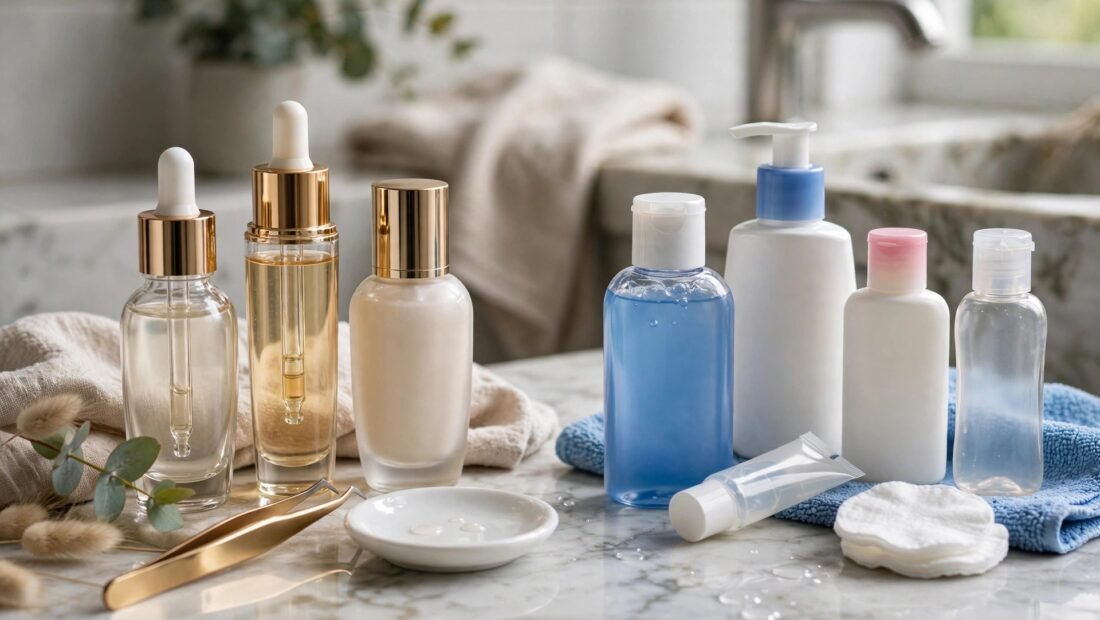
The $180 serum and the $14 serum list the same active ingredient at the same percentage. So what exactly does the extra $166 buy, and when is it worth paying? Sometimes the answer is a better formula. Often it is fragrance, glass, advertising, and margin. The honest way to decide is not brand by brand, but category by category, because skincare is not one market. In some categories price buys almost nothing. In a few, it buys the difference between a product that works and one that has quietly fallen apart in the bottle.
What the Price Actually Pays For
Start by splitting a price tag into its parts. One part is the active ingredients: the retinoid, vitamin C, niacinamide, or acid that does the work. These are well-known chemicals with ordinary costs. Niacinamide is niacinamide whether it sits in a $12 bottle or a $90 one.
A second part is formulation: how the actives are kept stable, how they are delivered into the skin, and how the product is balanced so it does not irritate. This is where real quality differences can live, and it matters most for unstable or fussy ingredients.
The rest of the price touches your skin very little. Fragrance, texture, heavy glass packaging, counter space, advertising, influencer deals, and small-batch production runs all cost money. So does a higher brand margin. Put plainly, a $200 cream does not contain $190 more ingredients than a $20 one. Much of the gap is story and presentation. That does not make expensive products a scam. It means price alone tells you almost nothing, and each category below has to be judged on its own chemistry.
Cleansers: Drugstore Wins Outright
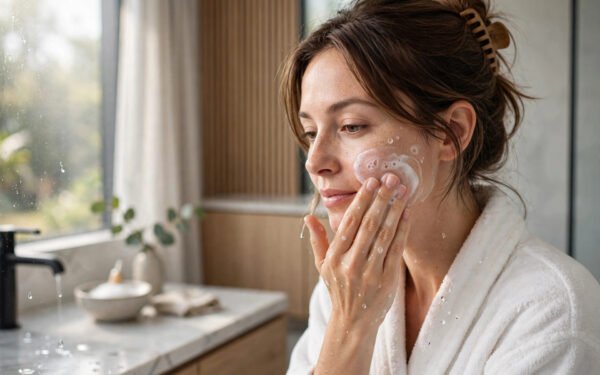
A cleanser stays on your face for about a minute and then rinses off. Its active ingredients have almost no time to do anything beyond helping lift oil and dirt, and the water washes the rest away. A gentle, pH-balanced drugstore cleanser performs identically to a $60 luxury one for the job that matters: cleaning without stripping.
What to look for is simple. The skin should feel clean, not tight or squeaky. If your face feels dry and pulled after washing, the cleanser is too harsh at any price. Save the money here without hesitation and spend it on products that stay on the skin for hours, where ingredients have time to work.
Basic Moisturizers: A Tie, With One Exception
A daily moisturizer needs three kinds of ingredients: humectants that draw in water, emollients that soften, and occlusives that slow water loss. All three groups are cheap, well understood, and widely available. Drugstore moisturizers built on ceramides, glycerin, or hyaluronic acid match luxury creams for ordinary daily hydration.
The exception is feel. A luxury cream may spread more smoothly, absorb faster, or sit better under makeup. If that nicer feel is the reason you use it every morning and night instead of skipping days, it has real value for you. Just name it correctly. You are paying for a texture you enjoy, not for stronger hydration chemistry.
Sunscreen: Identical Protection, Different Feel
Sunscreen is regulated and tested to the same standards regardless of price. A $12 SPF 50 protects identically to a $60 SPF 50 when both are applied properly, in the right amount, and reapplied as directed. The SPF number measures protection, and the testing behind it does not change with the brand’s price tier.
Properly is the hard part. Most people apply too little. A rough guide is a quarter teaspoon for the face alone, or two finger-lengths of product, and reapplication every two hours outdoors, sooner after swimming or heavy sweating. In Texas sun, that discipline matters far more than the label. Where a pricier sunscreen can earn its cost is comfort: a formula with no white cast and no greasy finish is one you will actually wear daily. The best sunscreen is the one on your face, so buy the texture you will use, at whichever price that turns out to be.
Single-Ingredient Actives: Check the Percentage, Not the Brand
Serums built around one familiar active, such as niacinamide or hyaluronic acid, are close to commodity products. A drugstore version at a sensible concentration performs much like a luxury version of the same thing. Read the label for the ingredient and its percentage where it is listed, and be suspicious of any bottle, cheap or dear, that hides behind vague words like proprietary blend with no numbers at all.
One caution cuts both ways. More is not always better. A very high percentage of an active can irritate skin that a moderate percentage would have helped. A burning face is not proof a product is strong and working. It is usually proof the dose or the formula is wrong for you.
Vitamin C: Where Formulation Genuinely Matters
Vitamin C is the clearest case where paying for quality can pay off, though the quality can appear at mid-range prices too. The best-studied form, L-ascorbic acid, works at a concentration of about 10 to 20 percent and at a low pH, around 3.5. A 2 percent serum at pH 6 is, in effect, expensive water, whatever the bottle cost.
L-ascorbic acid is also unstable. Air and light break it down, and a serum that has turned dark yellow or orange has largely oxidized. Packaging therefore decides whether the product works at all: an airless pump or an opaque bottle protects it, while a clear dropper bottle on a sunny shelf does not. Supporting ingredients such as ferulic acid and vitamin E can improve stability in a well-made formula. Judge a vitamin C serum by concentration, pH, and packaging together. A cheap serum that gets all three right beats a luxury one that gets them wrong.
Retinoids: The Prescription Beats Every Price Tag
Retinoids are the most nuanced category, and the verdict surprises people. Prescription tretinoin, often around $20 to $60 with insurance, outperforms every cosmetic retinoid at any price. The prescription is the value play. Nothing in a department store, however elegant, outranks it for the uses it is prescribed for.
Cosmetic retinol still has a place, especially for people starting out or with skin that needs a gentler pace. If that is your route, read how to start retinol safely as a beginner before the first application, because retinoids punish rushed routines with peeling and irritation. Among cosmetic options, formulation matters for stability and comfort, and some premium products are gentler for it. But keep the order straight: prescription first, well-made cosmetic second, luxury marketing a distant third.
Complex Serums and Elegant Textures: A Personal Call
Products that combine several actives at useful levels, keep them stable together, and still feel pleasant are genuinely hard to make. Some higher-priced serums achieve a stability and finish that cheaper copies only approach. Whether that difference is worth five or ten times the price is personal, not scientific. The fair test is your own skin over four to six weeks: one new product at a time, used consistently, judged by what changes and what does not.
Consistency is the quiet factor in every comparison. A modest routine used daily for three months will nearly always beat a brilliant routine used twice a week. If a lovely texture is what keeps you consistent, that is a legitimate reason to pay more, as long as you know that is what you are buying.
Storage: The Texas Factor Nobody Prices In
Heat ruins products at every price. A bathroom that steams up daily and a car glove box in August are hostile places for unstable actives. Store serums somewhere cool and dark, keep lids closed, and do not stockpile large quantities of products that oxidize.
This levels the field in an unglamorous way. A $15 serum used fresh beats a $150 serum oxidized in a hot bathroom. If a vitamin C serum changes colour, smells sharply different, or a cream separates and smells off, replace it. The money is already spent; putting a degraded product on your face does not recover it.
When Neither Option Is the Answer
Some skin problems are medical, not cosmetic. Persistent acne, rosacea, melasma, eczema, a changing mole, or a rash that does not settle will not be fixed by choosing the right price tier. Those need a dermatologist, and one visit often costs less than the luxury serum that was never going to treat the condition. For general skin care principles at any budget, the American Academy of Dermatology’s skin care guidance is a reliable reference point.
The Verdict
Spend freely nowhere, and save confidently in most places. Buy drugstore cleansers, basic moisturizers, and single-ingredient serums without a second thought. Choose sunscreen by the texture you will wear every day, since its protection is equal across prices when applied properly. Pay for formulation only where chemistry demands it, above all a vitamin C serum with the right concentration, low pH, and protective packaging. For retinoids, skip the luxury contest entirely and ask a dermatologist about tretinoin. Judge everything else by the ingredient list, the packaging, and four to six weeks of your own skin’s response. Price is a weak signal. Chemistry, stability, and consistency are the strong ones.