
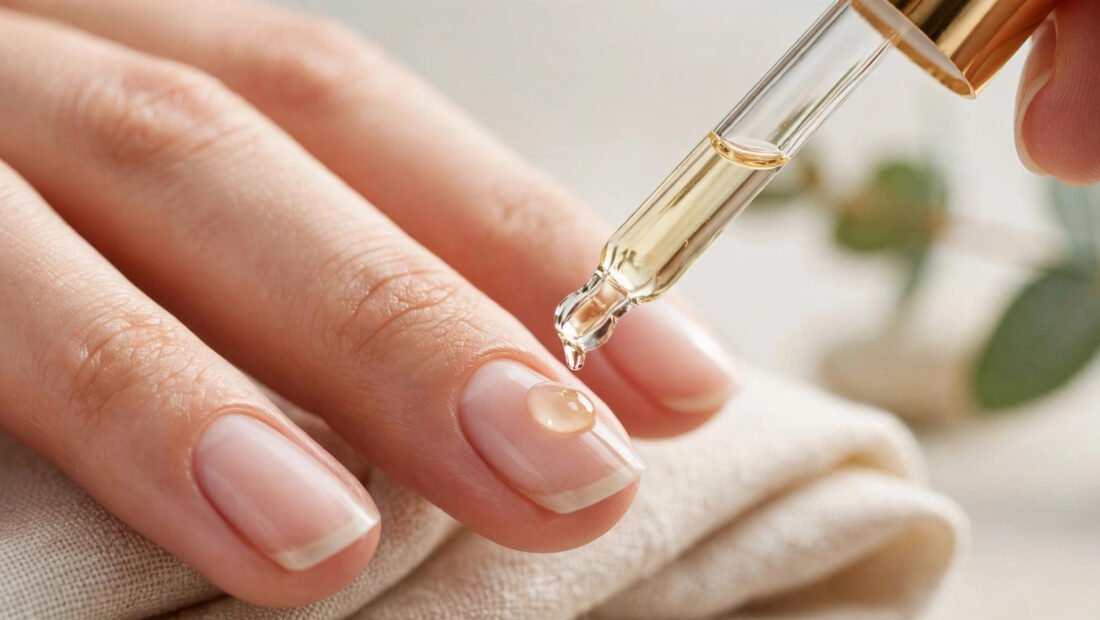
A salon manicure every two weeks at $50 to $80 a visit adds up to roughly $1,500 over a year. That is a lot of money for nails that still peel, split, and snap the week after the appointment. Here is the part the price tag hides: the salon visit is not what makes nails strong. A fingernail plate takes four to six months to grow out from cuticle to tip. Nothing done in one afternoon can rebuild that plate. Strength comes from what touches your nails every day for months — water, soap, files, polish, and plain habit. Skip the appointments, keep the habits, and the same slow growth works in your favor at home for a fraction of the cost.
The Daily and Weekly Checklist
Start here. This short list does most of the work, and everything after it just explains why each item matters. Stick it on the bathroom mirror and follow it for a full grow-out cycle before judging the results.
Every day
- Massage a drop of cuticle oil into each nail and the skin around it, ideally at night.
- Rub hand cream on after washing your hands, not just once in the morning.
- Wear gloves for dishes, cleaning, and any job where your hands sit in water.
- Keep nails at a length where the tips do not catch on pockets, keyboards, or car doors.
Once a week
- Set aside one 30-minute window for a proper home manicure, start to finish.
- File in one direction only, from the outer edge toward the center, with a fine file.
- Reapply top coat every two to three days so the protective layer never fully wears away.
- Check each nail for new splits and trim a damaged tip before it tears.
Never
- Never use your nails as tools to open cans, scrape labels, or pry at anything.
- Never peel off lifting polish. Peeling pulls layers of the nail plate off with it.
- Never cut your cuticles. Push them back gently and leave the seal intact.
That is the whole system. It looks plain because it is plain. Nails respond to steady protection and steady moisture, not to a new product every month.
Why Nails Break in the First Place
A nail plate is made of hard keratin, but it behaves a bit like a sponge. It soaks up water fast and dries out fast. Every soak-and-dry cycle swells the plate and then shrinks it. Do that several times a day — hand washing, showering, dishes, cleaning — and the layers start to separate. That separation is the peeling and flaking many people blame on weak nails. Often the nail is not thin. It is just waterlogged and dried out over and over until it gives up.
Detergents make the cycle worse. Dish soap and cleaners strip the natural oils that help the plate flex instead of snapping, and bare hands in hot, soapy water can undo a week of careful oiling. Length is the third cause: a nail well past the fingertip acts like a lever, bending at the stress point with every small knock. Shorter nails break far less often, so shorten first and rebuild length once new growth feels firmer. Harsh removers finish the job — acetone used every few days dries the plate, while a non-acetone remover used once a week is much kinder.
Strengtheners, Graded Honestly
A full drugstore shelf promises hard, strong nails in a week. Some of these products help for a short stretch. None of them changes the plate you already have in any lasting way, because the plate is dead tissue. A strengthener can coat it, stiffen it, or fill tiny cracks. It cannot feed it. Keep that limit in mind and the grades below make sense.
Hardeners that feel strong fast
Formaldehyde-type hardeners stiffen the plate quickly, and nails do feel stronger within days. That speed is the catch. A plate made too stiff loses its ability to flex, so instead of bending under pressure it cracks or snaps clean across. Some people also develop sensitivity around the nail from repeated use. Treat this kind of product as a short-term tool for a specific event or a brief rough patch, not as a daily routine month after month. If a hardener makes your nails feel like plastic, that is not a sign it is working well. It is a sign to stop.
The gentler route
Fiber and keratin treatments work more slowly and less dramatically. They add a flexible support layer or fill small surface flaws so splits are less likely to catch and spread. Nails will not feel rock hard, and that is the point. A healthy nail bends a little and survives. For most people with peeling, splitting nails, the gentler route plus the daily checklist beats a harsh hardener over a full grow-out cycle. Give any product weeks, not days, and change only one thing at a time so you know what helped.
For a plain-language look at what healthy nail care does and does not include, see the American Academy of Dermatology’s nail care guidance. It is a useful check against bold claims on product labels.
What About Biotin?
Biotin is the one supplement with decent evidence behind it for nails. For some users it reduced splitting and improved thickness after three to six months of steady use, typically at 2.5 mg daily. That timeline matters. Anyone who takes biotin for two weeks and sees nothing has not really tested it, because the nail visible today was formed months ago. Only new growth can show a change.
Two cautions belong with that promise. First, results are not universal. Some people notice a clear difference and some notice none. Second, check with a doctor before starting. Biotin can interfere with certain lab tests, which can lead to results that mislead the doctor reading them. Tell any clinician ordering blood work that you take it.
The Weekly 30-Minute Manicure at Home
Once a week, do the full routine slowly. Rushing is how cuticles get cut and files saw back and forth. Put on music and treat the half hour as the appointment you used to pay for.
Remove old polish with a non-acetone remover. Work one nail at a time and do not scrub. Then soak your fingertips for five minutes in warm water with a drop of oil added. The soak softens the cuticle area so it moves easily, and the oil limits how much plain water the plate absorbs.
Pat your hands dry. Push the cuticles back gently with a soft stick or the edge of a towel. Do not cut them: the cuticle is a seal that keeps water and bacteria out, and cutting it breaks that seal. File next, while the nails are dry again, with a fine file in one direction only. Sawing back and forth frays the layers at the tip and sets up the next split. Aim for a soft square or rounded shape, since sharp corners catch and tear first.
Finish with polish if you wear it. Start with a base coat, add color in thin coats rather than one thick one, and seal everything with a top coat, running the brush lightly over the very tip to cap the edge. That capped edge is where chips start, which is why refreshing the top coat every two to three days extends the whole manicure.
Adjustments for Texas Weather
Texas asks a lot of nails. Summer heat and long stretches of air conditioning pull moisture in opposite directions all day. Indoor air runs dry for months, so the cream-after-washing habit matters more here, not less. Keep a small tube at every sink you use often, at home and at work, so the step is easy instead of ideal.
Pools add chlorine, which dries the plate and the skin much like detergent does. Rinse your hands with clean water after a swim, dry them well, and add oil and cream once you are out for the day. Peeling that starts in June and fades in the fall usually points to water and chlorine exposure, not a sudden vitamin problem.
Heat also makes hands sweat, and damp skin softens nails, so they bend and tear more easily during yard work and outdoor jobs. Gloves, a shorter length through the hottest months, and a clear coat as a shield can all help.
When Weak Nails Need a Doctor
Most weak nails are a habit and exposure problem. Some are not. Certain changes deserve a medical look rather than another bottle of strengthener, and how to grow out damaged hair without the big chop is a fair reminder that slow-growing tissue rewards patience — but patience is the wrong answer when a warning sign shows up.
Book a visit with a doctor or dermatologist if a single nail changes while the others stay the same, if a dark streak appears in one nail, if a nail starts to separate from the bed under it, if you have pain, swelling, or redness that does not settle, or if the nail thickens, crumbles, or changes color in a way that suggests fungus. One odd nail out of ten is the pattern that matters most. General weakness across all ten nails usually points back to water, products, and habit. A lone nail doing something new deserves real attention.
How Long This Actually Takes
Expect meaningful improvement in two to three months. That is when enough new, better-cared-for nail has grown out to reach the stress point where breaks happen. Tips will feel firmer, polish will last longer, and splits should start less often. The full result takes longer. The plate replaces itself completely in four to six months, so a nail damaged at the cuticle in January is not fully gone until late spring or summer.
That long timeline is why so many people quit good routines early, judging a six-month process at week three. Judge it at month three instead. Take a photo on day one and another each month, in the same light, and compare new growth near the cuticle with the older tip. Follow the checklist through one full grow-out, and the nails you have next season will be the proof.


1 Comment