A clinic in a Texas metro will charge $300 to $1,500 for a single session of laser work or microneedling aimed at acne marks. That price is real, and for some scars it is worth paying. But most people staring at their cheeks in the mirror do not have the kind of scar those machines treat. They have flat marks: brown spots and red patches left behind by pimples that healed weeks ago. Flat marks respond to home care, and a steady routine built from drugstore products can cost under $50 in total.
The checklist, up front
- 1. Identify your mark type before you buy anything: brown pigment, red marks, or true pitted scars.
- 2. Wear sunscreen every morning, without exception, while you treat marks.
- 3. Start one brightening ingredient, not four, and use it as directed.
- 4. Never pick, squeeze, or scrub at healing skin.
- 5. Judge the result at 3 to 4 months, not at 3 to 4 days.
That is the whole plan. Everything below explains why each item sits on the list, how to work through it, and where home care honestly stops working. Skipping the first item is the most common reason people waste money: they buy a strong pigment serum for a red mark that has no pigment in it, use it for two months, see nothing, and conclude that home care is a scam.
Step 1 explained: the three mark types
Post-inflammatory hyperpigmentation, shortened to PIH, is the brown mark. After a pimple heals, inflamed skin can produce extra pigment, and that pigment sits in the upper layers as a flat brown or tan spot. It does not change the surface of the skin. Run a fingertip over it and the skin feels smooth. PIH is the most common mark type and the most responsive to home care.
Post-inflammatory erythema, or PIE, is the red or pink mark. The color here is not pigment at all. It comes from tiny blood vessels near the surface that were damaged or widened during inflammation. A simple test separates the two: press a fingertip or a clear piece of glass firmly on the mark for a few seconds. If the color fades or turns white under pressure and then returns, you are looking at PIE. If it stays brown, it is PIH. The test takes five seconds and decides your whole approach.
True scars are different in kind. These are pitted or raised changes in the skin’s structure, where collagen was lost or built unevenly as a deep spot healed. Icepick scars are narrow and deep. Boxcar scars are wider with sharper edges. Rolling scars give the skin a wavy surface. Home care can fade the color around a pitted scar and improve skin quality a little, but it cannot rebuild lost tissue or fill a pit. Anyone who tells you a cream will do that is selling you something. Pitted scars are the honest case for clinic treatment.
Many people have a mix: brown marks on the cheeks, red marks near the jaw, and a few shallow pits. Treat the marks at home, and make a separate decision about the pits once the color has faded, because marks often look far worse than the texture underneath them. If breakouts are still active, settle those first, since each new pimple can leave a new mark. It helps to understand why your skin is breaking out suddenly at 30 before spending anything on the marks it leaves behind.
The PIH ingredients, ranked by evidence
For brown marks, these are the ingredients with the best support, in rough order. Pick one to start. Each line explains what the ingredient actually does, because knowing the job helps you avoid doubling up on products that do the same thing.
- Vitamin C at 10 to 20%: slows pigment production and brightens overall tone. Use it in the morning. A serum that has turned dark orange or brown has oxidized and should be replaced.
- Niacinamide at 4 to 10%: reduces the transfer of pigment into skin cells, calms inflammation, and supports the barrier. It is one of the best tolerated options for sensitive skin.
- Azelaic acid at 10% over the counter: works on pigment and on acne at the same time, which makes it a strong pick if you still break out. Prescription strength is 15 to 20%, so the store version is the gentler end of a proven ingredient.
- Alpha arbutin at 2%: a gentle ingredient that slows the enzyme that makes pigment, without the irritation risk linked to stronger prescription lighteners.
- Adapalene 0.1%: a retinoid that speeds up cell turnover, so pigmented cells are shed faster. It also helps prevent the new breakouts that create new marks.
- AHA exfoliants at 5 to 10%: glycolic or lactic acid loosens the bonds holding dead, pigmented cells on the surface. Two or three times a week is enough for most people.
A workable pattern is vitamin C in the morning under sunscreen, and one night ingredient, such as azelaic acid or adapalene, in the evening. Add a second night ingredient only after a few calm weeks, and alternate nights rather than layering everything at once. Stinging, peeling, and new redness mean the routine is too strong, and irritated skin often makes more pigment, which is the opposite of the goal. For a clinical overview of which ingredients have real support, see the American Academy of Dermatology’s guidance on acne marks and scars.
Why sunscreen is non-negotiable
Ultraviolet light deepens pigment. It does so quickly, and it does so even on cloudy days and through a car window on a Texas commute. Every morning you skip sunscreen, daylight pushes pigment into the very marks you spent the evening trying to lift. Serums work slowly, over weeks. Sunlight works in hours. That mismatch is why sunscreen is not a supporting step in this plan. It is the step the rest of the plan depends on.
Use a broad-spectrum SPF 30 or higher each morning, and reapply if you spend real time outdoors. If sunscreen has broken you out in the past, the answer is a different formula, not no formula: look for oil-free, non-comedogenic gel or fluid textures made for faces. One week of unprotected sun can undo a month of careful brightening, which is a frustrating trade to make by accident.
Handling PIE, the red marks
Red marks frustrate people because the usual brighteners barely touch them. There is little pigment to lift, so pigment products have little to do. The good news is that PIE fades on its own as the small vessels repair themselves. The honest range is 3 to 12 months, with lighter marks clearing sooner and deeper red patches taking the long end.
Two ingredients help at the margins. Azelaic acid has anti-inflammatory effects that can ease redness. Niacinamide can help with redness too, and it is gentle enough for daily use. Beyond that, the main job is to avoid making things worse. Harsh exfoliation, strong scrubs, very hot water, and picking all keep vessels inflamed and stretch the timeline out. Treat red marks with patience and a light hand. If a patch of PIE matters enough and will not shift, a vascular laser at a clinic is the one procedure that targets the actual cause, and it is worth discussing with a dermatologist rather than spending a year on serums.
Kitchen remedies, graded honestly
Lemon juice is the most shared home remedy for dark marks, and it is the one to skip. Lemon juice is an uncontrolled acid, and compounds in citrus can react with sunlight on skin and cause a burn-like reaction with worse darkening afterward. In Texas sun, that risk is not theoretical. It can leave a mark darker and larger than the one you started with.
Turmeric sits in a safer but weaker place. It stains skin yellow, it makes a mess, and the evidence that it fades acne marks in any meaningful way is weak. It is unlikely to harm most people as a short mask, but it is also unlikely to do what a formulated product does. Aloe and honey get similar grades: soothing, low risk, and not strong enough to lift established pigment on their own.
The comparison that settles it is price against control. A formulated 5 to 10% AHA product has a measured strength and a known pH, and it costs about as much as the groceries people buy for home remedies. A decent niacinamide serum costs around twelve dollars and lasts for weeks of daily use. Measured beats improvised when the thing you are treating took months to form.
A budget routine and a real timeline
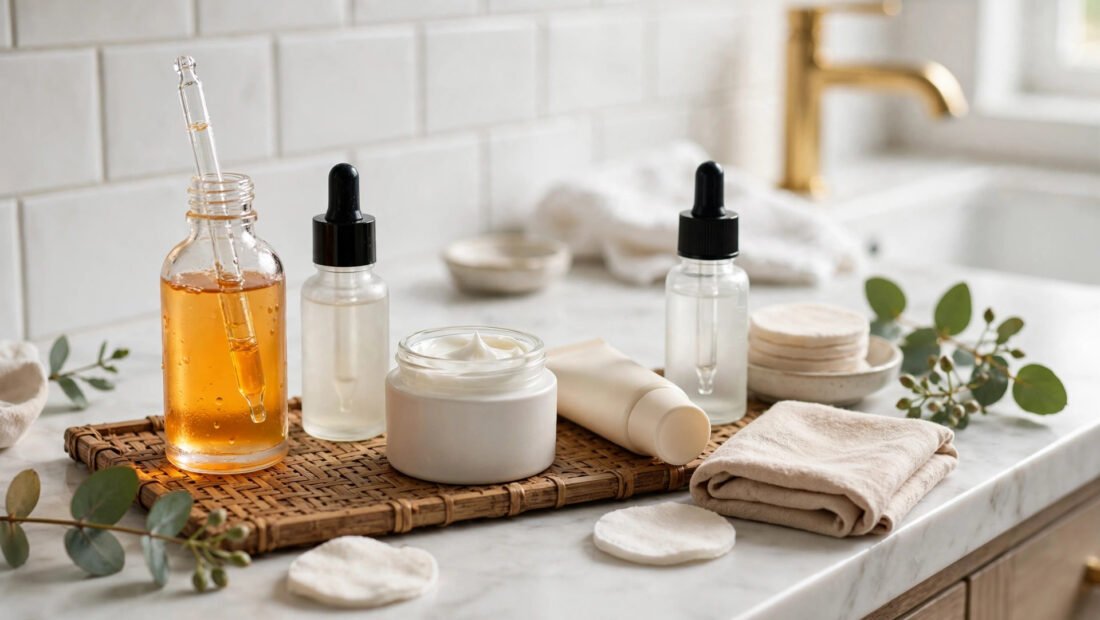
A routine of about $40 covers mild to moderate PIH well: a drugstore vitamin C serum, a niacinamide moisturizer, and sunscreen. Morning: cleanse gently or rinse, apply vitamin C, then moisturizer if you need it, then sunscreen. Evening: cleanse, apply your one night ingredient, then moisturizer. That is the whole thing. Consistency with this beats a shelf of products used at random.
Set your expectations by the calendar. Visible fading usually shows at 4 to 6 weeks. Significant improvement lands at 3 to 4 months. Untreated PIH typically fades over 6 to 12 months, and it takes longer on deeper skin tones, which is worth knowing so you do not judge your progress against someone else’s photos. Take one photo a month in the same light instead of checking the mirror daily. Daily checks will tell you nothing except how the light changed.
When to see a dermatologist
Book a visit if your main problem is pitted scars, since those need procedures rather than products. Book one if marks show no movement at all after 4 months of steady treatment and daily sunscreen, because prescription options exist for stubborn pigment. Book one if a mark darkens despite sunscreen, or if any single spot looks different from the rest: changing shape, bleeding, or failing to heal. That last visit is not about looks. Getting an unusual spot checked is basic skin safety. Home care handles the common, flat, stubborn marks of acne very well. Knowing where it stops is part of using it well.