
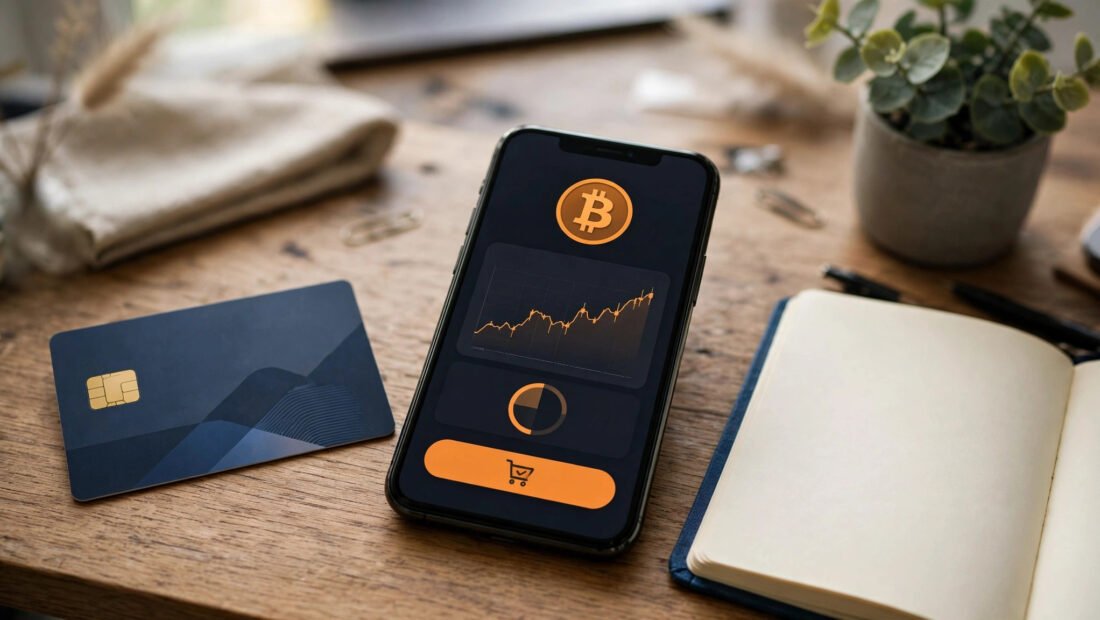
A careless credit card crypto purchase can lose 10 percent before the price even moves. The card fee is only the visible part. Underneath it sit a spread on the instant-buy screen, a possible cash-advance charge from the card issuer, and sometimes a foreign transaction fee, each one taking its cut quietly. None of these charges is hidden in a legal sense. They are just spread across different screens and statements, so few buyers ever add them up. Adding them up first is the whole skill.
Trap One: The Cash-Advance Coding That Costs 8 Percent on Its Own
Some card issuers treat a crypto purchase as a cash advance rather than a normal purchase. That single coding decision changes everything. A cash advance usually carries an upfront fee of 3 to 5 percent. Interest starts immediately, with no grace period, often at 25 percent APR or higher. Rewards points are normally excluded as well.
Stack a 5 percent cash-advance fee on top of interest that begins on day one and an exchange fee of 3 percent, and the purchase can cost 8 percent or more before the exchange has done anything unusual. On a $500 buy, that is $40 or more gone at the moment of purchase. The coin then has to rise by that amount just to break even.
Policies differ by issuer and by card, and issuers change them. There is no universal list you can trust for long. The check has to be made on your own card, before your own purchase, using the steps set out further down. Assuming your card treats crypto as a normal purchase because a friend’s card does is one of the most expensive assumptions in this market.
Trap Two: The Instant-Buy Screen and Its Spread
The simple buy screen on a major exchange is designed for speed, and speed is priced in. Alongside the stated card fee, the price quoted on an instant buy includes a spread, a markup over the market price, commonly 0.5 to 2 percent. The fee line may look modest while the spread quietly takes as much again.
The honest way to judge any platform is the amount of crypto that lands in the account for a set amount of dollars. Compare that final figure across platforms, not the headline fee. A service advertising no fees at all usually makes its money by widening the spread instead. The cost has not vanished. It has moved to a place where it is harder to see.
The same exchange often charges far less through its advanced trading interface, where you place the order yourself. Card fees there can run closer to 1 to 2 percent on some platforms, and the spread tightens because you are trading at market prices. Two extra minutes of learning that screen is regularly worth 1 to 2 percent on every future purchase, which is real money across a year of buys. Anyone comparing platforms at this stage will find a useful starting shortlist in the best crypto exchange for beginners, provided the fee schedules are then checked live, since they change.
Trap Three: Card Processing and Foreign Transaction Fees Stacking Up
Exchanges typically charge 2 to 4 percent for card deposits. That is not pure profit for them. Card networks charge the exchange for processing, and the exchange passes the cost on. Bank transfers, by contrast, usually cost the exchange very little, which is why they run at roughly 0 to 0.5 percent for the buyer.
A further 1 to 3 percent can appear if the exchange or its payment processor is based abroad and your card charges a foreign transaction fee. The charge may not appear until the statement arrives, listed as a separate line that is easy to miss. Check where the platform processes card payments, and check your card’s foreign transaction terms, before a large purchase rather than after it.
Put the careless version together: a 3.5 percent card fee, a 1.5 percent spread, a 5 percent cash-advance fee, and interest starting immediately. The total reaches 10 percent before the market has moved a cent. Put the careful version together and a card buy lands at 1 to 3 percent all in. The coin is the same. The route is the difference.
Trap Four: Carrying the Purchase as a Balance
Buying crypto on a card and paying the statement in full that month is a payment method. Buying crypto on a card and carrying the balance is borrowing at 20 to 30 percent APR to hold a volatile asset. Those are entirely different decisions wearing the same clothes.
Crypto can fall 20 or 30 percent in a bad month and stay down for a long stretch. Interest does not care. It accrues on schedule while the holding sits below the purchase price, so the loss deepens from both directions. A small learning purchase of $200 can quietly become a lasting debt if it is rolled from month to month alongside other spending. The rule is strict for a reason: if the full amount cannot be paid off immediately, the card is the wrong way to buy, whatever the fees are.
The same logic rules out rally buying. Purchasing in a rush because the price is climbing, on a card chosen because it is instant, at the worst fees, on money that is not fully spare, combines every trap at once. Urgency is the feeling these fee structures are built to monetise.
What a $500 Purchase Actually Costs on Each Route
Illustrative all-in costs for a $500 card purchase help make the stack concrete. Fee schedules change, so verify the current numbers on the platform before buying, but the pattern across routes is stable.
- Coinbase simple buy: roughly 3.5 to 4.5 percent all in, so about $18 to $23 of the $500 goes on costs.
- An advanced exchange interface using a card: roughly 2 to 3 percent, about $10 to $15, if your card codes the purchase normally.
- Cash App: priced through the spread rather than a clear fee, roughly 2 to 3 percent in effective cost.
- MoonPay-style on-ramp services inside wallet apps: roughly 4 to 5 percent, about $20 to $25, in exchange for simplicity and speed.
- Bitcoin ATMs: 7 to 15 percent, $35 to $75 on the same $500. For a cost-conscious buyer, an ATM is never the answer.
Notice the pattern. Each extra layer of convenience adds roughly a percentage point. Decide, in dollars, what your urgency is worth before you tap buy, not after the confirmation screen.
The Cheapest Legitimate Paths, Ranked
First, and cheapest by a wide margin, is a bank transfer to a major exchange at roughly 0 to 0.5 percent. It is not instant. Funds can take a day or more to clear and become tradable. For any purchase that is not genuinely urgent, which in practice means most purchases, this route beats every card option and should be the default.
Second are the advanced or low-fee interfaces of major exchanges, where card fees run at 1 to 2 percent on some platforms and spreads stay tight. Combined with a card that codes crypto as a normal purchase, the all-in cost lands around 2 to 3 percent. That is the best a card can realistically do.
Third are transparent on-ramp services built for card-to-crypto purchases, typically 3 to 5 percent all in. They publish their fees clearly and work inside apps people already use. They suit small, urgent buys where the dollar cost of the percentage is tiny. On $100, a 4 percent cost is $4, a fair price for immediacy. On $10,000, that same 4 percent is $400, which is not a convenience fee any more. Scale changes the answer.
Whichever route is chosen, the general risk warnings on the SEC’s investor education site, Investor.gov are worth reading before a first purchase, because fee awareness is only one part of buying a volatile asset safely.
Check Your Own Card Before You Buy Anything
Start with the cardholder agreement or the issuer’s website and search the terms for cryptocurrency, cash advance, and cash-like transactions. Some issuers state plainly that digital currency purchases count as cash advances. Others say nothing, which is not the same as a clear no.
If the terms are unclear, call the number on the back of the card and ask directly whether a purchase at a named exchange would be treated as a cash advance, and whether it would earn rewards. Note the date of the call. Then, if you go ahead, make a small test purchase first, $10 or $20, and watch how it posts. Check the statement coding and whether a cash-advance fee or immediate interest appears. A $20 test that reveals bad coding has saved you from learning the same lesson on $2,000.
On rewards, set expectations low. Most issuers exclude crypto from rewards or claw the points back when a purchase is coded as a cash advance. A rewards strategy built on crypto buying only works where the issuer confirms normal purchase coding in writing, and even then the rewards rarely outweigh a poor fee route. Never let points talk you into a more expensive platform.
When a Card Makes Sense, and Keeping the Records
Card buying makes sense in a narrow set of cases: a small purchase, genuinely time-sensitive, funded by money already sitting in your budget, on a card verified not to apply cash-advance treatment, paid off in full immediately. A first learning buy of $50 to $100 fits that description well. The lesson in how accounts, fees, and transfers work is worth a few dollars of cost.
It does not make sense for large purchases, for anything that would be carried as a balance, for emotional buying during a rally, or for recurring dollar-cost averaging, where monthly card fees quietly bleed a plan that a free bank transfer would serve better. Set the recurring buy up on a bank transfer once and the cost problem largely disappears.
Finally, keep records from the first buy. Save the date, the amount paid, the price, the amount of crypto received, and every fee charged. The purchase itself is not a taxable event, but later sales and trades are, and the fees form part of your cost basis picture. Exchange exports help, but a simple personal spreadsheet survives an exchange changing its history tools. A cheap purchase with clean records beats a cheap purchase that turns tax season into a reconstruction job, and a careful route at 1 to 3 percent beats a careless one at 10 percent every single time.



2 Comments