
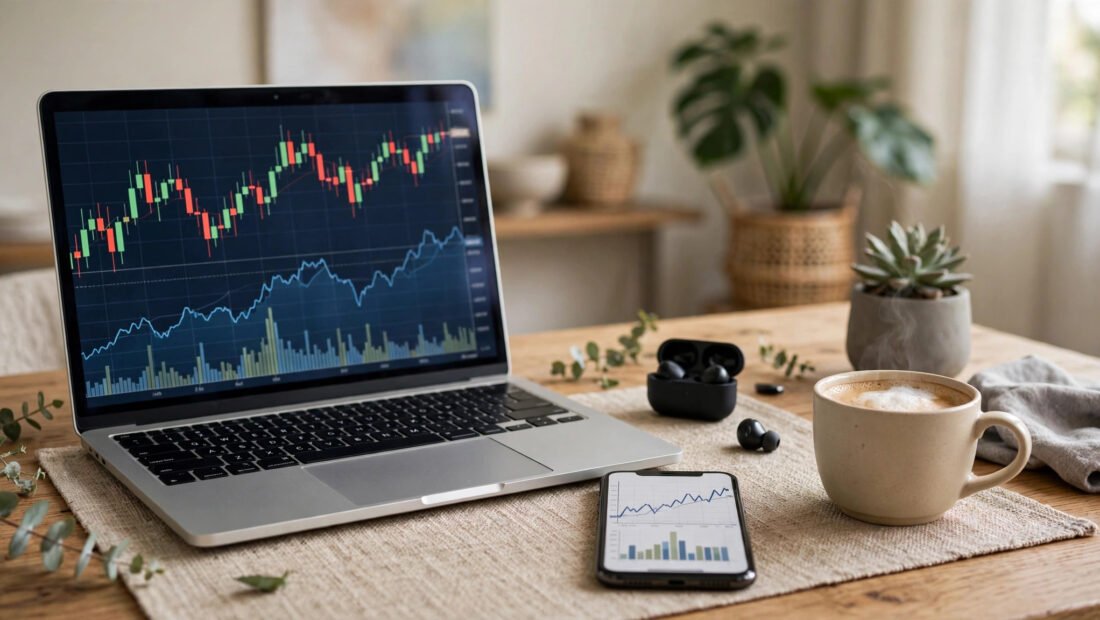
The same $1,000 of Bitcoin can cost about $5 on one screen and about $25 on another, inside the very same app. Nothing about the coin changes. The price of Bitcoin does not change either. What changes is the window used to buy it: a simple buy button built for speed, or an advanced trading view built for lower cost. For a beginner, the exchange matters, but the window inside the exchange often matters more.
That fee gap is the right place to start. A slick app that hides its cost in the price is not free. A plainer screen that shows a clear fee is not expensive just because the fee is visible. What follows weighs the main United States options side by side on the things that actually affect a first year of buying: total cost, security, ease of use, coin choice, and support when something goes wrong.
What actually matters, in order
Total cost comes first for most beginners, because it hits every single purchase. Total cost means the trading fee plus the spread, which is the small markup built into the price quoted on a simple buy screen. A platform can advertise zero fees and still cost more than a rival, if its spread is wide. The only fair test is simple: compare how much Bitcoin actually arrives for the same dollar amount, say $500 or $1,000, on the same day.
Security record comes a very close second. A cheap platform that freezes withdrawals, loses funds, or shuts down is not cheap at all. Beginners should favor United States platforms with a long operating history, clear company leadership, and a clean record of letting customers withdraw their money and coins. Years in business under real scrutiny count for more than a polished ad.
Ease of use ranks third. A first purchase should be hard to mess up. Clear deposit steps, clear warnings before a trade is final, and a simple way to see balances and past trades all reduce beginner errors. Support ranks alongside ease of use. When a deposit stalls or an account locks, a real help channel matters more than a long coin list.
Coin selection ranks last for a true beginner. Bitcoin and Ethereum cover the learning stage for almost everyone. An exchange with hundreds of obscure tokens offers more ways to lose money, not more value. Easy and cheap dollar deposits by bank transfer matter more than access to the newest token.
Coinbase: the default beginner pick
Coinbase is the name most United States beginners start with, and for two good reasons: the basic app is very clear, and the company is large, public, and heavily regulated. Opening an account, verifying identity, and making a first buy can all be done without guessing what a button does. That clarity has real value.
The tradeoff is cost on the simple interface. Simple buys carry an all-in cost of roughly 1 to 2 percent once fee and spread are combined. On a $1,000 buy at about 1.5 percent, that is about $15. The same company also offers an advanced trading view. Prices there are much lower, closer to the value end of the market, because the buyer places a proper trade instead of accepting an instant quote. Learning that second view is the single best money-saving step a Coinbase beginner can take.
Support is the other common complaint. Responses can be slow when markets get busy. Coin choice is a strong point, with a wide range of major coins. Verdict: best for a beginner who wants the simplest start and is willing to learn the advanced view quickly to bring costs down.
Kraken: the value pick
Kraken has operated for many years with a strong security reputation, and it wins most comparisons on price. On its trading interface, the all-in cost for a beginner-sized buy lands around 0.5 to 1 percent. On the $1,000 example at about 0.5 percent, the cost is about $5, a third of the simple-buy example above. Over a year of monthly buys, that gap stops being pocket change.
The interface asks a little more of the user. Kraken still feels like a trading platform first and a simple wallet second. Coin selection is broad, and fees are published clearly enough to check before trading. Anyone comparing platforms should read Kraken’s official exchange and fee pages directly, since fee tiers change and the trading view a buyer uses decides the tier.
Verdict: best for a beginner who cares most about keeping costs low and can handle a slightly steeper first hour of learning. For monthly buyers, Kraken’s price edge is hard to beat among reputable United States options.
Cash App and Strike: the minimalists
Cash App and Strike take the opposite approach. Both focus on Bitcoin, keep the screens spare, and let a user buy a small amount in seconds, sometimes from an app already used for everyday payments. There is very little to configure and very little to get wrong. For a first $50 learning purchase, that simplicity is appealing.
The limits show up fast. Coin choice is narrow or Bitcoin-only, and trading tools are minimal. Spreads need watching, because a clean screen can still hide a costly quote, and the high-spread end reaches about 2.5 percent all-in. On $1,000, that is about $25, five times the low-cost trading example.
Verdict: best for tiny, simple Bitcoin buys and for learning the basics with training wheels on. Once the amounts or the buying habit grow, a full exchange with a proper trading view usually works out cheaper and more flexible.
Fidelity Crypto and traditional brokerages: the cautious route
Some beginners do not want a crypto app at all. Fidelity Crypto and similar brokerage offers let a customer hold crypto exposure inside a familiar investment account, next to stocks and funds, with the same login and statements. For someone who only wants Bitcoin or Ethereum as a small portfolio holding, that familiarity lowers stress.
The tradeoff is control. Coin choice is very narrow, typically just the largest coins. Moving coins out to a personal wallet is limited or not offered, so the holding is an investment position, not coins that can be sent or spent. Fees and spreads still apply and should be compared the same way as anywhere else. No brokerage label removes price risk.
Verdict: best for the cautious investor who values one trusted account over coin control, and who has no plan to move crypto off the platform. Beginners who want to learn how wallets and transfers work will outgrow this route.
The fee math, worked plainly
Put the three price points side by side on the same $1,000 Bitcoin buy. At about 1.5 percent all-in on a simple interface, the cost is about $15. At about 0.5 percent on an advanced trading view, the cost is about $5. At about 2.5 percent on a high-spread app, the cost is about $25. The Bitcoin received differs by up to $20 on a single buy, with no difference in what was bought.
Now stretch that across a habit. A person buying $200 a month pays that percentage twelve times a year, every year. A 1 to 2 percent difference per trade does not stay small. It compounds the same way any repeated cost does, quietly shrinking the amount of coin collected. That is why payment method also deserves a check before buying, since card buys add their own premium; the details on how to buy crypto with a credit card without high fees show why bank transfers usually beat cards for cost. Ten minutes spent learning an advanced view, and picking the cheaper funding route, pays back on every future buy.
Bitcoin ATMs sit at the far end of this scale. They are fast and take cash, but fees of 7 to 15 percent turn a $1,000 buy into a $70 to $150 cost. That is an emergency option for a rare situation, not a buying strategy.
Red flags that end the comparison early
Some offers should not be compared at all. They should be rejected. An offshore platform promising no identity checks is asking a beginner to give up legal protection for nothing. Any promise of guaranteed returns is a lie, no matter how professional the website looks. Pressure that arrives through social media messages, group chats, or a new online contact who wants to help invest is a classic setup for theft.
Other warning signs include bonuses that require recruiting friends, unexplained high yields, and any history of customers being unable to withdraw during busy markets. Boring and regulated beats exciting and offshore every time. If a platform cannot clearly say where it is based, how it holds customer funds, and how withdrawals work, it fails the security test before fees even enter the discussion.
Security steps that apply on every platform
Whichever option wins, the account setup decides much of the safety. Turn on two-factor authentication with an authenticator app, not just text messages. Use a long, unique password stored in a password manager. Turn on a withdrawal allowlist if offered, so coins can only go to addresses saved in advance. Never share login codes or recovery phrases with anyone claiming to be support staff. Real support never needs them.
Treat the exchange as a place to buy, not a vault for life savings. Once holdings grow past a learning amount, moving crypto to a personal wallet becomes worth learning, slowly and with a small test transfer first. Decentralized exchanges sit at the far end of that learning curve. They require full self-custody, carry added technical risk, and offer no support desk. They are not beginner territory, whichever centralized platform a beginner starts on.
Recommendation
For most beginners in the United States, the choice narrows to two habits, not just two brands. Start where the first buy feels safest, which for many people is Coinbase, then move buying activity to the advanced view as soon as the basics click, or start on Kraken if low fees matter most and a slightly busier screen is acceptable. Use Cash App or Strike only for small Bitcoin learning buys. Use a brokerage route only when coin control does not matter. In every case, compare the amount of coin received for the same dollars, set up strong account security on day one, and ignore any platform that promises easy profits. The best exchange is the regulated one with the lowest total cost that the buyer will actually use carefully.




2 Comments