
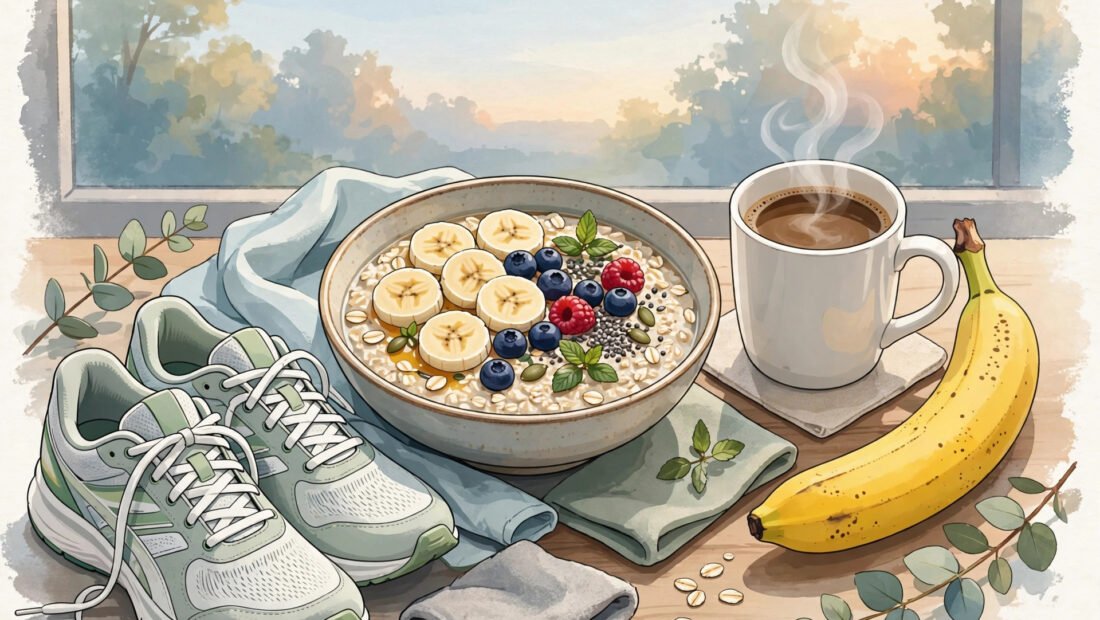
It is 5:30 a.m. The gym bag is packed, shoes are by the door, and the stomach is growling. One question stands between bed and the workout: eat something now, or train empty and eat after? Eat too much and the session feels heavy and queasy. Eat nothing before a hard session and energy can crash halfway through. The right answer depends mostly on two things: how much time is left before training, and how hard the session will be.
Is training fasted actually bad?
No, not for easy work. Training without eating first, after an overnight fast, is fine for a walk, an easy jog, gentle cycling, mobility work, or light yoga under an hour. Many people prefer it for those sessions. It feels lighter, it saves time, and it gets done without any kitchen decisions at dawn.
Fasted training does change what fuel gets burned during the session. More fat is burned in that window. Total fat loss across a full 24 hours does not increase, though. The body balances things out later in the day. With the same daily food and training, body results end up much the same.
Where fasted training does cost something is hard performance. Heavy lifting, intervals, and long sessions all go better fed. More reps get finished, pace holds longer, and focus stays sharper. For muscle building, the effect matters even more, since training quality drives the growth signal. The deciding rule is simple: easy session, fasted is a fair choice; hard session, eat something.
Some people also feel dizzy or distracted when they train hungry, even at moderate effort. That response is reason enough to eat.
What should I eat 30 minutes before a workout?
At 30 to 60 minutes out, think small, plain, and almost all carbs. The goal is fast energy that leaves the stomach quickly, not a meal. Keep it under about 200 calories. Fat, fiber, and a large serving of protein all slow digestion, so keep them low here even though they are useful at other meals.
Good fits include half a banana, a small applesauce pouch, a few dates, toast with honey, or a sports drink. Under 30 minutes, cut it back further: half a banana or a sports drink at most. A full snack that close to training is the most common route to nausea.
Give hard sessions a little more respect than easy ones. If only 25 minutes remain before heavy squats or hard intervals, a sports drink plus a couple of dates can still help without sitting heavy. If the session is an easy walk, eating nothing in this window is equally sensible.
What should I eat an hour or two before?
The 1 to 2 hour window is the sweet spot for most morning workouts, and the 60 to 90 minute range is where a proper snack pays off most. There is time to digest, so the food can be a bit more substantial, still led by carbs, with moderate protein and low fat and fiber. Anyone awake three to four hours before a big session can go further and eat a full balanced meal of carbs, protein, and moderate fat, then let digestion finish well before training starts.
For the 60 to 90 minute window, these 12 quick options all work, and rotating them keeps mornings from getting stale:
1. A banana, plain or with a thin smear of peanut butter if the fuller 90 minutes are available. 2. Oatmeal made with water or milk, topped with honey and a handful of berries. 3. Toast with honey, simple and fast, with white or sourdough bread digesting easiest. 4. An applesauce pouch, the lowest-effort choice for a sensitive stomach. 5. A small smoothie of banana, berries, and milk or yogurt, blended thin so it drinks quickly. 6. Greek yogurt with berries and a drizzle of honey, best near the 90-minute end since it carries more protein. 7. Rice cakes with jam, light and almost pure fast carbs. 8. A small handful of dates, compact and energy-dense, so portion them rather than eating from the bag. 9. A small bagel with jam, a denser choice for longer or harder sessions. 10. A granola bar, chosen carefully, since high-fiber bars can backfire; a simple carb-led bar is the safer pick. 11. Orange juice plus a handful of pretzels, giving fluids, quick sugar, and salt in one go. 12. A small leftover rice bowl from dinner, plain rice with a little soy sauce or honey, reheated in a minute.
Portion is the control knob. A hard two-hour session can use the larger end of this range. A 45-minute gym session needs the smaller end. When unsure, eat less and earlier rather than more and later. Extra food can always wait until after.
What about water and coffee before training?
Water comes first. Most people wake up mildly dehydrated after a night without fluids, and dehydration of just 2 percent of body weight measurably impairs performance. That sounds small. In practice it means a higher heart rate for the same effort, heavier legs, and worse focus. Drink 16 to 24 ounces of water in the hour before training. Sipping steadily beats chugging it all at the door.
Coffee counts toward fluids and it helps in its own right. Caffeine taken 30 to 60 minutes before training improves performance for most people, at roughly 3 to 6 milligrams per kilogram of body weight. A normal cup of coffee lands in a useful range for many adults. Coffee pairs with water rather than replacing it. Anyone still deciding on training time itself can weigh the tradeoffs in the comparison of whether morning or evening workouts are better, since the best time is often the time that actually happens each week.
For sessions over an hour, or very sweaty sessions, electrolytes start to matter too. A sports drink before and during long work covers fluid, carbs, and salt together. Short morning sessions rarely need more than water plus the snack above.
Why do I feel nauseous when I eat before a workout?
Nausea almost always traces back to amount, timing, or heaviness. Too much food, food eaten too close to the start, or food high in fat and fiber is still sitting in the stomach when the workout begins. Running and jumping make it worse, but lifting on a full stomach can feel just as bad.
Three fixes solve it for most people. Eat smaller, cutting the snack in half before changing anything else. Eat earlier, moving the same food from 30 minutes out to 60 or 90 minutes out. Go liquid, swapping solid food for a small smoothie or sports drink, since liquids leave the stomach faster. Change one variable at a time to learn which fix does the work.
New foods deserve blame too. A hard workout or race morning is not the day to test a new bar, a new drink, or a borrowed supplement. Test everything on an easy day first. If nausea keeps happening even with tiny, early, liquid food, or comes with dizziness and shaking, that pattern deserves a medical check rather than more food experiments.
Should cardio and weight training get different food?
Slightly, yes, though the overlap is large. Steady cardio, especially longer runs and rides, runs mainly on carbs. A carb-led snack with little fat and fiber is the priority, and longer sessions may also need carbs during the workout itself. The stomach tolerance question matters most here, since an upset stomach ends a run faster than slightly low energy does.
Weight training also needs carbs, because hard sets burn through stored energy fast and low fuel shows up as weak final sets. It benefits a bit more from including some protein before training when there is time, for example Greek yogurt with berries at 90 minutes out, or the small smoothie. At 30 minutes out, the protein edge shrinks and the plain carb rule takes over again for both types of training.
In daily practice, the same short list covers both. A banana, toast with honey, or rice cakes handle a lifting day and a cardio day equally well at the tight end. The 90-minute options with yogurt or oatmeal suit lifting days a little better. No separate shopping trip is needed.
What should I avoid before a morning workout?
Avoid high fat right before training. Bacon, fried food, cheese-heavy dishes, and large amounts of nut butter slow the stomach down and tend to announce themselves mid-session. Avoid high fiber in that final hour too. Big salads, bran cereal, and large bean servings are healthy foods at the wrong time.
Avoid a big protein load by itself. A huge shake or a large serving of eggs with no carbs gives the body slow work to do without giving it quick fuel. Moderate protein inside a carb-led snack is fine. Protein alone, in bulk, at the door, is not.
Avoid experiments and avoid excess volume. The most common pre-workout mistake is simply too much, too close. When a choice feels uncertain, the safer error is a smaller snack eaten earlier, as the Academy of Nutrition and Dietetics’ nutrition guidance also stresses in its broader advice to match intake to timing and tolerance. Supplements belong on the avoid-for-now list as well. Coffee provides the caffeine that does most of the proven work, without the cost and the long ingredient label of a specialty powder.
What should I eat and drink after the workout?
After training, the job flips. Replace fluids, refill energy, and eat a normal meal with protein. Replace each pound lost with 16 to 24 ounces of water in the hours after, rather than forcing it all down at once.
Food can stay ordinary. Eggs on toast, Greek yogurt with fruit, a turkey sandwich, chocolate milk, or leftovers with rice all cover carbs plus protein without special products. A protein-containing meal within a couple of hours supports recovery well. Prepping something the night before, such as overnight oats or a ready sandwich, makes follow-through far more likely.
Then the pattern repeats the next morning. Small carb-led food matched to the time available, water early, coffee if it helps, nothing heavy or new, and a real meal after. That plain routine, repeated, beats any perfect plan that only happens once.




1 Comment