
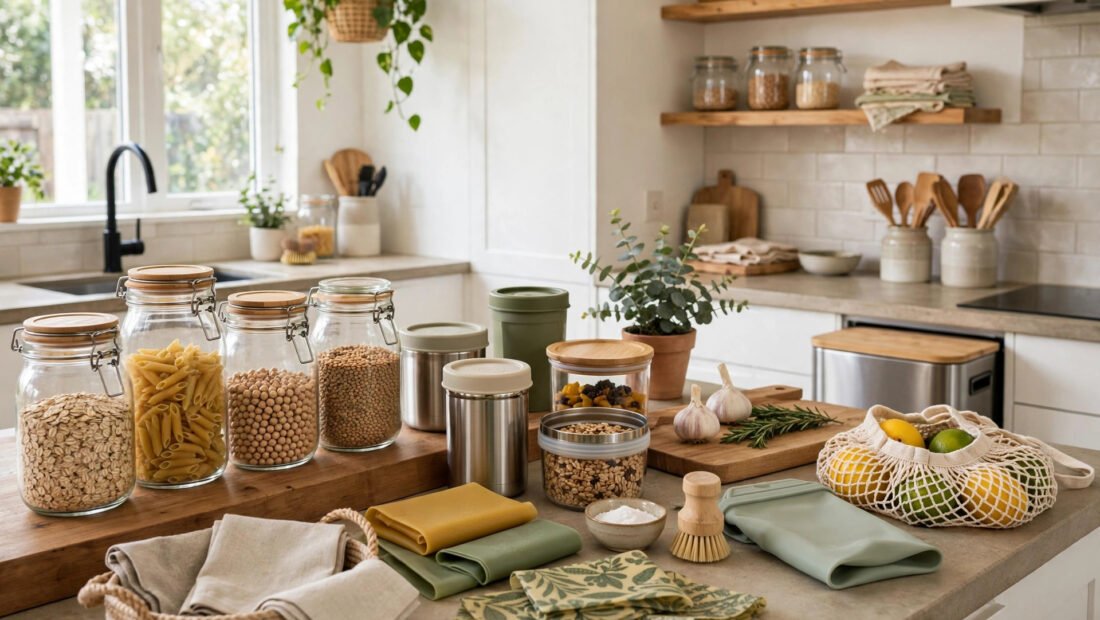
Five swaps costing under $100 can remove most of a kitchen’s plastic, but only in the right order, and the order starts with a one-week audit nobody enjoys. Counting every wrap, bag, and bottle for seven days feels tedious. It is also what stops you spending money on the wrong swaps first. The checklist below puts the highest-return changes at the top, and the detail after it explains how each one works in a real kitchen.
The Priority Checklist: Do These First
- The one-week audit: note every piece of kitchen plastic you throw away or recycle for seven days, grouped by type, with no changes and no judgement yet.
- Reusable shopping bags plus mesh produce bags: about $20 for the set, and the bags alone can remove hundreds of single-use bags a year.
- Beeswax wraps or silicone stretch lids: about $15 for a beeswax starter set, replacing most everyday cling wrap use.
- Glass containers for leftovers and storage: buy a starter set once, then add pieces only when a real gap appears.
- Reusable silicone bags instead of zip bags: for snacks, freezer portions, and marinades.
- Cleaning swaps: dissolvable tablets or concentrate refills, a dish soap bar, and reusable cloths for most wiping tasks.
Those items form the core of the change. Everything else, from takeout habits to recycling the small amount that remains, works better once the core is in place. Buying in the wrong order is the usual failure: a set of novelty jars arrives while cling wrap and produce bags still flow through the kitchen every single day.
Start With the Audit, Even Though It Is Dull
For one week, keep a note on the fridge or in your phone. Each time plastic leaves the kitchen, write down what it was: produce bag, cling wrap, zip bag, takeout tub, cleaning bottle, packaging from meat or cheese. Do not change any habit during that week. Normal behaviour is the data you need.
At the end of the week, group the entries. Most households find three or four categories make up almost everything. Food storage and grocery packaging usually lead. One household may discover takeout containers dominate. Another may find cleaning bottles and disposable wipes are the real pile. Your list decides where your money goes first, and it often surprises people who assumed their biggest problem was something else.
Keep the audit sheet. It becomes your before picture. A month after the swaps, a second quick count shows whether the change is real or just a feeling.
Fix Food Storage First, Because It Is the Biggest Win
Storage plastic is used every day, often several times a day, which is why it beats almost any other swap. Start with cling wrap. Beeswax wraps cover bowls, half onions, cheese, and sandwiches. Wash them in cool water with mild soap, air-dry them, and expect about a year of use from a set that costs roughly $15 to start. They are sanitary when washed that way and dried fully. Keep them away from heat and do not use them on raw meat; a glass container is the right tool for that job.
Silicone stretch lids suit people who prefer a tighter seal. They stretch over cut fruit, open tins, and bowls, then go in the dishwasher. Either option ends the daily habit of tearing off a fresh sheet of wrap for a job that lasts one night in the fridge.
Glass containers handle leftovers, meal prep, and freezer portions. They do not stain, they do not hold smells from last week’s curry, and they last for years. Buy one mixed set with lids that fit more than one size if you can, because a drawer of mismatched lids is its own small misery. Silicone reusable bags then replace zip bags for snacks, chopped vegetables, and freezer use. They cost more up front and pay it back within months of regular use.
Keep one roll of cling wrap in the drawer if you want to. An odd-shaped item will still appear now and then. Reduction that lasts beats a strict rule that collapses in week three.
Rebuild the Grocery Routine Around the Bags
Reusable shopping bags only work if they are where you shop from. Store them in the car boot or by the front door, not in a cupboard you forget. Mesh produce bags cost about $10 a set and should live inside the shopping bags, so the two travel together. That one small placement decision removes the most common reason the system fails: standing in the produce aisle with good intentions and empty hands.
Where your store has a bulk section, bring your own jars or sturdy containers for grains, nuts, and spices. Weigh the empty container first if the store requires it, and write the tare weight on the lid. Choose the plastic-free version of a product when the price is comparable: the sauce in glass over the one in a plastic tub, the cardboard box over the blister pack. Do not drive across town for one package-free item. A swap that adds an hour to the weekly shop will not survive.
Farmers’ markets deserve a regular place in the routine where they are practical. Texas growers often sell produce loose, with no packaging at all, and prices can be lower than the supermarket for seasonal items. Bring your bags, buy what is in season, and plan meals around it. Storage and waste are linked here too, since food bought loose in the right quantity is food less likely to be thrown away. For the other half of that problem, see how to reduce food waste in your kitchen, because wasted food usually arrives wrapped in wasted packaging.
Clear the Cleaning Cabinet Next
Cleaning plastic hides under the sink: spray bottles, detergent jugs, tubs of wipes, and packaging around sponges. The fix with the largest effect is refills. Dissolvable cleaning tablets or concentrate refills, mixed with water in a bottle you already own, remove about 90 percent of the plastic per use compared with buying a new ready-made bottle each time. One small tablet replaces a whole bottle’s worth of packaging.
A dish soap bar replaces the plastic bottle by the sink and lasts for months. It sits on a small draining dish, works with a brush or cloth, and removes a steady stream of bottles across a year. Reusable cloths handle most wiping and spill jobs that paper towels and disposable wipes used to do. Keep a small stack washed and ready, and keep paper towels for the genuinely unpleasant jobs only, such as greasy spills or pet messes.
For anything you cannot replace, buy the large format. One big detergent container uses less plastic per wash than four small ones, and it means fewer trips and fewer bottles in the bin.
Tame Takeout and Convenience Habits
Takeout brings a burst of plastic in a single bag: tubs, lids, cutlery sets, sauce pots, and the bag itself. The simplest cut is one sentence when you order: no cutlery and no napkins, please. At home you already own both. Where you have a choice of restaurant, favour the places that use compostable or paper packaging.
For planned pickups, keep a small kit in the car: a reusable container, a cutlery set, and a cloth napkin. It will not suit every order, and soup remains a risk best left to the restaurant’s tub, but it handles a good share of regular pickups. The largest takeout cut of all is cooking one more meal a week than you do now. That single change removes a full set of packaging every week and saves real money alongside it.
Recycle What Remains, and Recycle It Correctly
Some plastic will still arrive. Milk jugs, medicine bottles, and packaging you cannot avoid will keep coming, so the last job is to handle them well. Rinse containers so food residue does not contaminate a whole load. Never put recyclables inside a plastic bag in the curbside bin, because bags jam sorting machinery and can cause loads to be rejected. Take plastic bags and film to a store drop-off bin instead, since most curbside systems do not accept them.
Check your own city’s rules rather than guessing. Accepted items vary widely between Texas cities, and putting a doubtful item in the bin hoping it will be recycled, often called wishcycling, causes more harm than leaving it out. Broader background sits in the EPA’s recycling and waste-reduction guidance, which also explains why reduction sits above recycling in the first place.
That order matters because US plastic recycling rates are low, around 5 to 6 percent. Most plastic put out for recycling is not turned into new plastic. That is not a reason to stop recycling what remains. It is a reason to treat recycling as the last step, not the plan. The bags, wraps, and containers you never buy are the ones that definitely never become waste.
Get the Rest of the Household On Board
A system that depends on one person’s effort fails when that person is busy. Make the swap easier than the old habit. Glass containers at eye level, disposables stored somewhere awkward. Reusable bags by the door and in the car. Snacks pre-portioned into reusable containers so grabbing plastic is not the fastest option.
Start with the invisible wins, the swaps nobody has to think about: refills in the same spray bottle, the soap bar by the sink, glass containers that simply appear in the fridge. Let family members and roommates choose their own bottles and snack bags where it helps, because people use what they picked. Talk about shared savings rather than guilt. Reusables and bulk buying cut household costs in a way everyone can see on the receipt.
Expect an imperfect month. A forgotten bag, a takeout night, a roll of wrap used up on a large item. None of that undoes the system. The audit gave you a starting count, the checklist gave you the order, and the kitchen now runs on reusables for the jobs that happen every day. That is where most of the plastic was, and that is where most of it stops.



1 Comment