Slugging done wrong is just a greasy pillowcase and a fresh breakout. The layer order is wrong, a strong active is sitting underneath, or the season is wrong, and a trick that should calm dry skin leaves it irritated instead. The layer itself is simple. Whether it helps depends entirely on what goes under it, how much you use, and when in the year you reach for it.
Mistake One: Slugging Over Strong Actives
This is the error that causes the most trouble. Petrolatum forms a seal. Anything left on the skin under that seal stays in close contact for hours, and its effect gets stronger. A retinoid that felt fine on its own can start to sting once it is trapped. An exfoliating acid that was meant to sit for a short time keeps working through the night.
The result is predictable: redness around the nose and mouth, peeling that was not there before, and a burning feeling when you apply plain moisturiser the next morning. People often blame the petrolatum. The petrolatum was not the problem. It did its job too well on the wrong layer underneath.
If you use a retinoid or a strong acid, keep slugging for the nights when you are not using it. Many people run a simple rotation. One night for the active, one or two nights for plain hydration and slugging, then repeat. On slugging nights, keep the layers gentle: cleanser, a hydrating serum if you use one, moisturiser, and nothing that tingles, peels, or resurfaces.
Mistake Two: Slugging on an Unwashed Face
A seal traps what is there. If the day is still on your skin, the seal traps that too. Sunscreen residue, sweat, city dust, and makeup left in the pores get held against the skin for eight hours instead of being washed away in the evening.
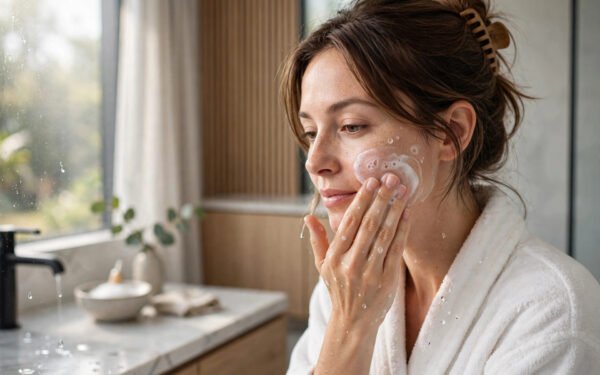
That is why cleansing matters more on a slugging night, not less. Use your normal cleanser and take a full minute with it, working around the hairline, jaw, and sides of the nose where residue collects. If you wore heavy sunscreen or long-wear makeup, think through whether double cleansing is worth it for your skin on those days, because a single quick rinse often leaves a film behind.
Pat the skin so it is damp but not dripping. Then move straight to the rest of the routine. A clean, slightly damp face is the base the whole method depends on.
Mistake Three: Expecting Petrolatum to Moisturise on Its Own
Petrolatum adds no water to the skin. It has no hydrating ingredient to give. Its strength is the opposite: it stops water from leaving. Petrolatum reduces transepidermal water loss, often shortened to TEWL, by up to 98 percent, which is more than any other moisturiser ingredient can claim. Dry skin loses moisture too fast, so blocking that loss is a real fix.
Slugging over bare, dry skin seals in dryness. The face can feel smooth on the surface in the morning because of the film, yet still feel tight an hour after washing. The skin underneath never got the water or the moisturiser it needed.
The fix is to build the moisture first and use petrolatum only as the lid. Hydrating layers and a proper moisturiser do the adding. The thin seal on top does the keeping. Skip the layers and the lid has almost nothing worth keeping.
Mistake Four: Using a Thick Frosting Layer
More does not work better here. A thick layer does not block much more water loss than a thin one, but it does transfer to the pillow, feel heavy, and make the skin more likely to feel congested by morning. It also wastes product and makes the whole routine unpleasant enough that people quit after two nights.
A pea-sized amount is enough for dry patches. A dime-sized amount, spread very thin, covers the whole face for most people. Warm it between clean fingertips first so it spreads easily. Press it on rather than rubbing hard. The finish should be a light sheen, not a white or glossy mask. If you can see thick streaks, you have used too much.
Start away from the eye area if you are prone to milia, the tiny white bumps that can form when heavy products sit close to the eyes. Cheeks, forehead, chin, and the sides of the nose are the driest zones for most faces and the safest place to learn the amount that suits you.
Mistake Five: Slugging Every Night, All Year, Whatever Your Skin Type
Petrolatum itself is non-comedogenic, which means the ingredient does not clog pores on its own. That fact gets stretched too far. Trapping dirt, heavy products, and strong actives under a seal can still trigger breakouts, especially on acne-prone skin. The risk comes from what is trapped and how often, not from the petrolatum alone.
If your skin breaks out easily, patch-test first. Try the thinnest layer on one dry cheek area for several nights and watch for small bumps or congestion. Keep slugging to dry zones only, such as the cheeks, and leave an oily T-zone bare. If bumps appear each time you try, stop. Dry patches can be treated in other ways, and forcing a trend through repeated breakouts helps nothing.
Frequency needs the same judgement. Very dry skin in the middle of winter may do well with slugging every night for a spell. Most people do better with a few nights a week, using it when the skin feels tight or flaky rather than by habit. Skin that feels comfortable does not need a seal that night.
Mistake Six: Choosing the Wrong Product for Your Skin
Pure petrolatum, sold as Vaseline, is the simplest choice. It is one ingredient doing one job, which makes it easy to judge. If slugging irritates you with a pure product, the method itself is likely the issue, not an added ingredient.
Aquaphor-style ointments also contain petrolatum, but they add other ingredients, including lanolin alcohol and glycerin. Many people use them without any problem and like the less greasy feel. A small number react to lanolin alcohol, so an ointment can bother skin that tolerates pure petrolatum fine. If you switch products and the irritation starts at the same time, that change is worth noting before you give up on slugging entirely.
Avoid scented balms, coconut oil, and random body butters for this job. Fragrance adds irritation risk under a seal. Coconut oil clogs pores for many people. A plain, fragrance-free ointment is the right tool, and it is also the cheap one.
The Correct Technique, Step by Step in Words
Start in the evening with a proper cleanse. Remove the day fully, then pat the face until it stays slightly damp. Damp skin holds more water for the seal to protect, so do not wait twenty minutes and let the face dry out completely before you continue.
Next, apply your hydrating layers. A serum with ingredients such as hyaluronic acid or glycerin can go on first if that is part of your routine. Keep it simple on slugging nights and leave out strong actives. Follow with your normal moisturiser over the whole face, giving it a minute to settle. This is the moisture the seal will hold in place.
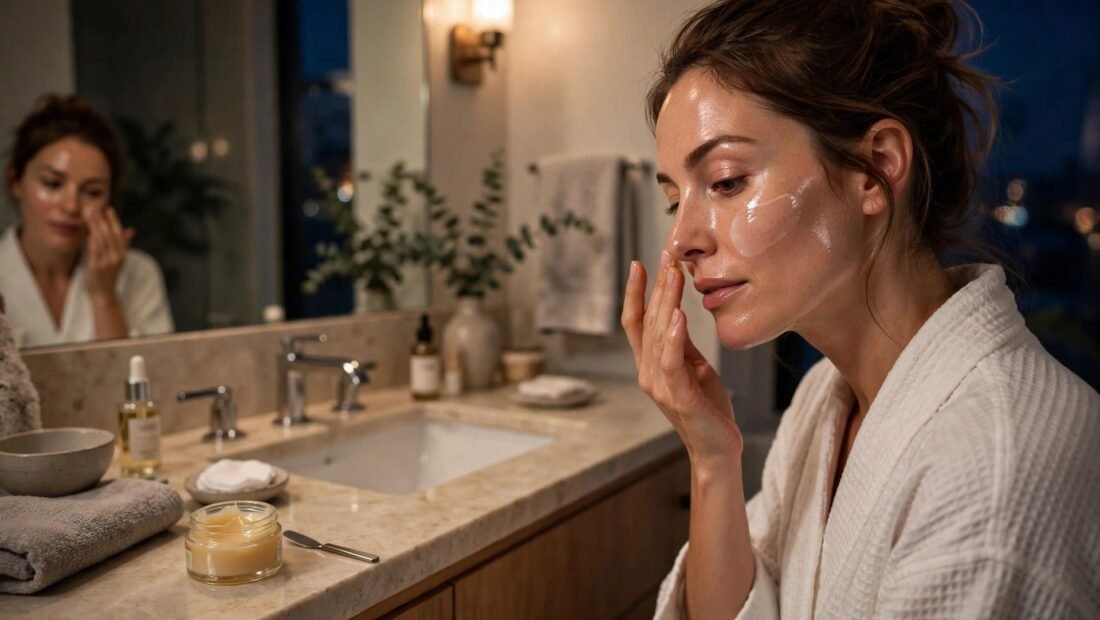
Then take a pea-to-dime-sized amount of petrolatum, warm it between your fingertips, and spread a thin film over the driest areas. You can cover the whole face if your skin is dry all over, or limit it to the cheeks, around the mouth, and any flaky patches. Press gently. Do not add a second layer to spots that look shiny enough already.
Use a pillowcase you do not mind washing often, or lay a clean soft towel over the pillow for the first few nights while you learn the right amount. In the morning, rinse with lukewarm water or a gentle cleanser to remove the residue, then follow your normal daytime routine. This order matters, and it reflects the American Academy of Dermatology’s guidance on moisturizers and dry skin, which puts petrolatum forward as a strong option for dry, cracked skin.
The Texas Season Rule
In Texas, slugging is mainly a winter tool. Cold fronts pull humidity down fast, indoor heating dries the air further, and skin that was fine in October can turn tight and flaky by January. Those are slugging conditions. A few nights a week through the coldest stretch can carry dry skin through it.
Summer is different. In 90 percent humidity, the air is already doing part of the job of slowing water loss, and heavy occlusion can leave skin feeling congested and uncomfortable. Sweat under a seal is not pleasant and can lead to bumps. Most Texas readers should scale slugging right back in summer, or save it for the odd night when air conditioning has run hard all day and the skin feels stripped.
Air conditioning deserves its own mention because it runs for much of the year in Texas homes and offices. It pulls moisture from indoor air for hours at a time. If your skin feels dry even when the weather outside is humid, the air conditioning is a likely cause. On those nights, a thinner layer, or slugging only the driest patches, is usually enough.
Done with the right layers underneath, a thin film, and the right season, slugging is not a gimmick. It is a cheap, plain use of the most effective moisture barrier available. Done carelessly, it is a greasy pillow and a breakout. The difference is technique, and technique is easy to get right once the common mistakes are out of the way.