
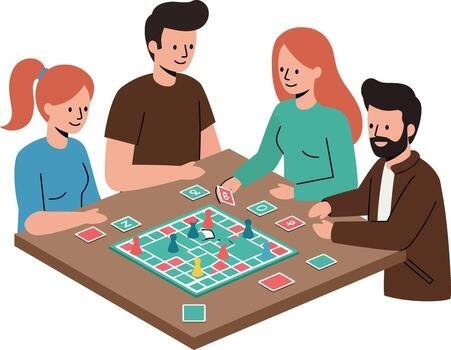
If your entire experience of board games is Monopoly — the four-hour slog, the player elimination, the inevitable family argument — I have wonderful news: modern board games are a completely different species. The last fifteen years have been a golden age, and today’s best games are tight, clever, funny, and over in under two hours.
The best board games for adults who hate Monopoly share what Monopoly lacks: meaningful decisions every turn, no player elimination (nobody sits out for two hours), a real ending time, and mechanics that generate stories you’ll retell. Here are the essential picks, organized by what kind of night you want.
Gateway Games: The Best Board Games for Adults Starting Out
Ticket to Ride is the perfect first modern game: collect colored cards, claim train routes across the map, longest routes win. It takes 10 minutes to learn, plays in under an hour, and has just enough strategy to stay interesting after dozens of plays. Codenames is the ultimate party game — a word-association team game where one player gives one-word clues to connect multiple words. It generates hilarious misunderstandings and plays up to 8+ effortlessly.
Splendor is the quiet genius of the gateway shelf: collect gems, buy cards, build an engine, first to 15 points wins. It looks simple and reveals surprising depth — the rare game that works as well with two players as with four. Azul adds beauty to the mix: draft gorgeous tiles to decorate a palace wall, with just enough spite to keep things spicy. Any of these four will convert a Monopoly skeptic in one evening.
For Strategy Lovers and Bigger Groups
Ready for more depth? Wingspan is the phenomenon for a reason — build a bird sanctuary with engine-building mechanics, stunning artwork, and a theme so pleasant it disarms non-gamers. It looks gentle and plays surprisingly sharp. For something meatier, Brass: Birmingham or Terraforming Mars offer deep, satisfying strategy for groups that want a real mental workout (budget 2 to 3 hours and learn the rules beforehand).
Big group? The Crew (a cooperative trick-taking game) and Just One (cooperative party word game) handle crowds brilliantly. Social deduction fans should try The Resistance or Blood on the Clocktower — deception, debate, and accusations, all in good fun. And for pure laughs, Wits & Wagers (betting on trivia answers) gets even non-gamers shouting. The modern catalog has something for every group size and every temperament.
Reference: BoardGameGeek’s rankings and reviews.
Reference: Wirecutter’s board game guides.
Board Game Night Starter Collection
Five games that cover every occasion:
- Ticket to Ride — the gateway classic. Easy to learn, satisfying for years. 2–5 players, ~60 min.
- Codenames — best party game ever made. Word clues, team play, endless replayability. 4–8+ players, ~30 min.
- Splendor — elegant engine-building in a small box. Great at 2 players. 2–4 players, ~30 min.
- Azul — beautiful tile-drafting with a mean streak. 2–4 players, ~45 min.
- Wingspan — the modern masterpiece. Gorgeous, deep, welcoming. 1–5 players, ~90 min.
- Just One — cooperative party game, perfect icebreaker. 3–7 players, ~20 min.
- The Crew — cooperative trick-taking that turns card players into teammates. 2–5 players, ~30 min.
How to Actually Get Them Played
The biggest obstacle isn’t choosing games — it’s the rules explanation. Nominate one person to learn each game beforehand (watch a 10-minute tutorial video, play a practice round solo). A confident 10-minute teach beats 30 minutes of four people reading a rulebook aloud. Start with the gateway games even if you suspect your group is ‘advanced’ — early wins build the habit.
Set the ritual: a regular night (first Friday, say), phones away, snacks that don’t grease up the cards. Keep sessions to one or two games — ending while everyone’s still having fun guarantees the next night happens. And embrace losing gracefully; the stories (‘remember when you blocked my route with one train?’) are the actual product. Nobody remembers who won Azul in March. Everybody remembers the betrayal.
Quick Answers to Common Questions
What’s the best board game for someone who’s never played modern games?
Ticket to Ride — 10 minutes to learn, under an hour to play, and just enough strategy to stay interesting for years. It’s the gateway game for a reason: it teaches modern game concepts (set collection, route building, blocking) without any intimidation. Codenames is the alternative if your group prefers party-style wordplay.
How long should a game night last?
Plan for 2–3 hours with one or two games — ending while everyone’s still having fun guarantees the next game night happens. Marathon sessions sound great in theory but produce glazed eyes and abandoned games. Two tight 45-minute games beat one sprawling 3-hour epic for most groups, most nights.
What if someone hates losing?
Choose cooperative games — everyone wins or loses together, and the post-game analysis is bonding instead of blame. The Crew, Just One, and Pandemic are all excellent. If the group insists on competitive games, keep them short and light; nobody’s relationships should hinge on a board game, and the host sets that tone.
More from Daily USA Post
- Keep reading: how can I make a juicy turkey for Thanksgiving
- Related: what is the best way to cook bacon without the mess
- what are the best documentaries about unsolved mysteries, explained in detail
The best board games for adults who hate Monopoly — Ticket to Ride, Codenames, Splendor, Azul, Wingspan — offer real decisions, no elimination, and firm end times. Start with one gateway game, have someone learn the rules beforehand, and make it a regular ritual. One game night is all it takes to understand what the golden age of board gaming is about — and Monopoly will never darken your table again.
Buy one gateway game this week — Ticket to Ride if your group likes strategy, Codenames if they like parties. Learn the rules from a ten-minute video, invite two friends, and play. One evening is all it takes to understand what the fuss is about — and Monopoly will never darken your table again.




1 Comment