
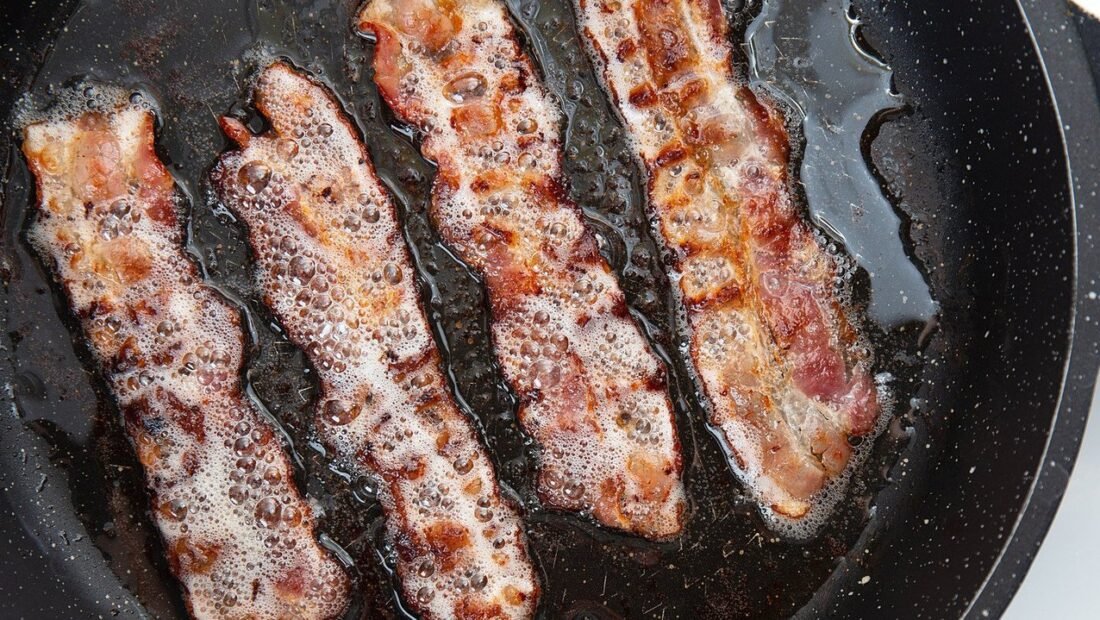
Stovetop bacon is a splatter crime scene. Grease on the backsplash, grease on the stovetop, grease somehow on the cabinet handles three feet away — and you standing there flipping individual strips like a short-order cook. There’s a better way, and professional kitchens have used it forever.
The best way to cook bacon without the mess is the oven. You lay the strips on a sheet pan, walk away, and come back to perfectly flat, evenly cooked bacon with the grease neatly contained. No splatter, no flipping, no babysitting. Here’s the full method plus variations for every bacon style.
The Oven Method: Best Way to Cook Bacon, Step by Step
Line a rimmed baking sheet with foil or parchment for zero-scrub cleanup — the rim is essential, since bacon renders a surprising amount of fat. Arrange the strips in a single layer without overlapping; overlapping steams instead of crisps. Put the pan in a cold oven, then set it to 400°F. Starting cold lets the fat render gradually, which means flatter, more evenly cooked bacon.
Bake 15 to 20 minutes depending on thickness, checking at 15. No flipping needed — the ambient heat cooks both sides evenly. When it’s nearly at your desired crispness (it firms up a bit as it cools), transfer the strips to a paper-towel-lined plate or a wire rack. Save the rendered fat in a jar in the fridge — it’s liquid gold for roasting potatoes, frying eggs, or making the best cornbread of your life.
Dialing In Your Perfect Bacon
For extra-crispy bacon, use a wire rack set inside the sheet pan. Elevating the strips lets hot air circulate underneath and the fat drip away, giving you uniformly crisp bacon that never sits in grease. For chewier bacon, pull it at 15 minutes while it’s still slightly flexible — carryover crisping will firm it up. Thick-cut bacon needs 20 to 25 minutes; thin bacon can be done in 12 to 15, so watch it closely.
Candied bacon (brown sugar + black pepper before baking) is the move that ruins regular bacon for you — sweet, spicy, shatteringly crisp. Pepper-crusted, maple-glazed, or chili-dusted variations all work the same way: season before baking, then don’t touch it. And for bacon bits, chop the raw bacon first, spread the pieces on the pan, and bake — perfectly even crumbles with no knife work on hot, shattering strips.
Reference: USDA bacon and food safety.
Reference: Serious Eats on cooking bacon.
Mess-Free Bacon Rules
The details for perfect results:
- Always use a rimmed sheet pan — flat cookie sheets let grease run off onto your oven floor.
- Line with foil or parchment. Cleanup becomes ‘crumple and toss’ instead of a scrubbing session.
- Start in a cold oven. Gradual rendering means flatter bacon and less curling.
- Don’t overlap strips. Overlap steams; single layers crisp.
- Bake at 400°F: 12–15 min for thin, 15–20 for regular, 20–25 for thick-cut.
- Pull it just before it looks done — carryover heat crisps it further as it cools.
- Save the rendered fat in a jar. Refrigerated bacon fat keeps for months and upgrades everything.
Other Methods, Honestly Ranked
The microwave (bacon between paper towels, 1 minute per slice) is genuinely fast and nearly splatter-free, but the texture is never quite as good — slightly chewy-steamy rather than crisp. Fine for a BLT emergency, not for bacon worth savoring. The air fryer makes excellent bacon in 8 to 10 minutes at 350°F, but batch size is tiny and grease management in some models is annoying.
Stovetop still has one advantage: the fond. If you’re making a dish that starts with rendered bacon fat in the pan (carbonara, braised greens, clam chowder), cooking the bacon in that same pan builds flavor you can’t get otherwise. But for bacon as the star — breakfast plates, BLTs, burgers — the oven wins on every metric: texture, evenness, batch size, and cleanup. Once you go oven, you don’t go back.
Quick Answers to Common Questions
What temperature is best for oven bacon?
400°F is the sweet spot — hot enough to render and crisp efficiently, gentle enough for even cooking without burning. Start the pan in a cold oven so the fat renders gradually (flatter bacon, less curling). Thin bacon: 12–15 minutes. Regular: 15–20. Thick-cut: 20–25. Pull it just before it looks done; carryover heat finishes the crisping.
Can I cook bacon in the air fryer?
Yes — 350°F for 8–10 minutes makes excellent bacon, arguably crispier than the oven. The trade-offs: tiny batch sizes and grease management, which varies by model. For 2–4 slices it’s great; for a crowd, the oven’s sheet-pan capacity wins easily. Lay strips flat without overlapping and check early — air fryers run hot.
How long does bacon grease keep?
Strain it into a jar and refrigerate: it keeps for months (some say up to 6). The straining matters — food particles left in the fat go rancid faster. Use it for roasting potatoes, frying eggs, seasoning cast iron, or making cornbread. It’s the best free cooking fat in your kitchen, and throwing it away is a small tragedy.
More from Daily USA Post
- Our complete guide: how can I find new music similar to my favorite bands
- what are the best mystery novels for beginners — what you need to know
- Keep reading: what are the best family-friendly video games for kids
The best way to cook bacon without the mess is the oven method: strips on a foil-lined rimmed pan, into a cold oven, bake at 400°F for 15 to 20 minutes. No flipping, no splatter, perfectly flat and even, with the grease contained for easy cleanup — and save that rendered fat, because it’s the best cooking fat in your kitchen. Your stovetop and your backsplash will thank you.
Try it this weekend: a full sheet pan, cold oven, 400°F, walk away. Come back to the flattest, most evenly crisped bacon you’ve ever made at home — and a pan that cleans up with a crumple of foil. Once you’ve done it, the splattery stovetop method will feel like a bad memory.



